Best Foldable Shopping Bags for Travel
Best Foldable Shopping Bags for Travel
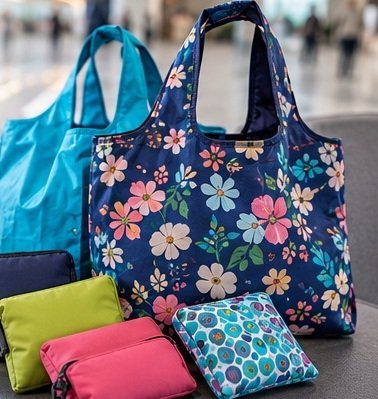
Pocket shoppers, roomy totes and a convertible alternative, chosen around the journey back from the shops.
The best foldable shopping bags for travel are the ones you remember to take out of your luggage. A beautifully made tote is not much use folded beneath your clothes when you stop for groceries, while an ultra-small pouch can be frustrating if the bag is awkward to carry once opened. The useful balance is between packed size, comfortable handles and the kind of load you actually buy.
This guide compares small everyday shoppers, a larger lightweight option and a more substantial convertible tote. It also explains why a shopping bag is not automatically waterproof luggage, a secure daypack or a free extra cabin item. Those distinctions matter more than another attractive print.
Our selections are research-led, using manufacturer specifications and identifiable buying options rather than claimed hands-on load tests. Where products have similar names or a retailer sells a multipack, the differences are stated plainly. You can then choose one useful bag—or keep a serviceable one you already own—without assembling a collection of near-identical backups.
reisenthel pocket
Check AO7003 rather than assuming all mini maxi models match.
IKEA SKYNKE
A serviceable simple shopper may already meet your needs.
Standard BAGGU
The linked offer includes three bags, not one.
BAGSMART Faro
Extra modes and 300g are worthwhile only when used.
Best foldable shopping bags for travel: the useful differences
Packed dimensions, handle shape and closure tell you more than the word “foldable”. The comparison below distinguishes an open shopper from a more structured convertible bag and avoids treating a manufacturer’s maximum-load claim as a sensible weight for everyone to carry.
| Bag / model | Published size or capacity | Storage and main trade-off | Buying route |
|---|---|---|---|
| reisenthel mini maxi shopper pocket AO7003 [1] | 15L; 32.3g | Separate small case; not the longer-handled AT7003 | Check UK options |
| IKEA SKYNKE 805.176.74 [2] | 45 x 36cm; product-only weight not confirmed | Folds into own pocket; not approved for direct food contact | Manufacturer information |
| ChicoBag Original [3] | 25lb manufacturer load claim | Built-in pouch; UK buying route not verified | Manufacturer information |
| Standard BAGGU [4][5] | About 64.8 x 39.4 x 15.2cm | Separate pouch; linked offer is a three-pack | Check three-pack |
| LOQI Mondrian New York City 3 [6] | 50 x 42cm; 55g | Separate zip pouch; main shopper is open | Check UK options |
| Current Sea to Summit Ultra-Sil [7] | 30L; 57g | Attached stuff pouch; not the older Nano | Manufacturer information |
| BAGSMART Faro Foldable Totepack [8] | 25L; 300g | Convertible carrying and own zip pocket; larger folded package | Check UK options |
How the bags were selected
The shortlist covers different roles rather than seven versions of the same purchase. Small shoppers suit spontaneous errands; larger ones can carry bulky but light items; a convertible tote is relevant when the return walk matters enough to justify additional fabric and straps. Some manufacturer references are included without a commission-bearing shopping link where a suitable UK listing was not verified.
The figures are published specifications, not our measurements. Capacity is left unstated where the manufacturer does not give a comparable litre figure, and package weight is not relabelled as the empty weight of a bag. Those gaps are preferable to invented precision.
Product information was reviewed on 10 October 2026. Offers, prints, stock and delivery depend on the seller and selected variant. In particular, a listing for a three-pack is not a single-bag price comparison, and a US manufacturer page does not by itself establish a convenient UK buying route.
Small shoppers that can live in an everyday bag
reisenthel mini maxi shopper pocket: a compact hand-carried backup
The mini maxi shopper pocket, model AO7003 in black, is a 15L bag. Reisenthel lists dimensions of 45 by 53.5 by 7cm, a weight of 32.3g and a folded size of 5 by 10.5 by 2cm. It packs into a separate case and has two carrying handles. [1]
This is not the same specification as the longer-handled mini maxi shopper AT7003. The similar names make that distinction worth checking before ordering. The pocket version is attractive when your priority is a very small reserve for a book, a light grocery stop or an extra layer picked up during the day.
My practical reservation is the separate case: decide where it will go while the bag is open. Losing the pouch does not necessarily make the tote unusable, but it can remove the tidy storage system that persuaded you to buy it. Also check the supplied stock’s material description, since current manufacturer information and older marketplace inventory may not always represent the same production run.
IKEA SKYNKE: a useful simplicity benchmark
IKEA’s black-and-white striped SKYNKE is listed at 45 by 36cm, with two carrying options and an internal pocket into which it folds. It uses recycled polyester and calls for hand washing at a maximum of 40°C. Crucially, IKEA says it is not approved for direct food contact: groceries should be packaged or covered. [2]
It earns a place here because a travel backup does not need to be a specialist premium accessory. Someone who already owns SKYNKE may have little reason to replace it. Check that the handles and open shape suit the things you carry, then give it a consistent place in your day bag.
The published 0.04kg figure appears under package details, so it is not presented as a measured empty-bag weight. Likewise, local availability should be checked with IKEA rather than assumed from the product page. The useful comparison is its straightforward folding and carrying arrangement, not an unverified claim that it is the lightest or strongest option.
ChicoBag Original: for people who lose separate pouches
The ChicoBag Original stuffs into a built-in pouch. Its manufacturer describes woven polyester, a 25lb carrying-capacity claim and cold washing followed by hanging to dry. The cited Original is not the newer Original rePETe + Refine, so recycled-material and warranty claims from that newer product should not be transferred automatically. [3]
An attached pouch is the reason to investigate it. You cannot set the pouch down separately at the checkout and leave it behind. That can be more valuable in normal travel than reducing the folded object by a small amount, especially when you frequently open and close the bag throughout the day.
Consider the handle length and loaded shape before ordering from abroad. A manufacturer’s US page establishes the design, not the cost or convenience of delivery to a UK address. Compare the complete buying route, including returns, with locally available alternatives. This guide includes the product as a useful design reference without inventing a verified UK marketplace listing.
Roomier bags, prints and a convertible alternative
Standard BAGGU: a roomy format, with the multipack made clear
The Standard BAGGU format measures approximately 64.8cm high, 39.4cm wide and 15.2cm deep, including its handle area. The current manufacturer describes recycled ripstop nylon and a flat individual pouch around 12.7cm square. Its stated 50lb load claim is not a recommendation to carry that much shopping. [4]
The linked UK offer contains three Standard bags in a print set, rather than one black bag. Its listing identifies ripstop nylon and individual storage pouches; confirm the actual prints, material description and pack contents before ordering. The larger outer packaging for a set should not be confused with the folded size of a single bag. [5]
For a couple or family who will use several bags, a set can make organisational sense. For someone who needs one spare, it can be unnecessary duplication. Divide the delivered cost by the number of bags you will genuinely use, not simply the number included in the box. That produces a more honest value comparison.
LOQI Mondrian New York City 3: a light printed shoulder bag
LOQI’s Mondrian New York City 3 recycled bag is listed at 55g and 50 by 42cm, with a 27cm handle measurement and a separate zip pouch around 12cm square. The manufacturer describes water resistance, a 20kg carrying claim and hand washing as the preferred way to preserve the coating. [6]
The print is a legitimate part of the appeal when it encourages you to carry and reuse the bag. However, the artwork does not change the limits of an open shopper. Keep valuables elsewhere, protect sharp objects and choose a load you can comfortably carry rather than treating the advertised maximum as a target.
The zip belongs to the separate pouch; do not infer that the main shopping bag has a zipped closure. That distinction matters for crowded transport and for loose small items. The linked design is the Mondrian New York City 3 version, not another LOQI bag whose dimensions or material have merely been assumed to match.
Sea to Summit Ultra-Sil Shopping Bag: larger, not the older Nano
The current Ultra-Sil Shopping Bag is listed at 30L and 57g, with 30D siliconised CORDURA fabric and an attached stuff pouch. The main opening is not zipped. This is distinct from older Ultra-Sil Nano listings and their different capacities or weights. [7]
Its strongest case is a bulky, relatively light load: spare layers, a towel or several awkwardly shaped purchases. More capacity does not mean you should fill every litre with dense groceries. Imagine the return walk and the way the handles will feel, not just the amount that fits inside.
Some manufacturer page elements retain differing older figures, so use the current technical specification for the selected model and confirm the supplied version. This guide does not turn a dramatic demonstration load into an everyday carrying recommendation. An ultralight shopper remains a soft bag without the protection, structure or security of a proper travel pack.
BAGSMART Faro Foldable Totepack: only when the extra carrying modes help
BAGSMART’s UK Faro Foldable Totepack is listed at 25L and 300g, with dimensions of 32.5 by 17.5 by 41cm. It converts between tote, shoulder and backpack-style carrying, packs into its own zip pocket and uses CORDURA nylon with water-repellent YKK zips. [8]
That makes it a different purchase from a tiny backup shopper. The extra weight may be worthwhile when you regularly carry purchases farther and will use the alternative carrying modes. It is less persuasive when the bag will only emerge briefly for a snack and a paperback.
Do not accept a general “personal item” claim as proof of fit on every airline. Compare the loaded dimensions with your actual allowance, and check that the straps and conversion process suit you. The verified UK product page has varied availability by colour; review the selected variant and current return terms rather than assuming every displayed option is immediately dispatchable.
Capacity, shape and packed size are different questions
A litre figure does not describe the opening
A nominally roomy bag can still be awkward for a wide food container or a box with square corners. Conversely, an open, flexible shopper may accommodate an irregular light item even when no litre capacity is stated. Think about your typical purchases before declaring the larger number better.
Use a few clean objects at home to explore the shape: a cereal box, a folded layer and a paperback are enough to reveal how the base and handles behave. You are assessing your own needs, not performing a manufacturer load test. Avoid overloading a new bag to see whether the advertising survives.
For bulky souvenirs, measure the actual item and remember that fragile purchases need protective packaging. A foldable bag is a carrying layer, not shock protection. If the object requires padding, include that padding in your size calculation rather than planning around the unwrapped souvenir alone.
Packed size should be repeatable
Fold or stuff the bag yourself before the first trip. A compact manufacturer’s photograph is less relevant than the size you can reproduce while standing beside a checkout or packing in a small hotel room. Do not choose a system that only works after a careful ten-minute folding exercise you will never repeat.
Keep an attached-pouch bag from being overstuffed into the pouch at sharp angles, and avoid forcing zips around bunched fabric. With a separate pouch, decide on one place for it while the bag is open. A small system that is used consistently is more effective than an exceptionally tiny system that gets lost.
Do not compare package dimensions with bag dimensions
Retail listings can show shipping-package measurements alongside the product’s own size. A multipack may also have an outer storage pouch as well as individual bag pouches. Read the labels carefully before comparing figures.
The same caution applies to weight. A package weight may include tags, wrapping or several items, while a product figure may describe one particular size. This guide leaves those distinctions visible rather than creating a neat but unreliable ranking. Ask the seller when a measurement affects whether the purchase will work for you.
Comfort depends on the loaded bag, not the empty one
Hand carrying and shoulder carrying feel different
Try the handles with the clothing you will wear. A shoulder opening that works over a T-shirt may feel cramped over a jacket. Equally, long handles can make a hand-carried bag hang lower than you expect, especially for a shorter traveller.
The handle measurement alone may not describe the usable drop in the way you assume. Check whether a brand measures the full handle length or the vertical distance from the opening to the top of the handle. Where that distinction is unclear, a trial with the actual bag is more useful than a speculative calculation.
For a short grocery walk, simple handles may be sufficient. For a longer return journey, decide whether spreading the load between two bags or using a more appropriate backpack would be more comfortable. The answer is not always a stronger version of the same tote.
Maximum load is not a personal carrying recommendation
BAGGU, LOQI and ChicoBag publish carrying-capacity claims, but those figures should not become goals for the shopping trip. The load you can comfortably manage depends on your circumstances, the distance and the items themselves. A bag can remain intact while still being unpleasant to carry. [3] [4] [6]
Start with a modest realistic load and notice whether the handles bunch or the contents pull the bag into an awkward shape. If it feels wrong, redistribute or reduce the load. Do not keep carrying an uncomfortable arrangement just because the manufacturer’s maximum is much higher.
Also protect the fabric from concentrated pressure. A sharp corner or an unprotected utensil presents a different problem from evenly distributed groceries. Wrap or isolate awkward items rather than assuming a high load claim means puncture resistance.
When a convertible tote makes sense
Backpack-style carrying can be useful for a longer walk, but only when the straps and bag shape work for the load. A convertible tote is not automatically as supportive as a dedicated daypack. Evaluate it as the lighter, flexible product it is, rather than expecting the structure of a hiking pack.
BAGSMART Faro is the option here to investigate when those extra carrying modes are genuinely part of the plan. Its 300g published weight is several times that of the smallest shoppers, so the benefit should be more substantial than having additional straps available just in case. [8]
Practise changing modes before leaving. Check where loose straps go and how the bag behaves once loaded. The conversion should be a useful routine, not a puzzle you solve on the pavement with groceries balanced beside you.
Separate food, cleaning products and damp items
Use different bags for different tasks
Government food-hygiene guidance advises separating raw foods from other foods and keeping bags used for raw foods distinct from those used for ready-to-eat items. It also recommends separating cleaning products from food and checking bags for spillages. A bag that looks clean may still have been used for something unsuitable. [9]
For travel, a simple colour or role system can help. One bag might carry packaged groceries, while another handles non-food purchases or spare clothing. The purpose is to reduce confusion, not to imply that a coloured bag has any special hygienic property.
A shopper is not a cooler bag
An ordinary foldable shopper does not become an insulated food carrier because it holds groceries. Plan chilled or frozen purchases around suitable food-handling arrangements and the journey back to accommodation. The bag’s load capacity says nothing about maintaining the temperature of its contents.
Likewise, a thin shopper is not a reliable container for leaking packaging. Put the item in suitable packaging first and keep it separated from clean clothes and other purchases. If something spills, deal with the contamination before using the bag for another purpose.
Do not make a delicate-coated shopper your dedicated raw-food bag when you cannot clean it appropriately. Choose a system suited to the hygiene task and follow the relevant cleaning advice. A foldable travel accessory should not complicate basic food separation.
Damp clothing needs its own plan
A shopping bag can carry a dry extra layer, but damp swimwear or a wet towel creates a different problem. Do not bundle those items against food or clean clothing and then fold the bag away immediately after emptying it. Use suitable containment and allow items to dry when practical.
An open shopper also cannot protect valuables from a wet load inside it. Keep phones, passports and electronics in a separate appropriate place rather than dropping them into the pouch with everything else. The aim is to assign clear roles to simple bags, not make one unstructured container do every job.
Water resistance is not waterproof luggage
An open top remains an open top
Several bags in this guide have water-repellent or water-resistant material descriptions, but that does not close the main opening. Rain can enter around the handles or through the top, and a thin shopping bag is not a substitute for a properly designed waterproof container. [1] [6] [8]
For a brief walk, you may simply arrange the contents so that a light layer covers less sensitive purchases. For anything that must stay dry, choose appropriate separate protection. Do not rely on a product photograph showing droplets on fabric as proof of complete weather protection.
The distinction is especially important with LOQI: its separate pouch has a zip, while the main shopper remains open. A zipped accessory included with a bag does not mean the entire carrying system is sealed. Check the actual opening you will use for the items that matter.
Keep valuable small items elsewhere
A foldable shopper is generally best treated as an extra carrier, not the main home for your passport, payment cards or phone. Open access and a soft shape can make small items difficult to organise. A separate pouch helps with organisation, but it is not automatically security protection.
For crowded transport, hold the bag in a way that keeps it under your control and avoids knocking other people. Do not place valuable items loosely on top of groceries or leave the bag unattended because its contents appear ordinary. Practical attention matters more than an accessory’s travel-themed branding.
If you need a secure main day bag, choose one for that purpose. A foldable shopper can still accompany it for purchases without being asked to provide the structure, closure and organisation of the main bag.
A foldable bag is not a free baggage allowance
Empty inside your bag is different from full in your hand
A folded shopper carried inside your permitted luggage is simply part of your packed belongings. Once filled and carried separately, it becomes another item to consider under the airline’s baggage rules. Its ability to fold later does not make its current loaded size irrelevant.
For example, easyJet’s published allowance gives all passengers one small under-seat bag, with additional large-cabin-bag arrangements depending on the booking. Check your actual entitlement rather than assuming a shopping bag is automatically extra. The current standard small-bag maximum is 45 by 36 by 20cm, including handles and wheels. [10]
The point is not to use that example as a rule for every airline. It is to plan a return journey that still fits the allowance you purchased. Check every operating carrier and do not rely on a general “airline approved” statement in a tote’s product description.
Soft fabric does not remove the need to measure
A flexible bag can change shape, but it cannot make a rigid box inside it smaller. Measure the packed outer dimensions, including anything that protrudes or prevents the bag fitting comfortably. Do not plan around crushing fragile purchases to pass a size check.
BAGSMART’s Faro may be described as a travel personal item, but the selected airline and the way you pack it determine whether it fits. The same principle applies to every soft bag here. Capacity in litres is not a cabin-size approval certificate.
For a simple fallback, leave enough space to put the empty shopper and its contents back into your main bag where appropriate. If that is impossible, investigate the correct extra-baggage option before reaching the gate rather than expecting the folded design to create an exception.
Souvenir shopping needs a return plan
Before buying a bulky item, consider protective packaging, permitted baggage and how you will carry it during connections. A roomy shopper can help between a shop and the accommodation but may not be suitable as the final transport solution.
Avoid turning the backup bag into a reason to exceed the amount you can comfortably manage. The extra capacity is useful only when the rest of the journey still works. Sometimes the sensible choice is a smaller purchase, shipping arranged through a reliable seller or simply leaving the item behind.
Care, drying and small repairs
Follow the material-specific instructions
The bags here do not share one universal wash setting. IKEA specifies hand washing for SKYNKE; ChicoBag’s Original calls for a cold wash and hanging to dry; LOQI prefers hand washing to preserve water resistance. Read the label for the exact product you receive. [2] [3] [6]
This matters when deciding the bag’s role. An item that needs gentle care may be a poor choice for a task that regularly contaminates it. Select the bag and cleaning routine together rather than discovering that the care instructions conflict with the job you bought it for.
Empty the pouch and check corners before washing. A forgotten receipt, coin or small accessory can complicate an otherwise simple clean. For removable pouches, keep track of both pieces so the tidy storage system is still complete afterwards.
Dry before folding for storage
A compact pouch is good at keeping fabric compressed; it is not the ideal place to leave that fabric damp. After cleaning or getting caught in rain, allow the bag to dry before putting it away for a long period. A consistent drying spot at the accommodation can make this easy.
Do not use heat simply to speed the process unless the care instructions permit it. Thin fabrics, coatings and plastic parts may have different tolerances. The useful habit is allowing enough drying time rather than forcing the bag into its pouch just because checkout is approaching.
For the journey home, keep a recently used or damp bag separated from clean clothing until it can dry. An inexpensive backup still deserves sensible care; repeatedly storing it wet undermines the reason for choosing something reusable.
Inspect seams and handles without destructive testing
Look for loose stitching, worn areas or damage where handles join the body. A small repair may be practical if you have the skills and it suits the fabric, but do not assume every tear can be safely repaired for the same load. Reduce the bag’s role or replace it when you no longer trust it for the intended use.
Avoid deliberate overload tests. They can damage a bag without telling you how it will behave over repeated normal trips. A gentle first-use check with your ordinary purchases is more relevant than trying to reproduce a dramatic manufacturer demonstration.
Keep the product name and care information. That makes it easier to ask about repairs, replacement pouches or a suitable successor later. It also helps prevent the common mistake of ordering a similarly named bag with different handles or storage arrangements.
Buy for repeated use rather than a theoretical saving
Begin with the bag you already own
Inspect your existing shoppers before buying a new travel-specific one. Does one already fold small enough, feel comfortable with your usual purchases and fit a pocket you actually use? If so, giving it a permanent place in your travel kit may solve the problem without spending anything.
A new purchase becomes more persuasive when it addresses a specific limitation: a separate pouch you keep losing, handles that are too short over a coat, an awkward packed size or a genuinely useful alternative carrying mode. Those are clearer reasons than a new print described as a must-have travel essential.
This guide does not assign a universal number of uses at which a bag becomes environmentally preferable. That would depend on materials, production, alternatives and actual reuse. A practical approach is to use a serviceable bag consistently and avoid unnecessary duplicates rather than treating a marketing replacement figure as a personal guarantee.
Compare single bags and multipacks honestly
The BAGGU link here is a three-pack. It can be useful for a household that has distinct roles for several bags, but it is not automatically cheaper in practice for someone who needs only one. Count the bags that will be used, then compare the total delivered cost with a suitable single bag.
For a shared travel kit, decide who carries each bag and where the empty pouches live. A spare that remains in the main suitcase does not help the person making an unplanned shop stop. Distributing useful bags across the people who need them is better than having several packed together and unavailable.
Pay for conversion only when you use it
BAGSMART Faro’s carrying modes may justify its extra weight for someone who regularly walks back with purchases. For a traveller seeking the tiniest reserve, those same features are unnecessary. The two users should not be pushed towards the same “best overall” answer.
Before buying a convertible tote, imagine three ordinary occasions when you would use the backpack-style mode. If none comes to mind, a smaller shopper may be the more sensible choice. A useful feature earns its place through an actual routine, not merely by appearing in the specifications.
Practical shopping-bag choices for three trips
A city break with occasional small purchases
Choose a compact shopper that fits in the bag you carry all day. Reisenthel’s pocket model or an existing SKYNKE is a reasonable starting point. Keep the pouch or folded bag near the top so that using it does not require unloading your day kit.
For this trip, do not buy a larger tote simply because there might be souvenir shopping. Check what you usually purchase and how far you carry it. A small dependable bag used twice can be more valuable than a large one left in the room throughout the break.
A self-catering stay with regular grocery trips
Think in terms of separation and carrying comfort. A couple of bags with clear roles can be more useful than one enormous bag holding raw ingredients, ready-to-eat food and cleaning products together. Keep the food-contact and cleaning instructions of each bag in mind.
A roomy Standard BAGGU or LOQI may fit some of the carrying work, while a suitable dedicated food-carrying arrangement handles tasks that need different hygiene or temperature control. Do not treat an attractive shopper as an insulated or food-safe container simply because the journey from shop to kitchen seems short.
A longer walk back with bulky light purchases
Sea to Summit’s 30L Ultra-Sil is worth investigating for volume without a structured tote’s weight. However, check the handles with your expected load and remember that its open top does not secure loose small items. It is a carrying tool, not protective luggage.
When the walk is long enough that alternative carrying modes genuinely matter, Faro is the more substantial option to compare. Balance that benefit against its extra weight and packed bulk. The best answer comes from the loaded journey back, not the empty bag’s appearance on a product page.
Pros and cons of foldable shoppers
Where they are genuinely useful
A foldable shopper adds flexible carrying space without requiring a second full-size bag to be carried empty all day. It can separate a light purchase from the main travel kit and make spontaneous errands easier. An attached pouch can also keep the storage routine uncomplicated.
The strongest benefit is availability: the bag is small enough to come with you and simple enough to use without planning. That is why a modest shopper you already like can outperform a more elaborate travel tote for ordinary errands.
Where their limits show
Open tops, thin fabric and minimal structure are compromises. They do not provide the organisation of a daypack, the protection of a padded case or the temperature control of a cooler. A high load claim also does not establish that the handles will feel comfortable over a long walk.
They can encourage overbuying when spare capacity is mistaken for spare baggage allowance. Treat the bag as a useful carrier within the journey you have planned, not a way to escape the limits of your luggage, comfort or budget.
Common mistakes when choosing a foldable travel bag
Treating all mini maxi bags as one model
Check the model code and handle arrangement. The mini maxi shopper pocket AO7003 is not the same bag as the longer-handled AT7003. Similar branding does not make their dimensions, weights or storage systems interchangeable.
Assuming a zip pouch means a zipped main bag
Identify which part actually closes. A small accessory pouch can organise keys or store the folded shopper without making the main carrying compartment secure. That distinction matters when deciding where to keep valuables or loose purchases.
Buying to the maximum claimed load
Choose a load you can comfortably carry, protect sharp corners and distribute weight sensibly. A published maximum is not a recommendation for your grocery trip. Stop and reorganise an uncomfortable load rather than treating the bag’s strength claim as a challenge.
Packing the backup where it cannot be reached
Put it in the bag or pocket you use at the destination, not deep in the suitcase. After each use, return it to that same place once clean and dry. The habit of carrying the bag is more valuable than a small difference in folded dimensions.
Frequently asked questions about foldable shopping bags
Which foldable bag is best for travelling light?
For a small backup, begin with the smallest format that comfortably holds your usual purchases and fits a pocket you actually use. Reisenthel’s mini maxi shopper pocket is a compact option, while an existing IKEA SKYNKE may already be sufficient. Do not select by grams alone: an awkward pouch or uncomfortable handle can make the lighter bag less useful in practice.
Can I use a shopping bag as an extra cabin bag?
Only within the baggage allowance and rules of the operating airline. A folded bag inside your luggage is different from a filled shopper carried separately. Check both the number of items and the loaded dimensions. EasyJet’s standard small-bag allowance, for example, is one under-seat bag, not an automatic invitation to add a separate shopper. Plan the return journey before accumulating purchases. [10]
Are foldable shopping bags waterproof?
Not merely because the fabric is described as water-resistant or water-repellent. An open main compartment still allows water to enter, and seams or closures may have their own limitations. Keep water-sensitive items in appropriate separate protection. A printed shopper or its little zip pouch should not be treated as a substitute for a properly designed waterproof container.
Is the BAGGU link for one bag or three?
The linked UK offer is a Standard BAGGU three-pack with a print set. Check the selected prints, included pouches and current seller before purchasing. The outer packaging for the set is not the same thing as the folded size of one bag. A multipack is useful only when you have a realistic use for the additional bags. [5]
Should I choose an attached pouch?
It is a useful feature when you frequently misplace separate storage cases. ChicoBag Original and IKEA SKYNKE provide integrated storage approaches, while other designs use a separate pouch or case. Try the folding or stuffing process before travelling. The best system is one you can repeat easily and keep complete, not necessarily the neatest folded object in a catalogue photograph.
Can I put loose food directly into any shopper?
No. Follow the product’s food-contact guidance and use appropriate packaging. IKEA explicitly says SKYNKE is not approved for direct food contact. Also keep raw foods separate from ready-to-eat items and use suitable cleaning and storage routines. A bag being sold for shopping does not mean every kind of food can safely sit directly against its fabric. [2] [9]
Is the Sea to Summit bag the 25L Nano version?
Not the version discussed here. This guide uses the current Ultra-Sil Shopping Bag’s 30L, 57g technical specification. Older Nano listings and older page snippets may give other figures. Confirm the exact model and selected size before comparing prices or weights, and do not assume a similar photograph means the product has identical capacity and construction. [7]
Is a convertible tote worth the extra weight?
It can be when you regularly carry purchases far enough to use the alternative modes. BAGSMART Faro’s listed 300g weight buys more structure and carrying options than a tiny pocket shopper, but that is unnecessary for everyone. Decide whether backpack-style carrying will be part of your normal routine, and try the straps with a realistic load before relying on it for a long walk. [8]
Choose one useful bag and give it a permanent place
For a small everyday reserve, start with reisenthel mini maxi shopper pocket or a serviceable SKYNKE you already own. Choose ChicoBag Original when integrated storage is the feature you need most, subject to a sensible UK buying route. Standard BAGGU and LOQI offer roomier printed-shopper approaches, but check the pack contents and distinguish the main opening from the storage pouch.
Sea to Summit’s current Ultra-Sil is the larger lightweight option to investigate. BAGSMART Faro is the heavier convertible alternative for someone who will actually use its extra carrying modes. Neither is automatically a better choice than a modest pocket bag.
The final test is simple: load it with the kind of purchase you normally make, carry it briefly and pack it away yourself. Then give it a consistent place in your day kit. A bag that passes those checks and comes with you is more useful than another impressive specification left in the suitcase.
Sources and fact-checking notes
- reisenthel: mini maxi shopper pocket AO7003; current specification.
- IKEA UK: SKYNKE 805.176.74; care, food-contact restriction and measurements.
- ChicoBag: Original Tote; built-in pouch, material and care.
- BAGGU: Standard Baggu; current single-bag format.
- BAGGU: identified UK Standard three-pack listing; pack contents and material.
- LOQI: Mondrian New York City 3 recycled bag; specification and care.
- Sea to Summit UK: current Ultra-Sil Shopping Bag; selected 30L technical specification.
- BAGSMART UK: Faro Foldable Totepack; carrying modes and specification.
- GOV.UK / Food Standards Agency: cross-contamination and using shopping bags safely.
- easyJet: cabin bags; item count and current small-bag dimensions.
Illustrations in this article were created for Taylor’s Trailblazing Travel Gear. Third-party photographs, where used, are credited beside the image or in the source list.