
How to Choose Travel Gear
Step 1: Write the job in one sentence
Use a specific statement such as: “I need a personal-item backpack for three-night rail and budget-airline trips, carrying a 14-inch laptop and weighing no more than my realistic comfort limit.” A product that cannot do that job is not a bargain.
Step 2: Set non-negotiable filters
- Maximum external dimensions and empty weight.
- Required compatibility, connector, voltage or device size.
- Fit, accessibility or mobility requirements.
- Safety standard or operator rule that genuinely applies.
- Delivery date and return availability.
- Maximum total cost, including delivery, duties and required accessories.
Step 3: Score the factors that remain
| Criterion | Suggested weight | Evidence to use |
|---|---|---|
| Trip and user fit | 25% | Measurements, loaded trial, route and activity needs. |
| Core performance | 20% | Hands-on evidence, objective measurements or credible technical documentation. |
| Durability and repair | 15% | Materials, construction, replaceable parts, warranty details and long-term reports. |
| Weight and packed size | 15% | Verified dimensions and weight, including required accessories. |
| Ease of use | 10% | Access, controls, cleaning, charging or setup. |
| Support and returns | 5% | Written policy, local service and return cost. |
| Total value | 10% | Current final price, expected use and realistic lifespan. |
Change the weights when the trip demands it. Safety or fit may become a pass/fail requirement rather than a scored preference.
Step 4: Separate evidence from claims
Manufacturer specifications are the strongest source for dimensions, compatibility and warranty terms, but they are not independent evidence of comfort or long-term durability. Retailer descriptions may be incomplete. User reviews can reveal repeated problems but also include fake, incentivised or mismatched reviews. Use each source for the question it can answer.
Step 5: Compare the real cost
Add mandatory accessories, replacement parts, delivery, duties, subscriptions, battery costs and return postage. A lower initial price may not be better value if the item cannot be repaired or requires proprietary extras. A premium price is not evidence of superior performance.
Step 6: Check timing and version
Product names are often reused across generations, sizes and regional versions. Record the exact model, capacity, colour if it changes materials, retailer and date checked. Make sure reviews refer to the same version that is being sold.
Step 7: Run a home trial
- Load the bag with realistic contents and carry it for more than a few minutes.
- Charge the actual devices through every intended port.
- Pack the organiser inside the real luggage.
- Open and close zips, buckles and controls repeatedly.
- Check noise, heat, pressure points, cleaning and storage.
- Keep packaging and evidence until the return decision is made.
Step 8: Record why you chose it
A short decision note prevents later marketing from rewriting the reason for purchase. Record the job, the decisive criteria, the main compromise and the return deadline. For a published review, retain source links, measurements, photographs and test notes.
Red flags
- “Airline approved”, “waterproof”, “anti-theft” or “lifetime warranty” without a precise definition.
- A comparison that changes criteria between products.
- A ranking with no intended user or trip.
- Stock photographs presented as evidence of testing.
- Urgency claims that cannot be verified.
- Large numbers of near-identical pages written only to target keyword variations.
See How We Review Travel Gear for the publication standard used on this site.
Latest guides to choosing travel gear
Use structured comparisons, measurement checks and buying frameworks to choose gear without overbuying.
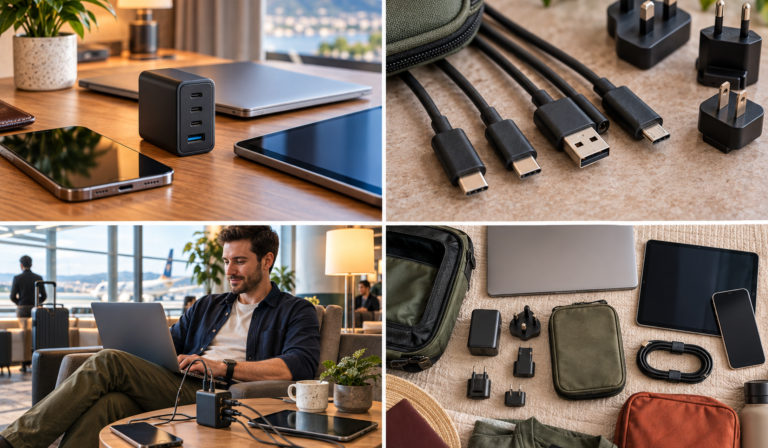
How to Choose a Travel Charger for Phone, Tablet and Laptop
A clear method for choosing one travel charger that can power a phone, tablet and laptop without overlooking port sharing, cable ratings or destination input.
Read the guide
How to Test a Travel Backpack at Home Before the Return Window Closes
A practical, return-safe home test for travel backpacks, covering torso fit, real packing weight, stair and overhead simulations, airline sizing and keep-or-return scoring.
Read the guide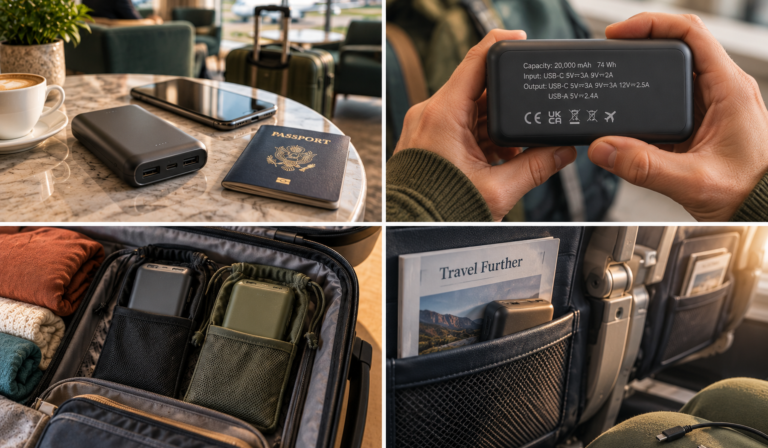
Power Banks for Flights: A Rule-Checking Checklist
A 2026 checklist for flying with power banks, covering watt-hours, cabin-only packing, two-bank limits, airline-specific use bans and safer storage.
Read the guide
How to Check Repairability Before Buying Luggage
A practical pre-purchase repairability check for suitcases, covering wheels, handles, zips, shells, spare parts, warranty wording, repair routes and the evidence worth saving.
Read the guide
Recycled-Material Claims in Travel Gear: Questions to Ask
A practical buyer guide to recycled-material claims in backpacks, luggage and organisers, including percentages, pre- and post-consumer inputs, certification scope, component boundaries and green-claim checks.
Read the guide
Research-Led vs Hands-On Travel Gear Reviews: How to Tell the Difference
A practical reader's guide to separating transparent research-led comparisons from genuine hands-on testing, including evidence, disclosures, limitations and red flags.
Read the guide