Roll-Top vs Zip Dry Bag

Roll-Top vs Zip Dry Bag
A quicker opening is useful only when the complete bag provides the water protection your trip needs.
The roll-top vs zip dry bag question hides a crucial distinction: not every zip on a water-resistant bag is a waterproof sealing zip. A familiar-looking slider can belong to an ordinary organiser, a splash-resistant travel pouch or a bag tested for temporary immersion. They should not be treated as the same product.
A roll-top is a sensible starting point for soft clothing, flexible packing and straightforward hardware. A genuinely waterproof zip pouch can be more convenient when you need to see and retrieve small items without unfolding a collar. Neither mechanism wins on its name alone; the fabric, seams, opening and permitted exposure all need to work together.
This is a research-led comparison of closure systems, not a leak-test report. Manufacturer instructions and published water limits support the specific examples. The practical exercises are checks you can carry out on your own bag, using harmless contents and conditions that stay within its instructions.
Roll-top clothing storage
A flexible sack suits soft layers when you can leave the collar clear.
A verified sealing zip
A broad pouch opening can reduce rummaging and show what is inside.
All zips are waterproof
An ordinary or coated zip is not proof of immersion resistance.
Check every closure
Debris, trapped fabric and an incomplete end stop can defeat good materials.
Roll-top vs zip dry bag: compare the actual closure
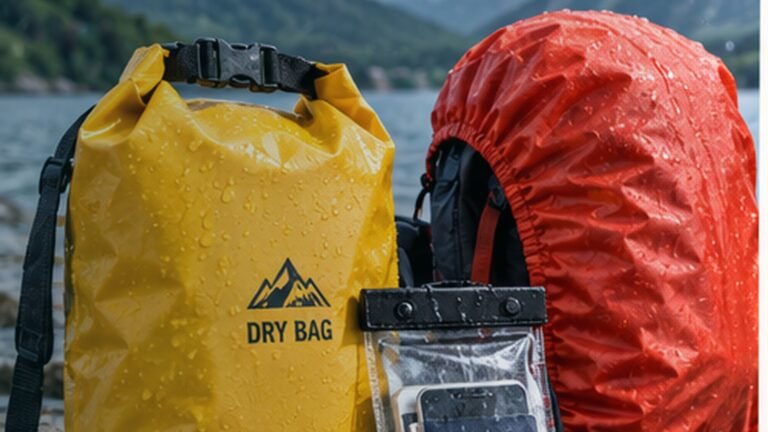
A roll-top makes a folded barrier
A roll-top bag closes by bringing the mouth together, rolling or folding the collar as instructed and securing the ends. The collar is part of the protection system, not spare fabric that can be filled to the top. Its practical strengths are flexibility and a closure that is relatively easy to inspect visually. However, the buckle being clicked shut does not prove that the collar underneath is properly arranged.
A zip bag can close more quickly, but the word 'zip' describes a broad range of mechanisms. A conventional toothed zip, a coated zip used for weather resistance and a specialist sealing zip should not be assigned the same performance. Before comparing convenience, establish which kind of opening the product actually has and what protection is claimed for the finished bag. A familiar slider is not enough evidence by itself.
Match the comparison to the contents
For a clothing module that stays packed for most of the day, the time spent rolling a collar may be a minor issue. For a small pouch opened repeatedly to retrieve accessories, access can become a more important factor. Start with those use patterns rather than assuming that the technically more elaborate closure is always worth buying. Complexity is useful only when it solves a real problem.
| Question | Roll-top | Verified waterproof zip |
|---|---|---|
| How it closes | Clear collar, specified rolls or folds, then secure | A model-specific sealing movement ending at the intended stop |
| Best starting role | Soft clothing or a module accessed infrequently | Small items needing broad, repeated access |
| Space limitation | Must leave sufficient free collar | Interior shape and clear sealing area still matter |
| Care | Inspect collar, seams and buckle; clean as instructed | Inspect full sealing path and use specified maintenance |
| Water performance | Depends on the finished bag, not the buckle | Depends on the finished bag, not the zip name |
Three things that retailers may call a waterproof zip
Ordinary teeth and weather-resistant coatings
An everyday zip joins fabric panels, but its presence does not establish a watertight seal. A protective flap or coating can improve resistance to some weather exposure, yet you still need a whole-product claim that describes the intended conditions. Words such as water-resistant, weatherproof and waterproof are not interchangeable test results. Treat ambiguous wording as a reason to investigate, especially when the contents cannot tolerate getting wet.
Look at the complete opening rather than the middle of the zip alone. Ends, stitching and the connection between the zip tape and bag body all form part of the enclosure. A convincing close-up of one smooth surface can distract from the rest of the construction. Product photography is useful for understanding the design, but it is not a substitute for instructions or a published use limit.
A genuine sealing zip has specific requirements
Specialist systems can use different sealing arrangements and care routines. ORTLIEB's TIZIP information distinguishes between closure designs rather than treating all sealing zips as identical. That is a useful reminder not to copy the maintenance method from one product onto another. Identify the system on the exact bag and follow its instructions for closing, cleaning, lubrication and storage. The technology name is a starting point for research, not a universal instruction manual. [3]
Read the complete bag rating before comparing convenience
Water jets and immersion are different exposures
The IEC's IP guide distinguishes splashes, water jets and temporary immersion. An IPX5 or IPX6 claim is not the same thing as a temporary-immersion claim, and a higher-looking number should not be treated as a general guarantee for every water exposure. When a manufacturer supplies an immersion condition, read the depth, time and setup involved. Your intended use may place different demands on the bag. [5]
Likewise, a fabric's hydrostatic measurement does not establish that its closure and seams will protect the contents under the same conditions. Sea to Summit's UK Lightweight Dry Bag description explicitly warns against submersion even while describing waterproof fabric. The practical buying decision should respect the finished product's limitation, not use a coating specification to argue around it. [1]
Ask what would make a leak consequential
A damp spare shirt and a damaged camera have different consequences. That does not mean buying the most expensive enclosure for every item. It means matching the evidence to the risk you are accepting. For sensitive electronics or important documents, use an appropriate protective system and do not infer performance from a general bag comparison. Where the instructions do not cover your intended exposure, choose another solution rather than guessing.
| Claim | What it can establish | What not to infer |
|---|---|---|
| Waterproof fabric | A property of the material under stated test conditions | That the opening and seams give identical protection |
| Splash or water-jet claim | Suitability for the specific stated exposure | Permission to submerge the complete bag |
| An immersion-rated product | A defined test condition for the exact model when used correctly | Unlimited depth, duration or protection after damage |
| No published depth/time | Potentially useful storage within the maker's stated use | An invented rating based on appearance or a different model |
Roll-top use: leave room for a proper collar
Packing should make closing straightforward
Arrange the contents below the area required for closure. Remove trapped straps, clothing corners and uneven lumps before rolling. The exact number and method of folds depend on the bag, so use its supplied instructions rather than a universal rule copied from a different brand. A bag that fits the contents only when closed with fewer folds than required is too small for that arrangement.
The collar should lie evenly enough to make the instructed closure without force. Do not use the buckle as a lever to drag an overfilled bag together. That can create a convincing-looking closure while leaving poor folds underneath. Repack, remove an optional object or choose a more suitable shape. The useful capacity of the bag ends where reliable closing becomes a struggle.
Reassess whenever the load changes
A roll-top offers flexibility, but that flexibility can make overfilling easy to overlook. A towel returned loosely after use may occupy more space than it did in the morning. Check the collar again rather than assuming yesterday's number of folds remains achievable. A brief inspection after each repack is more valuable than a confident memory of how well the bag closed before the outing.

Waterproof zip use: complete the whole closing movement
An almost-closed zip is still unfinished
A sealing zip may need the slider fully seated at its intended end position. The final movement can be easy to overlook when the bag appears closed along most of its length. Inspect the whole closure and follow the manufacturer's method rather than relying only on a quick glance from the side. If the instructions describe a particular end-stop check, make that part of your routine.
Do not force a resistant slider. Stop and look for trapped fabric, a displaced object or contamination. Pulling harder can turn a manageable problem into a damaged closure, and it does not prove that the seal has formed. A small clear area around the opening helps you see what is happening. Pack so that retrieving one item does not drag several loose cords across the sealing surface.
Make the routine workable when travelling
Try the closure with dry hands and the conditions you can safely reproduce before the trip. You should be able to operate it without bending the bag sharply or holding it against a delicate object. Someone who finds the slider awkward may be better served by another design, even if the rated protection is attractive. Reliability includes being able to complete the manufacturer's method consistently, not merely owning a capable component.
Access speed: count the full retrieval, not just opening
A quicker opening can still lead to more rummaging
A broad zip pouch can make its contents visible and reachable without unfolding a collar. That is useful for objects used repeatedly. However, a flat pouch filled with tangled cables may still be slower to use than a well-organised roll-top holding one clearly defined module. Time the whole task informally: find the object, remove it, replace it and close the bag properly. The opening mechanism is only one stage.
For clothing storage, a roll-top may be perfectly convenient because you unpack it at accommodation or after an activity. A few additional folds are unlikely to matter when the contents are accessed twice. Conversely, using the same bag for clothing and frequently retrieved accessories can expose everything repeatedly. Separating access patterns may solve the problem more effectively than replacing every roll-top with a zip model.
Avoid opening sensitive contents in the wrong place
The most protective closure cannot help while the bag is open. Choose a sheltered place to retrieve belongings where practical, wipe or shake external moisture away as instructed and avoid letting a wet opening contact dry contents. The point is not to perform an elaborate ritual; it is to prevent a simple access decision from defeating the protection you bought. Convenience should include being able to close the bag again calmly.
Capacity and shape work differently with each closure
Roll-tops need free collar, not a fixed universal deduction
Do not assume a bag loses exactly the same percentage of its labelled capacity every time it is rolled. Manufacturers may account for normal closure differently, and bag shapes vary. Check the measurement description and trial the real load. The meaningful question is whether the bag holds the required items with the specified closure, rather than whether a spreadsheet predicts it should.
Soft clothing can adapt to a cylindrical or oval bag, while a rigid case may be constrained by the opening. Put the protected object through the mouth without forcing it, then leave enough collar clear. If you have to remove padding to make the object fit, the bag is no longer solving the original protection problem. Consider a wider shape or purpose-designed case instead of only increasing the nominal litres.
Zip pouches also have usable-space limits
A gusset can create useful depth, but the bag may still narrow near the zip. An object that fits the base can obstruct the slider or press against the sealing surface when packed tightly. Check the interior dimensions, not only the outside outline. The closure should remain easy to operate with everything inside, and you should not need to squeeze a hard object past it at an awkward angle.
Materials, seams and base wear deserve equal attention
The closure is only one possible weak point
Inspect the body and seams with the same care as the opening. A neat zip does not compensate for damage elsewhere, and a well-rolled collar cannot protect fabric that has been punctured. Think about where the bag will rest and what will rub against it. An internal organiser protected by a backpack faces different demands from a bag repeatedly placed on rough surfaces.
Keep sharp or abrasive objects separated from the bag material. A covered cable connector, key or hard corner can still press into a thin wall when the load is compressed. Arrange the contents so the bag is not being used as the only cushion. This is especially relevant with compact pouches, where a rigid object may remain in the same contact position throughout a journey.
Do not assume thicker always solves the right problem
Heavier material may suit some exposed uses, but it can also make folding and packing less convenient. A stiff bag can be awkward inside a small daypack, while a lightweight internal module may be unsuitable for being dragged across a deck. Choose construction for the role. Buying the thickest bag without considering the opening, seams and intended exposure can leave the main problem unresolved.
Sand, salt and dirt: create a manageable cleaning routine
Keep contamination away from sealing surfaces
A beach is an easy place to collect fine particles around an opening. Avoid placing an open bag directly on sand and keep loose accessories from carrying grit into the closure. When contamination is visible, follow the manufacturer's cleaning method before closing the bag around sensitive contents. A brush or cleaning liquid that suits one material may be inappropriate for another, so do not improvise aggressively.
After a trip involving salt water, clean and dry the bag as instructed rather than storing it with residue trapped in the folds or zip. Pay attention to the areas you normally overlook, including corners, the underside of a collar and the zip's end position. The aim is a clean working closure on the next outing, not merely an exterior that looks tidy in the cupboard.
Separate care products from the protected contents
Any recommended lubricant or cleaner should travel in its own secure packaging, not loose beside paper documents or electronics. Use only the quantity and application method specified for the closure. Carrying the product is useful only when you know what it is for; a mystery bottle left inside a pouch can become another spill risk. Record the product name so the correct replacement is easy to identify later.
Lubrication is model-specific, not a universal waterproofing trick
Follow the closure maker rather than general internet advice
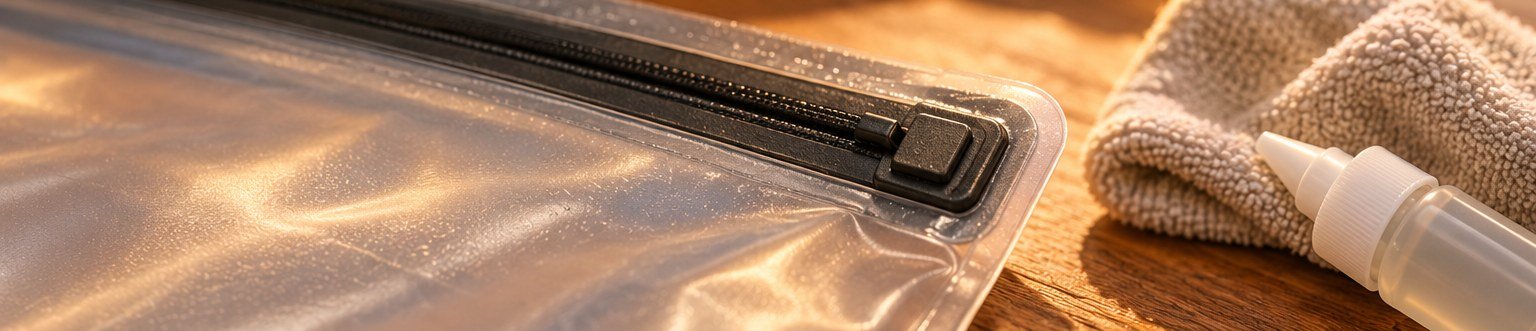
Nite Ize provides a water-based lubricant intended for TRU Zip closures and describes routine maintenance as part of keeping the system operating smoothly. That does not mean any household oil, wax or silicone product is an equivalent substitute. Equally, another sealing-zip system may specify a different treatment or application area. Check the exact instructions rather than treating lubrication as a way to make an ordinary zip waterproof. [4]
An ordinary roll-top collar does not become an immersion-rated seal because a product has been rubbed onto it. Unspecified treatments can also make future cleaning or inspection more difficult. Spend effort on correct use and the right bag instead of trying to upgrade a design through improvised waterproofing. Where the manufacturer cannot confirm compatibility, do not apply the treatment to a closure protecting important belongings.
Inspect performance after permitted maintenance
After cleaning or maintaining the bag, operate the closure as instructed and check it with harmless contents under permitted conditions. Maintenance should restore normal use, not disguise visible damage. A slider that remains difficult to seat or a sealing surface that looks distorted warrants further advice. Avoid packing valuables merely because a treatment has made the movement feel smoother.
Three product examples and what each one demonstrates
A straightforward roll-top packing module
The Sea to Summit Lightweight 5L provides a compact example with a roll-top, taped seams and a replaceable buckle design. Its UK description excludes submersion. Those details support its role as a flexible packing module, not an underwater electronics case. The exact selected size matters, and marketplace listings can mix generic fields with model-specific information. Use the brand's current instructions for the bag supplied. [1] [7]
A roll-top with an air-release function
The Sea to Summit Evac Lightweight 20L adds an air-permeable base intended to let excess air escape during compression. That is a design distinction, not evidence that the bag is suitable for sustained immersion or a replacement for a waterproof zip pouch. It may suit soft clothing when reducing trapped air is useful, provided the complete bag's instructions match the planned use. Check the current generation and do not confuse it with a compression bag that uses external straps. [8]
A small pouch with a stated immersion condition
Nite Ize specifies IP67 protection for the RunOff 3-1-1 Pouch, with a stated test condition of one metre for up to thirty minutes. Correct closing and maintenance remain essential. The product is a small pouch with a very different capacity and purpose from a clothing sack; it should not be compared as though it were a similarly sized dry backpack. Also, its travel-oriented name does not establish every airport's current liquids-bag requirements. [2]
| Product | Useful distinction | Buying option |
|---|---|---|
| Sea to Summit Lightweight 5L [1] | Straightforward flexible roll-top; not for submersion. | View Lightweight 5L |
| Sea to Summit Evac Lightweight 20L [8] | Roll-top with an air-permeable base for compressible kit; avoid submersion. | View Evac 20L |
| Nite Ize RunOff 3-1-1 Pouch [2] | A small broad-opening sealing-zip pouch with specific care requirements. | View RunOff pouch |
Match the closure to four different travel jobs
Clothing packed until the end of the outing
A roll-top is often a sensible starting point for a dry change or compact layer that will not be accessed repeatedly. It can adapt to a soft load and be packed inside another bag. However, the contents should not fill the collar, and the expected water exposure must remain within the product's limits. A clothing module does not need a complex closure merely to look more technical.
Frequently retrieved small accessories
A broad sealing-zip pouch may be more convenient for small items you want to see and retrieve quickly. Try the complete opening and closing sequence with the load inside before choosing it. The useful advantage is reduced disruption, not an excuse to keep the bag partly open. When every retrieval requires an awkward tug or exposes several loose cords to grit, reconsider the packing arrangement.
Toiletries and temporary wet storage
A pouch can separate travel toiletries, but bottle lids still need checking. Similarly, a roll-top can temporarily contain wet clothing without making that clothing dry. Remove or independently protect anything that must remain dry before changing the bag's role. Empty and dry the bag when practical. A watertight outer enclosure does not prevent moisture or spilled liquid spreading between objects already inside it.
Important electronics around water
Prioritise a clearly specified protection system suitable for the actual exposure, with impact protection where needed. Neither a generic zip nor an ordinary roll-top should be chosen solely because a product photograph shows a camera inside. Check the device in its protective case, verify the finished enclosure's limits and trial it with harmless contents first. If the manufacturer does not cover the use, choose a different solution.
Test a bag without risking the belongings it should protect
Begin with inspection and a dry closing trial
Check a new bag in good light before exposing it to water. Look for visible damage, distorted components or foreign material around the opening. Pack harmless items that resemble the shape of the intended load, then close it exactly as instructed. This reveals whether the collar has enough room or the zip can be fully seated without pressure from the contents.
Only use a water check compatible with the product's instructions. Do not immerse a non-submersible bag, exceed a stated limit or use valuable electronics as the test load. Dry tissue or another harmless moisture indicator can help reveal water entry when the manufacturer permits that kind of check. Inspect the interior afterwards and investigate any moisture before relying on the bag. A dry exterior is not proof of a dry interior.
Treat a passed check as limited evidence
A successful home check tells you something useful about that bag in that condition. It does not establish a professional certification, permanent waterproofness or resistance to a different type of exposure. Recheck after a long period of storage, visible wear or a maintenance issue, following the instructions. This is a practical habit, not a reason to repeatedly stress a bag beyond the job it was designed to do.
Diagnose moisture before blaming the closure
A wet object may be the source
When dry contents become damp, consider whether moisture was already inside the bag. A damp towel, wet hands, spilled toiletry or water transferred while opening can imitate a leak from outside. Remove the contents and examine the situation calmly. Otherwise, you may replace a working bag without changing the handling routine that caused the problem.
Separate the investigation from protecting your valuables. Move sensitive items to a reliably dry place first, then test the bag with harmless contents under permitted conditions. Do not keep using a questionable enclosure because the likely cause seems minor. Equally, do not improvise a repair and assume the original protection has been restored without manufacturer guidance. A visible patch or smoother zip movement is not sufficient evidence on its own.
Record the circumstances when seeking help
Note the model, approximate load, closure method and type of exposure. Clear photographs of the relevant area can help the manufacturer understand the issue. Avoid claiming that the product failed a test it was never designed to pass. A precise description is more likely to produce useful advice about care, repair, replacement or selecting a different model for your intended use.
Repairability, replacement parts and realistic value
A replaceable buckle is useful within limits
A field-replaceable buckle can make a roll-top easier to keep in service when the buckle is the only damaged part and the manufacturer supports the repair. It does not fix damaged fabric, seams or a worn sealing collar. Identify the actual fault before ordering a part. Repairability is valuable because it can preserve a suitable bag, not because every component can be replaced indefinitely. [7]
With a waterproof zip pouch, ask what support exists for the closure and whether repair or replacement is the recommended route. Specialist components may not be interchangeable with ordinary sewing-shop zips. Replacing the visible slider or adding glue without approval can compromise the system. Choose based partly on aftercare you can access, especially when the bag will be used repeatedly rather than for one short holiday.
Buy for a repeated use pattern
A modest roll-top can be excellent value when it reliably organises clothing on many trips. A more specialised zip pouch can justify its cost when broad access and a clearly stated water limit solve a regular problem. Buying the more elaborate design simply because it sounds superior may add care requirements you do not want. Consider the whole routine: packing, accessing, closing, cleaning and storing.
Dexterity, gloves and opening position
A closure has to work for the person using it
A technically capable zip may still be an awkward choice when its pull is difficult to grip or the pouch needs bracing with both hands. A roll-top can also be frustrating when the collar is stiff or the buckle release does not suit your fingers. Try the complete mechanism with a representative load before deciding which is easier. Avoid assuming that a familiar-looking design will feel familiar in this particular size and material.
Where gloves or wet-weather clothing are part of the trip, include them in a safe indoor handling trial. Check whether you can identify the correct opening and complete the closure without placing loose belongings on a surface. The objective is not maximum speed; it is a reliable sequence you can repeat without forcing components or leaving the bag unfinished. A larger pull or different opening position may matter more than changing closure category altogether.
Check shared use as well as your own routine
When two people will access the bag, both should understand how to close it. Do not rely on one person silently correcting the closure after every use. Show the instructions and agree where the sensitive items belong. A simple shared routine can prevent confusion when the usual person is occupied, without requiring another layer of equipment.
Storage between outings and protection during transfers
Avoid turning careful sealing into careless packing
A correctly closed bag can still be damaged by the way it is stored. Keep it clear of sharp objects, crushing pressure and unsupported stress on its opening. A stiff zip should not be folded sharply merely to squeeze the pouch into a pocket, and a rolled collar should not be used as a handle unless the product is designed for that method of carrying. Follow the manufacturer's packing and storage guidance.
For a long period between trips, ensure the bag is clean and dry and use the recommended closure position. Different materials and systems may have different requirements, so do not impose one universal storage rule. Keep the instructions or product identification somewhere accessible. That makes it easier to check the right maintenance procedure later, rather than guessing from a similar-looking bag found online.
Reconsider unnecessary nesting
Putting a zip pouch inside a roll-top can provide organisation, but it also creates additional closures to check and more material to pack. Use the combination for a clear purpose, not because two layers automatically sound twice as protective. Test the nested shape and make sure the outer load does not distort the inner pouch's opening. A poorly fitted combination can be less convenient than one appropriately specified enclosure.
Check product revisions before transferring a claim
Similar names can conceal different construction
A product family may contain several capacities, closure types and generations. Compare the exact model identifier, photographs and instructions rather than treating every item with the same brand name as equivalent. A retailer may also combine customer feedback across variations, so a favourable comment about another size does not establish the performance of the version in your basket. The practical evidence should follow the product actually supplied.
Save the purchase details and inspect the bag on arrival. If the packaging, closure or stated rating differs from what you expected, resolve the discrepancy before the trip. Do not assume that an unexplained variation is an upgrade or that an older instruction sheet applies unchanged. A short clarification while return options remain available is more useful than trying to interpret conflicting information beside the water.
Pros and cons of each closure approach
Where roll-tops are strongest
Roll-tops offer flexible packing shapes, relatively simple hardware and an opening that can accommodate soft modules well. Their compromises include the need for free collar, several deliberate closing movements and reduced convenience when frequently retrieving small objects. The style is a good fit when you value a straightforward clothing-storage routine and understand the product's exposure limits. It is not automatically the strongest answer for underwater protection.
Where sealing-zip pouches are strongest
A verified waterproof zip can provide broad, direct access and a clear whole-product test condition on suitable models. The trade-offs are model-specific care, the need to seat the closure fully and possible limits imposed by a narrow opening or stiff shape. The word 'zip' alone tells you none of those details. Choose a documented system you can operate consistently, not the smoothest-looking slider in a photograph.
Roll-top: flexible soft-item storage
Advantages: Simple, visible hardware and a shape that can suit clothing modules.
Trade-offs: Needs a clear collar and a complete closing routine.
Sealing zip: broad small-item access
Advantages: A suitable documented model can make repeated retrieval easier.
Trade-offs: Needs correct seating and model-specific cleaning and care.
Common mistakes to avoid
Treating the buckle click or slider movement as the whole check
A clicked buckle can hide an uneven collar, and a moved slider can stop short of its intended end position. Look at the completed closure rather than just the final hand movement. The appropriate check depends on the model, so keep its instructions accessible until the routine is familiar. Speed is not an advantage when it leaves the protection unfinished.
Applying a treatment intended for another system
Care advice for one waterproof zip may be wrong for another, and a lubricant does not create an immersion rating for an ordinary zip. Verify compatibility before application. Unspecified oils, solvents or abrasive cleaning can introduce problems that are harder to diagnose than the original stiffness. When uncertain, use the manufacturer's support rather than experimenting on a pouch needed for valuable equipment.
Leaving the bag half open because access is frequent
If the routine encourages you to bypass the closure, change the organisation. Put frequently used low-risk items somewhere appropriate, or choose a different pouch that you can close reliably. Leaving a supposedly waterproof bag open defeats the reason for carrying it. The solution is not always a more expensive product; it may be a clearer division between active-use items and stored belongings.
Frequently asked questions
Are roll-top dry bags waterproof?
Only within the limits of the particular product and correct use. Some are intended for splashes or internal packing rather than immersion. Read the finished bag's instructions, leave the required collar space and close it properly. Waterproof fabric alone does not establish that the entire bag can be submerged safely. [1]
Is a waterproof zip always better than a roll-top?
No. It may offer easier access or a suitable published protection limit, but it can require particular care and a precise closing routine. A roll-top may be more convenient for soft clothing stored for long periods. Compare the actual task, complete bag rating and your ability to use the closure consistently rather than ranking mechanisms in isolation.
Can I make a normal zip waterproof with lubricant?
Do not rely on that approach. A lubricant intended for a specialist sealing zip maintains that system; it does not turn ordinary teeth and stitching into a tested waterproof enclosure. Select a product designed for the exposure you expect and use compatible care products only. Improvised treatments can also complicate cleaning or damage materials. [4]
Should the zip feel difficult to pull?
Follow the manufacturer's description of normal operation. Resistance can have several causes, including contamination, pressure from the contents or a need for approved maintenance. Do not force the slider to prove it is secure. Inspect the bag and seek manufacturer advice if correct closing remains difficult or the components appear damaged.
Can I use the same bag for toiletries and electronics?
Changing roles is possible only after the bag is emptied, cleaned and fully dried according to its instructions, and its protection suits the new contents. Do not put electronics beside liquids merely because the outer enclosure is waterproof. An internal spill can reach the device without any failure of the outer bag.
Is a dry bag a suitable place for an emergency phone on a paddleboard?
RNLI guidance is to carry a phone in a waterproof pouch on your person, rather than leaving it in a bag attached to the board. You may become separated from the board and unable to reach that bag. Use appropriate activity-specific safety equipment and guidance; the choice between a roll and a zip does not settle emergency access. [6]
Final recommendation: choose the closure you will complete every time
For stored clothing and straightforward packing
Start with a roll-top that suits the load and permitted exposure. Leave its collar clear and use the specified folding method. When reducing trapped air around soft clothing is the actual problem, inspect an Evac Lightweight 20L rather than assuming a zipper is the only useful upgrade. Check the exact model instructions before relying on any special feature.
For broad access to a small protected kit
Consider a genuine sealing-zip pouch with documented whole-bag limits and care instructions you can follow. A RunOff 3-1-1 Pouch is one small-format example, not a universal replacement for a dry sack or phone case. In either category, correct use matters more than a reassuring name: choose the design that makes packing, access and proper resealing repeatable throughout the trip.
Sources and fact-checking notes
- Sea to Summit UK: Lightweight Dry Bag
Sizes, roll-top construction and the explicit non-submersion limitation. Conflicting hydrostatic figures are not used here.
- Nite Ize: RunOff Waterproof 3-1-1 Pouch
Manufacturer IP67 test conditions, interior dimensions, closure, maintenance and inspection instructions.
- ORTLIEB UK: TIZIP closures and care
Different sealing-zip technologies have different protection and lubrication requirements.
- Nite Ize: TRU Zip High Performance Lubricant
Manufacturer-specific maintenance product and routine lubrication advice.
- International Electrotechnical Commission: IP ratings guide
Distinction between water-jet ratings and temporary-immersion ratings. An IP label is not a universal safety guarantee.
- RNLI: stand-up paddleboarding safety
Appropriate buoyancy aid and a waterproofed means of calling for help carried on the person, not left on the board.
- Sea to Summit: Lightweight Dry Bag construction
Taped seams, fabric and repairable buckle details; no claim that a buckle alone determines waterproofness.
- Sea to Summit UK: Evac Dry Bag
Air-permeable base, compressible-clothing role and explicit non-submersion limitation. Model names vary by generation.
Illustrations in this article were created for Taylor’s Trailblazing Travel Gear. Third-party photographs, where used, are credited beside the image or in the source list.