Best Anti-Theft Crossbody Bags

Best Anti-Theft Crossbody Bags
Compare practical security features without buying a bag that is too awkward to close or too heavy to enjoy carrying.
The best anti-theft crossbody bags combine a useful carrying shape with closures you will actually use. Extra hardware is not much help when it is so fiddly that the bag stays open, or when a heavy empty bag becomes uncomfortable after adding the day's essentials. Choose a bag for a repeatable travel routine, not for the largest collection of security labels.
A crossbody can keep a small kit close and leave your hands free, but the strap position is only one part of the decision. Consider which opening holds your valuables, whether that opening can be secured while worn, how the strap adjusts over a coat and what happens when you sit down. A compact organiser and a larger day bag do not perform the same job.
The five models here were compared using manufacturer information and selected listings reviewed on 10 October 2026. No cut tests, theft simulations, radio tests or personal carry trials were performed. Rankings describe the role each design appears best suited to; they are not a security certification or a promise that belongings cannot be stolen.
Close the main opening
A feature only contributes when you use it consistently.
Best Anti-Theft Crossbody Bags: choose useful protection
Start with what you need to carry
Write down the belongings that must be in the bag during a normal outing. A phone, passport, payment card and keys suggest a different size from a kit containing water, a guidebook, spare glasses and a compact camera. Buying the smaller bag and then hanging extra items from its strap does not necessarily produce a neater or more controlled arrangement.
Separate the fixed essentials from items that vary with the day. You may always need keys and a phone, but only sometimes carry the original passport or a camera. This distinction helps you decide whether one medium bag is appropriate or a small valuables bag should work alongside a separate carrier for low-value bulky items. Neither arrangement should be assumed better before you examine the complete load.
Security must remain usable
A closure that takes several awkward movements can tempt you to stop using it. Likewise, a hidden pocket that is hard to reach may lead to a passport being moved to a convenient open compartment. Look for a layout that makes the sensible action straightforward. The most useful feature is not necessarily the most elaborate one; it is the feature you can operate consistently while travelling.
Keep the meaning of anti-theft proportionate. It describes design features intended to discourage or complicate some kinds of access, not an invulnerable container. A bag can still be lost, taken as a whole or opened when its protection is not engaged. The buying decision should improve your normal routine without encouraging confidence that goes beyond the evidence.
The comparison method
The shortlist focuses on five identifiable models with manufacturer descriptions of their storage and security features. I compared capacity, opening arrangements, strap design and likely practical roles. No cut-resistance ratings were created, no attempt was made to simulate theft, and no personal comfort scores are presented. Where a product has a narrower feature set, that limitation remains visible rather than being filled with another model's specifications.
Five models and the roles they suit
| Exact bag | Published capacity / size | Most useful role | Feature boundary | Explore |
|---|---|---|---|---|
| Pacsafe GO Crossbody Bag | 2.5L [1] | Compact everyday essentials | Not the GO phone or tech pouch | Official specs [1] |
| Pacsafe RFIDsafe Tech Crossbody | 1L; 22 x 12.5 x 3.5cm; 190g [2] | Flat phone-and-document kit | No eXomesh body claim in the listed feature set | Check Tech |
| Travelon Classic Essential Messenger 42457 | 4.5L; about 24.8 x 27.9 x 6.4cm [3] | More varied organised day kit | Not every Classic Messenger shares these dimensions | Check Essential |
| Travelon Classic Mini Shoulder 42459 | 2.5L; about 21.6 x 21.6 x 5.7cm [4] | A more square compact layout | Published 0.90lb is about 408g, not the lightest here | Official specs [4] |
| Pacsafe X Compact Crossbody | 3L [5] | Compact organised alternative | Measure device fit; do not rely on conflicting screen-size wording | Official specs [5] |
Compare a document bag with a day bag fairly
A slim one-litre organiser is not a disappointing version of a larger day bag. It may be the better choice when your aim is to carry only flat essentials close to your body. Conversely, choosing a compact bag for a substantial kit can make every opening a repacking exercise. Decide which task matters before comparing published litres or the number of compartments.
Use the model number or full name as well as the brand. Travelon sells several Classic styles, while Pacsafe uses related names across different formats. The Essential Messenger here is not every product described as a Classic Messenger. A retailer grouping several options together does not make their dimensions, pockets or protection interchangeable.
Pacsafe GO: a compact everyday starting point
The documented feature set
The Pacsafe GO Anti-Theft Crossbody Bag is a 2.5L design. The manufacturer lists a secured main-opening arrangement, a cut-resistant strap, eXomesh reinforcement and an RFID pocket, alongside internal organisation. This is the GO Crossbody Bag, not a GO phone pouch, tech crossbody or backpack. Those similarly named products should be compared separately. [1]
I would start here for a traveller who wants a compact ordinary crossbody rather than a flat neck-wallet replacement or a large day bag. The capacity encourages a modest load, which can be useful when you mainly carry a phone, small wallet, keys and a few essentials. However, do not make the size work by leaving necessary items loose outside the bag.
Check the closure while wearing it
The relevant fit trial is not just opening the bag on a table. Put it in your intended carrying position and check whether you can find, engage and release the main closure comfortably. Then repeat the normal task of putting a wallet away. The routine should not require balancing the bag on a bench or leaving another pocket open while you work.
A small bag can be particularly convenient when its contents are deliberately limited. If you regularly need water, a book and a larger camera, compare a different capacity or a separate daypack rather than assuming all of that will fit because the exterior looks flexible. The best compact option is the one that stays compact in actual use.
Pacsafe RFIDsafe Tech Crossbody: flat essentials, not full day storage
A different set of protective features
The RFIDsafe Tech Crossbody is listed as a 1L organiser measuring 22 x 12.5 x 3.5cm and weighing 190g. Its documented features include a zip clip, a single-wire cut-resistant strap, passport storage, three card slots and organisation for small cables. The manufacturer does not give it the same eXomesh body specification as the GO model. [2][11]
That distinction matters. I would shortlist it for a phone-and-document kit, not describe it as a smaller copy of every more reinforced Pacsafe bag. The flat shape may suit a reader who dislikes a loose pocketful of documents, but the usable depth needs careful checking once a phone case, passport cover and charger are added.
Keep the load genuinely flat
Lay out the intended kit before ordering. A passport, phone and a small number of cards are a clearer starting point than a phone, bulky power bank, coins, large keys and several adapters. When a slim bag becomes a rigid lump, its discreet profile and easy access can disappear. The nominal volume does not override the physical shape of your objects.
For a transit-focused role, I would prioritise a reliable place for the document you need next and a separate space for the phone. Avoid repeatedly extracting the whole contents just to find one card. This is where a compact organiser can earn its place: by simplifying a limited routine, not by trying to become an all-purpose handbag.
Travelon Classic Essential Messenger: more room to organise
Identify model 42457
Travelon's Classic Essential Messenger 42457 is a 4.5L polyester design measuring approximately 24.8 x 27.9 x 6.4cm. The maker's 0.75lb weight converts to about 340g, and its stated strap drop is 17 to 30 inches. It lists locking zips, reinforced body panels, cut-resistant strap cables and RFID storage, with several internal and external pockets. [3]
I would compare it when the small document-bag format is clearly insufficient but a full backpack is unnecessary. The extra capacity can accommodate a more varied everyday kit, provided the actual shapes fit. It does not establish that a particular bottle, camera or tablet will fit comfortably merely because the total litre figure sounds generous.
Distinguish organised pockets from protected pockets
Not every compartment should be treated as equivalent. A convenient external flap pocket has a different role from the main compartment whose closure you secure. Decide where the important items will go before filling every space. A bag can offer useful organisation while still requiring judgement about which pocket suits a passport or payment card.
The advantage for a reader with several small essentials is that each can have a predictable location. The drawback is that more locations can make checking the bag slower if you keep changing them. Start with a limited pocket map: documents, phone, small accessories and low-consequence quick-access items. Leave unnecessary spaces empty instead of adding belongings to justify them.
Two alternatives with different shapes and priorities
Travelon Classic Mini Shoulder 42459
The Classic Mini Shoulder 42459 is a 2.5L option measuring about 21.6 x 21.6 x 5.7cm. Travelon lists 0.90lb, approximately 408g, and a strap drop of 15 to 28 inches. Its security description includes secured openings, reinforced body construction, a cut-resistant strap and RFID storage. The published weight is not lower than every larger bag simply because the name includes Mini. [4]
I would compare its more square format with the items you carry, especially when a flatter rectangular organiser feels too narrow. Nevertheless, inspect the real pocket access and handle the bag with a normal load. A shape that looks compact in a product photograph may sit differently against your hip or under a jacket.
Do not buy it on the assumption that a smaller capacity always means a lighter or more discreet bag. The stronger question is whether its layout reduces the need for a second pouch and makes the daily routine easier. A modest increase in empty weight may be acceptable when the carrying shape suits you, but that is a personal fit judgement rather than a universal benefit.
Pacsafe X Compact Crossbody
Pacsafe's X Compact Crossbody is a 3L design with the Roobar Sport closure system, a cut-resistant strap and eXomesh body reinforcement. It also has a padded device area and internal organisation. The reviewed product information used differing tablet-size wording in different places, so this guide does not promise compatibility from a screen diagonal. Check your device's physical dimensions instead. [5]
This is a useful comparison for someone who wants a compact bag with more structured organisation than a flat document carrier. However, the additional mechanism needs an ordinary handling trial. Check where the closure sits against your body and whether you can use it with the bag in your chosen position, including over the coat you normally wear.
The decision between X Compact and GO should not become a contest over which name sounds more technical. Compare the actual opening, shape and contents. If the simpler bag already does the task comfortably, an additional mechanism may not add enough practical value for you. If the layout solves a recurring access problem, the more elaborate choice may earn its place.
Understand the features without turning them into promises
A secured zip slows access only when secured
The first feature I would inspect is the opening that holds the most important belongings. Can it be closed fully when the bag is loaded, and can you engage its retaining mechanism without forcing anything? A zip clip is not much use when the contents push against the opening or when you habitually leave it disengaged for convenience.
Avoid filling the bag so tightly that a normal closure becomes a two-handed struggle. Reducing the kit or choosing a more suitable capacity can improve the routine more than adding another small lock. The objective is an opening you can manage consistently, not a collection of devices attached to a bag that no longer closes naturally.
Cut-resistant does not mean cut-proof
Treat the manufacturer's material and construction claims as descriptions of features, not promises of immunity. The products here use different approaches to straps and body reinforcement, and their coverage is not identical. This guide has not measured resistance or assigned delay times. Do not copy a feature from one model to another because both carry an anti-theft label.
Also consider the whole bag. A reinforced panel does not secure an open pocket, prevent the entire bag being left behind or make every attachment point equivalent. A sensible comparison asks what the feature covers and which practical problem it addresses. Avoid broad claims that a single material makes the complete contents safe in all circumstances.
A detachable anchor is not a reason to leave valuables
Some designs include a way to secure the strap around a fixed object. That can be a useful feature to understand, but it should not be treated as permission to leave valuables unattended. The object, the bag and the surrounding situation all remain relevant. Do not attach yourself or another person to furniture, or create an arrangement that restricts movement or emergency departure.
For an ordinary cafe visit, keeping the closed bag under your control is the more straightforward starting point. Metropolitan Police advice includes avoiding bags hung out of view on chairs or left where they are easily taken. That practical guidance does not depend on the bag having an elaborate anchor mechanism. [6]
Fit the strap to your body and the clothing you wear
Strap length and drop describe different measurements
A full strap length is not the same as the distance from the strap's highest point to the bag. Manufacturers may publish one, the other or both. Compare the measurement description rather than assuming two similar numbers mean the same fit. When possible, try the bag with the strap adjusted across your body instead of judging it by a flat product diagram.
Allow for the clothes you will actually wear. A bag that sits comfortably over a thin shirt may feel too high or restrictive over a coat. Conversely, a long strap adjusted for winter layers may allow too much movement with light clothing. The useful adjustment range is the range that works on you, not simply the largest number listed.
Check which hand operates the opening
A bag can be comfortable across your body yet awkward to open with your preferred hand. Look at the position of the zip pull and retaining clip when the bag is actually worn. Do not assume that a photograph taken from the front shows the angle you will experience. Try the ordinary action of holding the bag steady while returning a wallet, and notice whether the closure remains easy to reach.
This is a useful reason to compare mechanisms in person where possible. A secure opening should not require you to twist the bag upside down, loosen the strap excessively or take everything off to reach a small part. When the layout consistently works against your natural handling, a different opening direction or bag shape may be more helpful than simply practising a frustrating sequence.
Consider fit when two people share a bag
A crossbody occasionally passed between travelling companions needs a fit check for both people. Different clothing and preferred carrying positions may use quite different strap settings. Check that the adjustment can be changed sensibly without leaving loose ends awkwardly placed, and that the hardware remains comfortable after the change. Do not make one person accept poor fit because the bag works well for the other.
Keep the pocket arrangement stable during the handover. Confirm who now holds the documents and which items, if any, have moved elsewhere. Sharing a carrier can be convenient for a brief outing, but it should not create uncertainty about the location of every essential. A simple agreed arrangement is better than treating the bag as a communal pocket with constantly changing contents.
Test the seated position
Sit down with the bag in place and notice where its corners, zips and strap adjuster rest. Reach for a pocket, stand again and walk a few steps. These ordinary movements can reveal a poor match more clearly than a quick mirror check. You should not need to hold the bag constantly to keep it from swinging into an awkward position.
For a slim kit, the RFIDsafe Tech format is worth considering, but do not assume its flat shape removes the need for a trial. A stiff phone case or a passport cover can change the bag's profile. Test the complete contents rather than the empty fabric alone, particularly when you plan to wear it beneath outer clothing.
Look at the contact points
A strap can be wide enough in one section yet uncomfortable where an adjuster or reinforcement sits. Notice where the hardware falls after adjustment, and whether it presses against your collarbone or catches on clothing. Do not modify a security strap or remove structural components to improve comfort. Choose a different bag when the intended arrangement does not suit you.
Likewise, a padded or reinforced body can feel different from a soft ordinary handbag. That is not automatically a disadvantage, but it belongs in the fit decision. The right bag should be manageable during the parts of the day you actually experience: stairs, queues, transport seats and a walk back to your accommodation.
Decide the capacity with a realistic small kit
Use one complete packing list for each comparison
Lay out the same phone, wallet, keys, glasses and other necessary items for every candidate. Do not make one bag appear roomier by removing the awkward object before trying it. Include protective cases you will genuinely use. A device that fits bare but not in its normal case is not a complete success for your routine.
For a planning example, imagine 340g for a bag, 220g for a phone and case, 100g for a wallet, 120g for glasses and case, 80g for keys and 250g for miscellaneous essentials. That totals 1.11kg before adding water or a camera. These are illustrative arithmetic inputs, not measurements of a recommended packing kit. Substitute your own weights.
Reserve room for movement and retrieval
Capacity that is technically occupied can be awkward to use. Leave enough space to return a wallet without catching other items in the zip. A little room around frequently used objects can be more useful than squeezing in one extra accessory. The bag should support the day's small tasks without needing to be emptied onto a table.
The Classic Essential Messenger is a sensible larger comparison when a compact organiser clearly fails this check. However, do not simply fill its additional pockets with more belongings. Choose the extra space to make necessary items easier to handle, not to recreate the same overpacking problem in a slightly larger bag.
Keep hard and leaky items apart
A bottle, compact umbrella or toiletry container introduces a different set of packing concerns from cards and documents. Decide whether those items belong in the crossbody at all. If they do, keep vulnerable belongings appropriately protected and avoid pressure against screens or glasses. A security-oriented bag is not automatically a protective case for every kind of equipment.
Do not hang a heavy bottle from an attachment point merely because it fits a clip. External objects can change balance and catch on surroundings. Use attachment points only as the manufacturer intends, and consider whether a separate ordinary carrier for bulky low-value items produces a simpler overall arrangement.
Build a repeatable access routine
Give the important items stable homes
Choose one place for the passport when it must accompany you, one for the phone and one for the payment method you use most often. Keep that arrangement stable throughout the trip. The exact pockets matter less than avoiding constant changes that make you search several compartments every time something is needed.
After opening the bag, return the item and secure the relevant closure before starting another task. This is particularly useful when juggling a coat, luggage and a ticket. A bag that makes this sequence straightforward can be a better practical purchase than a more elaborate design whose closure you leave unused because it interrupts the routine.
Do not put daily-access items in the wrong pocket
A protected or hidden compartment may be a sensible location for a reserve card but inconvenient for a transit pass required repeatedly. Plan the distinction before the first busy journey. Otherwise, the quick solution may be to move everything into a convenient external pocket, leaving the bag's more useful arrangement unused.
The Tech Crossbody is worth comparing when the core task is an orderly set of documents and a phone rather than a varied day kit. Look closely at the pocket map and the way the opening works. A small organiser can reduce searching when the kit stays limited; it becomes less useful if unrelated objects keep being added.
Use quick-access pockets deliberately
Keep low-consequence items in the spaces that are easiest to reach, and reserve the more controlled compartment for the belongings whose loss would cause the greatest disruption. An empty outer pocket is acceptable. You do not need to fill every visible feature to justify the purchase, and fewer contents can make a final belongings check quicker.
For readers who need several separate small-item categories, the Essential Messenger offers a different layout to inspect. Choose it because those compartments support an organised routine, not because more pockets sound inherently more secure. The handling test remains the same: retrieve, return and close without repeatedly setting things down.
Match the bag to the outing, not just the destination
A compact city walk
For an outing with a phone, a small wallet, keys and a few essentials, a compact crossbody can be sufficient. Keep water and any other necessary supplies in the plan, even if they belong in another appropriate bag. Do not reduce what you need for the day just to make the smallest crossbody look like the most elegant choice.
Pacsafe GO and Travelon Mini Shoulder are useful starting comparisons for this role, with different shapes and published weights. Try the kit in both rather than assuming their shared capacity makes them equivalent. The better layout is the one that lets you retrieve the ordinary items without disturbing the important ones.
A passport-and-phone transfer
A slim organiser may be convenient when moving between accommodation and a terminal with larger luggage. Keep the document needed next accessible, but do not leave it loose outside the bag for the whole journey. Re-establish the usual pocket arrangement after each check so a temporary placement does not become the place where something is forgotten.
The RFIDsafe Tech Crossbody is the more relevant design to investigate for that deliberately limited role. However, do not confuse convenient document access with extra cabin-baggage entitlement. The airline and fare decide how many bags you may carry, and a small crossbody may need to fit inside another permitted item. [9]
A longer day with a small camera or book
A larger organised bag can be useful when you need more than flat essentials, but verify the actual objects. A compact camera with its protective case may use space differently from a book and spare glasses. Do not rely on an advertised litre figure to guarantee that hard objects can be arranged safely without pressing into each other.
I would compare the Essential Messenger's dimensions with a paper template of the awkward item and then check the real opening where possible. If the complete load becomes uncomfortable on one shoulder, move to an appropriate daypack rather than treating crossbody carry as a requirement. More capacity is helpful only when the carrying method still suits the day.
An evening outing after sightseeing
Decide whether you want one bag for the whole day or a smaller bag for an evening change of clothes. A modest crossbody can avoid transferring belongings between several unfamiliar pockets, but only if the day load remains reasonable. Carrying unnecessary equipment through dinner simply to avoid a transfer is not always the simpler solution.
When you do change bags, move the essential kit deliberately and check the previous bag before putting it away. Do not rely on memory after a long day. A simple tray or clear surface in the room can make the transfer more orderly, provided the belongings remain under your control and are not left behind afterwards.
Keep RFID and digital security in their proper place
Shielding is not protection for every problem
An RFID pocket is a specific product feature, not a complete account-security system. It does not prevent the whole bag being taken, protect information typed into a fraudulent website or replace the controls on a phone. This comparison has not independently tested the radio performance of the listed pockets, so it does not assign a ranking based on shielding claims.
Read which part of the bag is described as protected and place the intended item fully inside that area. Do not assume every external pocket has the same construction. Likewise, do not borrow a technical claim from another product in the same range. The feature should be understood narrowly enough that you can describe what it does and what it leaves untouched.
A recovery plan should not disappear with the bag
Consider keeping an appropriate backup payment method and essential contact information separately from the everyday bag. The arrangement depends on your circumstances and the secure storage available, but the principle is straightforward: avoid making the missing bag the only place that holds the means to recover from losing it.
Use the official recovery and reporting tools for your cards, phone and documents when needed. Do not confront a person based on a location signal from a tracker or turn an attempt to retrieve belongings into a physical confrontation. Personal safety takes priority over keeping possession of a bag, however carefully you selected its protective features.
Materials, rain and care after the trip
Weather resistance has a separate specification
Anti-theft construction does not establish waterproofing. A reinforced panel, a secure zip and a water-repellent outer fabric answer different questions. None of the recommendations here is presented as an immersion-safe dry bag. For wet conditions, protect documents and electronics according to their needs rather than expecting a security label to cover weather exposure.
Also think about what happens when the bag is opened in rain. Even a useful outer treatment does not prevent you exposing the contents while searching. An orderly kit and a suitable small protective container may help with that task, but they add bulk. Include them in the fit trial rather than discovering after purchase that the bag no longer closes comfortably.
Follow model-specific cleaning guidance
Check the manufacturer's instructions before washing, applying a stain remover or lubricating a closure. Straps, coatings, reinforcement and hardware can make care more specific than the fibre name suggests. Do not assume that a fabric travel bag can be machine-washed or tumble-dried simply because an unrelated everyday tote can.
After cleaning or a wet outing, allow the bag to dry as directed and inspect the closures and adjustment points. Replace or repair damaged parts through appropriate manufacturer guidance. Avoid altering reinforced straps or filing a catching mechanism into a different shape. A modification that improves one annoyance can change a feature whose intended operation you no longer understand.
Buy the right model rather than a familiar name
Product names can conceal meaningful differences
Travelon's Essential Messenger, Classic Messenger and Mini Shoulder are different designs. Pacsafe's Tech Crossbody should not inherit the GO bag's complete body-reinforcement description. Keep the full name and model reference beside the specifications when comparing shops. A list of favourable features taken from several versions does not describe any single bag you can actually buy.
There is also a generation issue. Pacsafe's former Vibe 150 product address now displays a V Action Sling, illustrating why an old URL is not proof of an unchanged product. This guide does not transfer current features to a different older marketplace listing on that basis. Match the selected variant and current manufacturer information before ordering. [10]
Judge the complete cost of a usable arrangement
No fixed prices are quoted because colours, sellers and offers change. Compare the bag with any necessary protective case, organiser or separate carrier that your actual kit requires. A lower-priced empty bag can become a more expensive system if you must add several accessories to make it work, while an organised bag may include pockets you do not need.
Confirm seller identity, return conditions and the delivery date relevant to your trip. A product page can exist without a currently suitable offer. This is especially important with international marketplace listings. Do not turn the presence of a buying link into an assumption that the exact colour and version are ready for immediate UK delivery.
Keep the fit trial clean and ordinary
Within the retailer's return conditions, use clean contents to check the opening, strap range and normal carrying position. Try sitting and standing, then practise the main closure a few times. Do not perform cut tests, pull tests or water tests on an item you may return. The goal is to decide whether the product suits your routine, not to generate an unsupported security rating.
Record the useful observations plainly. For example, the phone case catches at the opening, the strap adjuster sits awkwardly over a coat, or the passport can be returned without disturbing other items. Those observations are more actionable than a vague impression that the bag feels secure. They tell you whether to keep it or compare another shape.
Pros and cons of an anti-theft crossbody
Useful strengths
A compact crossbody can keep a limited kit close, leave the hands free and provide a consistent main compartment with a closure you actively secure. Some models add targeted strap or body features and well-defined document organisation. The benefit is strongest when the layout supports ordinary habits.
Trade-offs to accept
Additional hardware and reinforcement may increase weight or make access less fluid. Small models can be overfilled, while larger ones may encourage unnecessary carrying. Protection is limited to the features and areas actually specified, and the complete bag can still be lost or taken.
Common buying and carrying mistakes
Equating lots of features with the right bag
A long specification list does not prove that the opening is convenient or the strap fits. Identify the feature that solves your main problem and inspect that first. If a simpler bag already provides a manageable closure and the right shape, extra mechanisms may add complexity without improving your everyday routine.
Leaving the main closure disengaged
The most obvious way to lose the benefit of a secured opening is to stop securing it. Find out during the fit trial whether the process feels straightforward. If it does not, choose another mechanism or capacity rather than planning to tolerate the inconvenience indefinitely. A product that depends on a routine you dislike is a weak match.
Putting valuable items in the easiest external pocket
Convenience can gradually undo an otherwise thoughtful layout. Decide which outer pockets are for low-consequence items and keep important belongings in the intended controlled area. After a busy transfer, take a moment to restore the normal arrangement. The pocket map should survive the actual journey, not only the careful packing at home.
Fighting to keep hold of a bag
No accessory is worth escalating a dangerous confrontation. Cut-resistant straps and locking features should not encourage you to resist someone threatening you or to attach the bag to your body in an improvised way. Prioritise your safety, move to a suitable place and use the appropriate reporting and recovery procedures for missing belongings.
Frequently asked questions
Which anti-theft crossbody is best overall?
Pacsafe GO is a sensible starting comparison for a compact everyday role, while Travelon Classic Essential Messenger is more relevant when the kit needs additional room. RFIDsafe Tech Crossbody suits a deliberately flat document-and-phone load. The better choice depends on contents, strap fit and closure handling. There is no independently tested universal winner in this guide, and none should be treated as theft-proof.
Are anti-theft crossbody bags worth buying?
They can be worthwhile when a documented feature solves a practical problem and the bag remains comfortable and easy to use. They are less convincing when the label encourages you to overlook poor fit or complicated access. Compare the complete bag with a good ordinary zipped alternative, then decide whether the additional features earn their cost and weight for your routine.
Is the RFIDsafe Tech Crossbody the same as Pacsafe GO?
No. The Tech model is a slimmer one-litre organiser with its own layout, zip clip and single-wire strap specification. The GO Crossbody Bag is a different 2.5L design with a different documented feature set. Do not transfer body-reinforcement or storage claims between them. Choose the exact product whose capacity and organisation suit the belongings you actually carry. [1][2]
Can I carry a water bottle in one of these bags?
Only when the actual bottle fits safely and the complete load remains comfortable. Published capacity does not guarantee a suitable bottle shape or compartment. Keep leaky items away from documents and electronics, and do not force the opening around a rigid object. A separate appropriate carrier or a daypack may be the better choice when water is a substantial part of the kit.
Should I wear the bag in front or at my side?
Use a position that lets you keep the closed bag under control and access it comfortably without twisting. In a crowded setting, being able to see the opening can be helpful. Check the strap fit and avoid positions that restrict movement. The choice of position should support attention and control rather than create a belief that one strap angle makes theft impossible.
Does a slash-resistant strap protect the whole bag?
No. A strap feature is not the same as body reinforcement, a secured main opening or protected document pockets. The coverage and construction are model-specific. This article has not measured resistance, and it does not turn material claims into guaranteed delay times. Read the complete feature map and consider how each part relates to the belongings you intend to carry.
Can the bag count as an extra free personal item on a flight?
Do not assume that a small crossbody receives a separate entitlement. Check the current allowance for the operating airline and your fare, including the permitted number of bags. Plan to place it inside another allowed item when required. A manufacturer's travel description or the bag's small size does not override the airline's conditions. [9]
How do I choose between a crossbody and an anti-theft backpack?
Start with the total load and the length of the outing. A crossbody can be convenient for a limited kit and frequent controlled access. A suitable backpack may make more sense for substantial water, layers or equipment carried for longer. Compare both with the same contents and required protection. Security features should not persuade you to choose an uncomfortable carrying method.
Should every card and document go in the same bag?
That is convenient but increases the consequences of losing the complete bag. Consider an appropriate separate backup arrangement for payment and essential contact information, depending on your circumstances and available secure storage. Keep the daily kit simple and understand the official reporting routes for missing items. A carefully selected bag is one part of preparation, not the whole recovery plan.
My recommendation: a bag whose closure becomes an ordinary habit
For a compact everyday kit, begin with GO and compare its shape with the Mini Shoulder. For documents and a phone, examine the RFIDsafe Tech Crossbody without expecting a complete day bag. When more organised room is genuinely needed, the Essential Messenger is the stronger size comparison. X Compact deserves attention when its layout and mechanism suit you better, not simply because it sounds more technical.
The final decision should come from a loaded fit trial and an uncomplicated opening-and-return routine. Keep the important belongings in their intended place, close the bag properly and avoid treating protective features as permission to leave it unattended. A bag that makes those ordinary actions easy is a more useful travel purchase than one chosen for promises that no portable bag can honestly make.
Sources and fact-checking notes
Product information was reviewed on 10 October 2026. Manufacturer descriptions establish the stated features, not independently tested performance. Selection advice and packing examples are editorial judgements. Stock, variants and seller terms can change; consult the exact item before purchasing.
- Pacsafe UK: GO Anti-Theft Crossbody Bag2.5L format, security features and carrying adjustment.
- Pacsafe UK: RFIDsafe Tech Crossbody1L model, document layout, zip clip and single-wire strap; no eXomesh claim.
- Travelon: Classic Essential Messenger 424574.5L, dimensions, weight, strap drop and security features.
- Travelon: Classic Mini Shoulder 424592.5L, dimensions, weight and carrying layout.
- Pacsafe UK: X Compact Crossbody3L model, Roobar Sport closure, strap and reinforced-body features.
- Metropolitan Police: Pickpocketing preventionClosed bags carried in view and avoiding unattended storage.
- Amazon UK: RFIDsafe Tech CrossbodyExact Tech Crossbody listing; colour and seller terms can change.
- Amazon UK: Travelon Classic Essential MessengerIdentifies the Essential model rather than another Classic Messenger.
- GOV.UK: Hand luggage restrictionsConfirm allowance for the actual airline and fare.
- Pacsafe UK: V Action Sling, former Vibe product addressShows why an old product URL is not proof of an unchanged generation.
- Pacsafe UK: RFIDsafe Tech full specificationPublished 1L volume, 22 x 12.5 x 3.5cm dimensions and 190g weight for the identified Tech model.
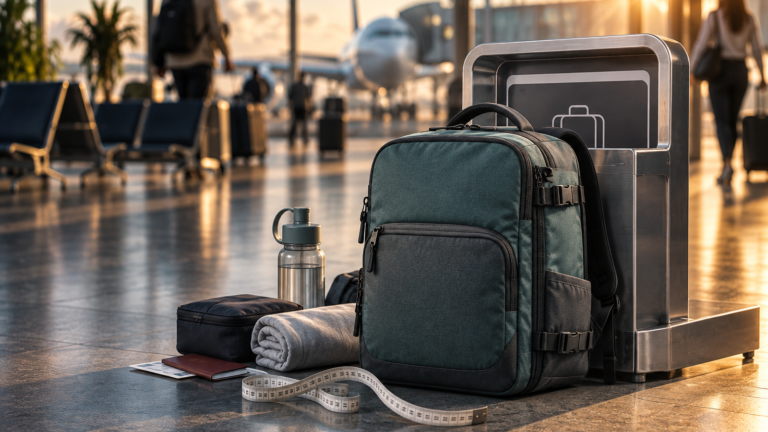
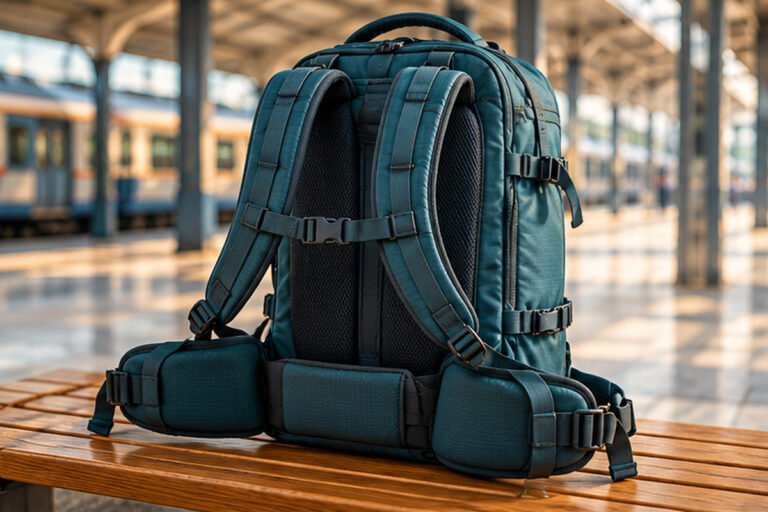
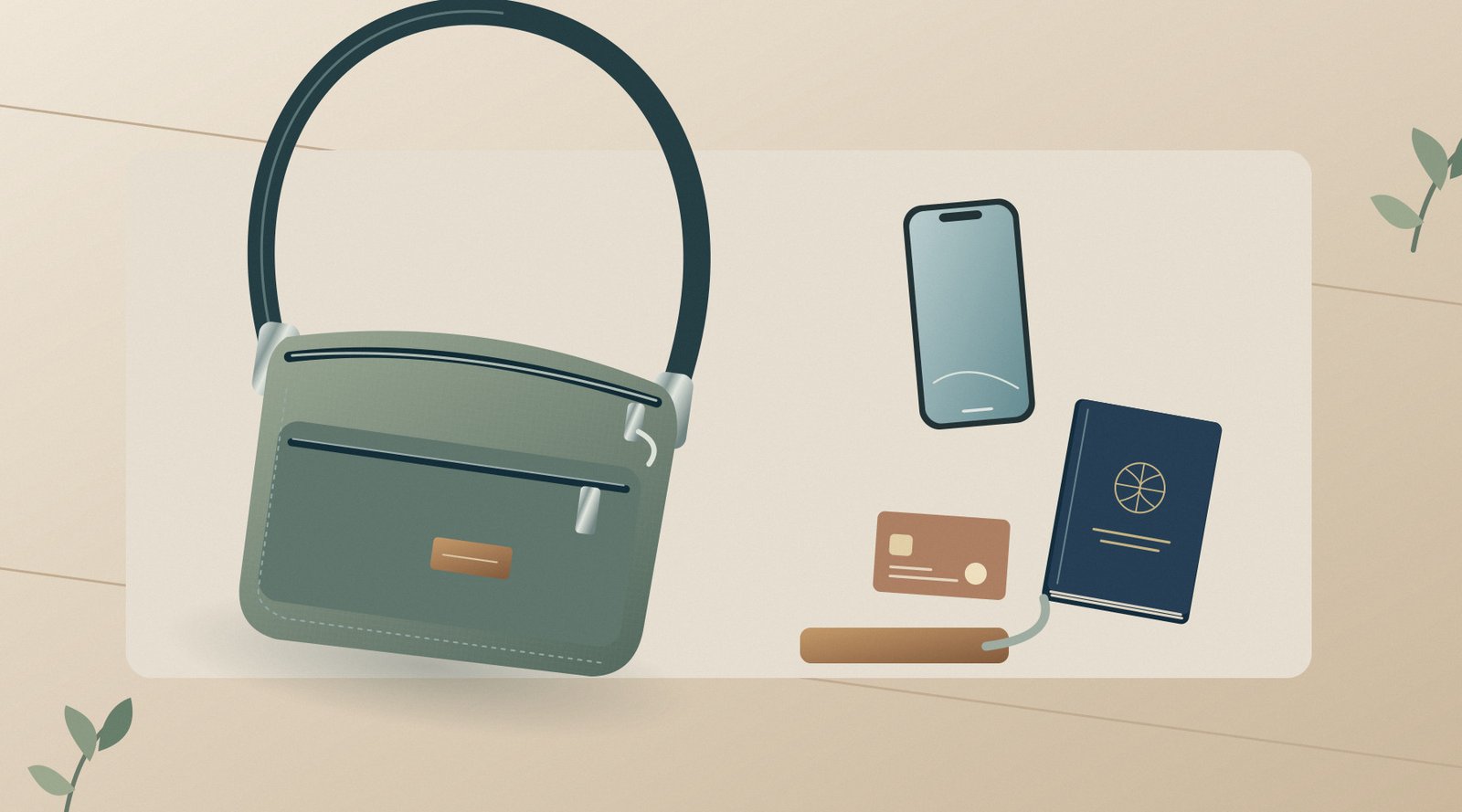
Illustrations are original concept drawings. They do not reproduce the named models, establish dimensions or demonstrate product performance. Buying links are provided only for identifiable destinations; a link does not guarantee an available offer, approved use or a delivery date.
Illustrations in this article were created for Taylor’s Trailblazing Travel Gear. Third-party photographs, where used, are credited beside the image or in the source list.