Personal-Item Backpack vs Tote Bag
The best underseat bag is the one that fits the rule and remains manageable all the way to your seat.
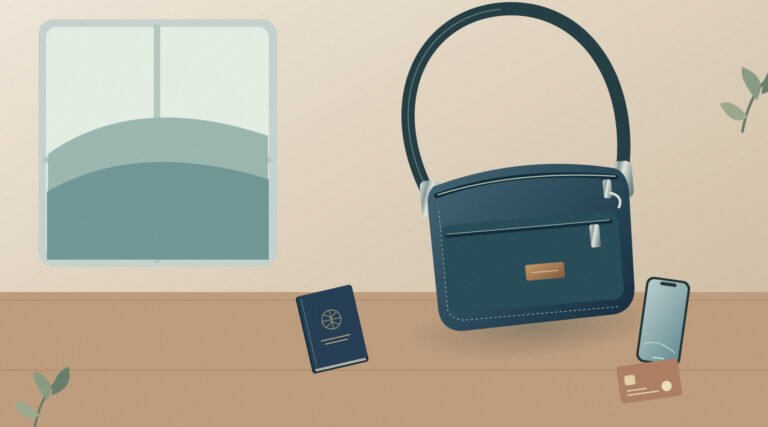
Generic bag illustration; no airline acceptance or exact product dimensions are implied.
A personal-item backpack vs tote bag comparison is really about two questions: what are you allowed to take, and how will you carry it? A backpack can be the better companion for a long station transfer, while a zipped tote can make a small flight kit easier to reach. Neither earns an underseat allowance simply because a retailer calls it a personal item.
Start with the exact booking and a realistic list of belongings. A laptop, charger, water bottle and overnight clothes create a different problem from a paperback, light layer and small pouch. The bag that looks elegant beside an empty suitcase may feel very different when you have to hold it through a delayed boarding queue.
This is a research-led comparison, not a claim of hands-on testing. The examples were selected to show meaningful differences in shape, closure and carrying arrangement. Published specifications and airline rules were checked on 11 October 2026. Suggested packing routines are practical editorial guidance; they are not measured comfort trials or guarantees of airline acceptance.
This article contains affiliate links. If you buy through them, Taylor’s Trailblazing Travel Gear may earn a commission at no extra cost to you. Recommendations and practical comparisons are research-led; no hands-on product testing is claimed.
Backpack advantage
Two shoulder straps offer a more balanced starting point for a substantial load.
Tote advantage
A broad zipped top can make a light seat-side kit easier to manage.
A secure closure
An open shopping tote is a different proposition from a zipped travel tote.
Check all three dimensions
Account for the laptop, filled pockets and the handle arrangement.
Personal-item backpack vs tote bag: the practical choice
Choose around carrying time and access frequency
A backpack is a useful starting point when you expect to walk with a substantial load and need both hands available. Two shoulder straps can keep the load more evenly arranged than a bag carried on one shoulder, although the exact fit still matters. A poorly fitted backpack can remain awkward even when its litre capacity seems ideal.
A tote is worth considering when the load is lighter and you want regular access through a broad top opening. It can sit beside you while you wait and may work neatly alongside a wheeled case. However, short handles, a narrow shoulder drop or a heavy laptop can make the carry less convenient than the simple shape suggests.
Do not choose a style before checking dimensions
The correct sequence is allowance, contents, carrying method and then product. Reversing it often leads to rationalising an unsuitable size because you already like the appearance. A compact-looking tote can be too wide, while a backpack sold as a daypack can be too tall for the same underseat allowance.
You do not need to declare one category the winner for every trip. A sound backpack you already own may be best for an active city break, and a zipped tote may serve a different short transfer. The goal is a bag that matches the most demanding part of this journey without making ordinary access unnecessarily difficult.
Establish the allowance included in your booking
Read the small-bag rule separately from the cabin-bag rule
On 11 October 2026, Ryanair included a 40 x 30 x 20cm small personal bag with all fares. Its Priority and 2 Cabin Bags option added a separate 55 x 40 x 20cm, 10kg cabin bag. Those are not interchangeable categories, and a backpack that meets the larger allowance does not automatically travel as the included small bag. [1]
easyJet’s published small underseat limit was 45 x 36 x 20cm. Its larger cabin-bag limit was 56 x 45 x 25cm, with entitlement depending on the booking or an added option. The published maximum was 15kg per cabin bag, with passengers required to lift and carry it themselves. A generous permitted weight is not a recommendation to carry that much. [2]
Check every relevant leg
A trip involving more than one carrier needs more than one check. Record the smallest applicable dimensions and any relevant weight or piece-count conditions. Do not assume that an outbound bag accepted by one airline establishes the rules for the return journey with another.
Keep the booking confirmation accessible, and review the live rules before departure. Product pages and older articles can use superseded limits or broad statements such as ‘airline approved’. A bag manufacturer does not decide the allowance in your reservation. Equally, a fellow traveller’s successful trip is not a substitute for the dimensions your own carrier publishes.
Use product dimensions as a screening tool
Compare the whole shape, not only one convenient side
The following examples show why a capacity label cannot decide personal-item suitability. Dimensions are reordered consistently for comparison, using the identified product sources rather than measurements made for this article. The screening comments assume the bag retains its published shape; a packed bag still needs checking.
| Product or size | Published dimensions | Published empty weight | Small-bag screening point | Product reference |
|---|---|---|---|---|
| Cabin Max Metz 24L | 40 x 30 x 20cm | 600g | Nominally matches the cited Ryanair dimensions; do not overfill | Official source below |
| BAGSMART Bubble 18L | 44 x 28 x 13cm | 360g | Dimensions are within the cited easyJet limit, not Ryanair’s 40cm side | See Bubble sizes; select 18L |
| BAGSMART Bubble 20L | 48.5 x 31 x 15cm | 600g | Longest side exceeds both cited small-bag limits | View Bubble 20L details |
| BAGSMART Paz 20L Totepack | 42 x 32 x 12cm | 480g | Nominal dimensions suit easyJet screening, not the smaller Ryanair box | View Paz dimensions |
| Osprey Daylite 26+6, black retailer listing | 43 x 33 x 16cm, unexpanded | 840g | Unexpanded dimensions suit easyJet screening, not Ryanair’s cited limit | View Daylite stock status |
| BAGSMART Blast 28L | 42 x 31 x 20.5cm | 900g | Do not round its 20.5cm depth down to a 20cm allowance | View Blast 28L details |
The black Daylite listing was sold out when checked. Bubble links initially show the 20L product selection; choose 18L explicitly when comparing that smaller version. Nominal fit is not a promise about filled pockets, rigid contents or the final bag at the gate. [3] [4] [5] [6] [7]
Treat the table as a shortlist filter
A clear dimensional mismatch is a reason to choose another candidate or a different baggage allowance, not an invitation to negotiate with the sizer. Flexibility can change a lightly packed bag’s shape, but you need to establish the actual result without damaging belongings or relying on force.
Also distinguish a useful comparison from an immediate shopping recommendation. The unavailable Daylite variant remains informative about shape, while a current offer must be checked separately. Choosing a bag for a flight next week requires a suitable product, a genuine offer and a realistic delivery date, not just a favourable specification row.

Measure the packed bag rather than the empty shell
Include the items that make the structure rigid
Pack the laptop or tablet, its protective sleeve and the items that normally sit beside it. Those can determine the minimum useful dimensions even when the surrounding fabric compresses. A tote that folds beautifully when empty may not become shorter once a rigid laptop occupies nearly its entire width.
Measure the widest and deepest filled points, not just the flat base panel. Exterior pockets, a bottle and an overfilled front organiser can all change the outline. Arrange flexible handles and straps as they will be stowed, following the carrier’s requirements. Do not let a photograph of the flat empty bag substitute for this check.
Avoid a forced-fit strategy
A bag that closes normally and fits with a little room to spare is a less stressful choice than one that works only when squeezed into a perfect arrangement. You will need to repack after security and may add a layer during the journey. Leave enough flexibility for that ordinary change rather than using every possible millimetre at home.
A homemade outline can help you visualise dimensions, but it is not the airline’s official sizer or an acceptance guarantee. Keep the check simple and honest. If you must remove essential items, leave the zip partly open or bend a device to fit your mock-up, the bag is not solving the intended problem.
Separate capacity from the space your belongings can use
A litre label does not describe every compartment
A tote and backpack with similar advertised volumes can arrange that space very differently. One may provide a broad, shallow chamber for a laptop and documents. Another may have a taller compartment with an organiser panel and bottle pockets. The number does not tell you whether your awkwardly shaped charger or lunch container fits conveniently.
Likewise, exterior dimensions describe a bounding shape, not a measured empty interior. Padded panels, seams, tapering and compartment divisions occupy or constrain space. Avoid multiplying three measurements and treating the result as an exact usable capacity that disproves every manufacturer’s volume figure.
Think about the specific difficult item
Identify the item most likely to dictate the bag: a laptop in its sleeve, a camera insert, a lunch box or spare shoes. Check its own dimensions and access route before considering how many small clothing pieces fit around it. This often resolves the tote-versus-backpack choice more quickly than arguing over a few nominal litres.
A bag with more volume can still make that item harder to reach. For example, a tall pocket may accept a bottle but place it beneath the top handle when the bag is packed. Look for a workable arrangement of the real objects you carry, not just a larger number on the product page.
Match the bag to the whole route
Include the parts of the journey between vehicles
Write down the likely transfers: walking from home to a station, changing platforms, carrying the bag through the airport and reaching accommodation after arrival. A journey marketed as a short flight can include a surprisingly demanding amount of carrying. Do not choose a tote solely because the time in the aircraft is brief.
A backpack can be more practical when you need a hand for a rail or another piece of luggage. Nevertheless, keep its depth in mind in busy spaces and remove it appropriately when it obstructs others. Being hands-free is useful only if the bag remains controlled rather than swinging into seats or fellow travellers.
A wheeled case changes the calculation
When the personal item can be supported appropriately on a suitcase for much of the route, a tote’s shoulder-carry disadvantage may matter less. However, stairs, overhead stowage and uneven surfaces will still require the bags to be handled separately. Consider those moments instead of assuming the personal item will never leave the trolley.
A trolley sleeve helps only when it matches the case and does not obstruct the release or make the combination unstable. The personal item’s weight still exists. It has not become negligible simply because the wheels carry it for part of the journey. Plan how you will lift, separate and stow the two pieces safely.
Check tote handles with the clothing you will wear
Handle drop can matter more than a padded panel
Put the tote on your shoulder while wearing a coat or jacket similar to your travel clothing. Check whether the opening sits comfortably below your arm and whether you can remove the bag without an awkward movement. A handle arrangement that works with a thin shirt may be frustrating over a bulky coat.
Keep the intended contents in mind. A broad laptop can push the bag away from your body, while a hard bottle near the upper edge can make the carry feel uneven. Try a sensible arrangement before rejecting the design, but do not rely on carrying it in an unusual position that you would not maintain during a real transfer.
Avoid choosing solely from a light-load photograph
An empty puffy tote can look soft and effortless. The result with your normal kit depends on strap width, attachment points, load position and personal fit. Examine where the handles join the body and whether the main closure remains easy to use when the bag is on a stable surface.
For a smaller tote reference, compare the Bubble range and select 18L rather than assuming the 20L version shares its dimensions and weight. The smaller version is the more relevant candidate for the cited easyJet dimensional screen. That is a size-based judgement, not a personal comfort endorsement. [4]
Check backpack straps and the back panel separately
Two straps do not guarantee a useful fit
Adjust both shoulder straps so the pack sits securely without pulling you into an unnatural posture. Follow the maker’s guidance for any sternum strap or belt. Notice whether the strap shape rubs, whether the back panel is too long and whether a hard object presses through the padding. You should not need an exaggerated adjustment to make an obviously unsuitable pack tolerable.
Avoid judging the fit while wearing only an almost empty bag. At the same time, do not undertake a prolonged loaded trial without understanding the seller’s return conditions. Ask what is permitted and keep any appropriate comparison controlled and proportionate to deciding whether the product suits you.
Choose restraint over unnecessary features
A small personal-item backpack may not need a substantial hipbelt, and a minimal belt is not equivalent to a load-bearing harness. Look for features that serve your actual kit. Extra buckles and straps can be inconvenient if they hang loose around seats or catch when you pull the bag from under the seat.
The Daylite 26+6 retailer reference provides a useful unexpanded shape comparison, but the identified black variant was unavailable. Compare any alternative offer carefully and remember that expanding it changes the bag you must measure. Do not treat the unexpanded table entry as approval for the expanded configuration. [8] [6]
Choose a closure that keeps the contents controlled
An open shopper and a zipped travel tote are different
A wide opening makes access easy, but it also makes it easier for loose items to fall out when the bag tips. For a personal item that will be stowed, moved and pulled from beneath a seat, an appropriate main closure is a practical advantage. Check that it can close normally with your actual load inside.
The Bubble tote sizes have a zipped main opening in the manufacturer’s description. That is a useful feature to inspect, but it is not an anti-theft guarantee or proof that the bag can be left unattended. Keep valuables in a deliberate place and close the bag when you are not retrieving something. [4]
Keep small objects from gathering at the bottom
A tote’s open chamber can become a collection of cables, receipts and loose items unless you give them a simple home. One small pouch can solve that without adding a rigid organiser that takes up much of the bag. By contrast, a backpack’s numerous pockets can create the opposite problem: forgetting which of several similar sections contains the item you need.
Use one consistent location for travel documents and one for small technology. Avoid placing essential items in an outer pocket simply because it is the easiest one to reach. Access convenience and security awareness need to be considered together, particularly in crowded public places.
Compare laptop fit and the way you remove it
Screen size is only a rough starting point
Measure the device with any sleeve you plan to keep on it. A compartment advertised for a particular screen diagonal may not suit every device body, protective case or accessory attached to it. Check the opening width as well as the space inside so you are not forcing a rigid object through an unsuitable mouth.
Keep the charger in a position that does not press hard against the screen or create a lump at your back. A separate laptop compartment can be useful, but it does not automatically add usable clothing capacity. The packed device may occupy space that the empty product photograph makes look available for something else.
Make removal possible without unpacking everything
The BAGSMART Blast 28L has a separately described laptop-access arrangement, which is useful to examine for work travel. Nevertheless, its published depth exceeds the 20cm small-bag examples above, so it should not be presented as a guaranteed free underseat choice on those dimensions. Access and allowance must be judged independently. [7]
Follow airport instructions about removing electronics; the bag’s design does not override the checkpoint procedure. At home, practise the physical task on a stable surface. If taking out the laptop requires spilling clothing or loosening a tightly packed tote, simplify the load or consider a more suitable access arrangement.
Pack the seat-side kit before the overnight kit
Identify what you need while seated
A phone cable, reading material, light layer and small comfort pouch may need to remain accessible during the flight. Put these in a predictable part of the bag rather than distributing them among clothing. Keep any essential medication according to its storage instructions and your travel needs, not merely in whatever pocket remains available.
A tote can offer a useful broad opening for this light kit, while a backpack can work just as well with a suitable top pocket or small pouch. The difference is how far you need to open it and whether the rest of the contents stay controlled. Test the task in the orientation in which the bag will be stowed.
Add clothing only after preserving that access
Place an overnight clothing bundle where it does not block the items you will use repeatedly. You do not need to access spare socks every time you look for a cable. Conversely, do not pack a heavy charger beneath a soft clothing bundle simply because it makes the top look tidy.
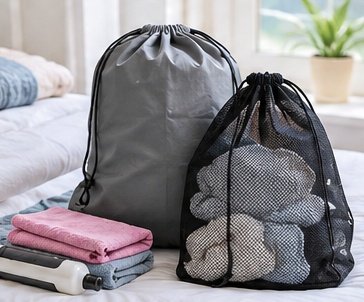
A small selection from BAGSMART’s compression cube set is one organisational option, but carrying the whole set may be unnecessary. Use existing pouches first and check packed organiser dimensions before buying more. The best system for a personal item is often simpler than the one you would use in a large suitcase. [9]
The linked Light Blue selection was notification-only on 11 October 2026. An existing pouch is sufficient while an appropriate current offer is unavailable.
Protect against spills and damp surfaces
Keep liquid containment separate from bag style
A bottle pocket can be convenient, but a poorly closed bottle can still leak into or onto the rest of the bag. Check the lid and keep vulnerable electronics appropriately protected. Do not place a drink container against a device simply because a tote’s chamber has enough width for both objects side by side.
A backpack can also put a leaking item above the clothing or technology you care about. Think about the consequence of a spill in the actual orientation used during stowage. A bag that stands upright during packing may lie flat beneath the seat, changing which compartment is below the bottle.
Do not overread water-resistant fabric claims
Water-repellent or water-resistant wording does not establish that the entire bag is waterproof. Closures, seams and the way the bag is used remain relevant. A soft tote with a zip should not be treated as a dry bag, and a backpack’s coated exterior is not a guarantee for prolonged exposure or immersion.
Use appropriate additional protection for vulnerable contents where the journey calls for it. Keep wet clothing separate rather than relying on the outer fabric to manage moisture already inside. After the trip, follow the product-specific cleaning and drying instructions instead of assuming that every fabric bag tolerates the same treatment.
Assess trolley sleeves without ignoring the carry you still need
The sleeve is a compatibility feature, not extra baggage allowance
A personal item placed on a suitcase still counts as a separate piece when the carrier’s rules say so. A neat stacked arrangement does not combine two bags into one entitlement. Check the piece count in the booking and be ready to separate the items for stowage or handling when needed.
Physically, compare the sleeve with the suitcase’s grip and tubes. It should fit without forcing, obstructing the release or allowing the bag to drag against the wheels. Avoid assuming that a larger secondary bag becomes stable merely because its sleeve passes over the handle.
Remove the secondary bag when the situation requires it
Before lifting a case, changing handle height or negotiating a place where the stacked arrangement is awkward, separate the bags as appropriate. Use designated carrying handles and keep the load manageable. Do not lift the whole combination by the telescopic suitcase handle.
A tote can be quick to lift off, whereas backpack straps may need tidying before stacking. On the other hand, a backpack gives you another carry option when the floor is unsuitable for rolling. Think about the transition between those modes, because that is where a superficially tidy arrangement can become cumbersome.
Consider a convertible totepack carefully
A hybrid can solve a specific transition
A totepack offers more than one way to carry the same bag. It can be useful when you want shoulder or hand access at the airport and backpack carry for a longer walk. However, the quality of the transition matters: loose straps, awkward buckles or handles that press against your back can reduce the benefit.
The BAGSMART Paz 20L Totepack is a current example with published dimensions of 42 x 32 x 12cm and a stated weight of 480g. Those figures make it an easyJet-size screening candidate on the cited rules, not a nominal match for Ryanair’s smaller box. The real packed configuration remains the deciding check. [5]
Do not expect two perfect bags in one
A hybrid design may compromise shoulder-strap structure, handle arrangement or pocket access to offer both modes. That can be worthwhile if you will genuinely use both. It is less useful when the extra straps simply add complexity to a trip where one carrying method would have been sufficient.
Try switching modes with the bag safely supported and the main closure shut. Check what happens to the unused straps and whether the access pocket stays convenient. A successful conversion should not require you to remove half the contents or leave something dangling near the floor.
Keep the weight budget honest
Count the bag and the organisers
The empty bag is part of the weight you carry, as are laptop sleeves, pouches and any detachable strap. Compare the complete system rather than choosing a lightweight tote and then adding a substantial internal organiser. Similarly, a backpack with built-in compartments may reduce the need for separate pouches, but only if those compartments actually suit the items.
Use your own comfortable limit as well as the airline’s maximum. A legal load can still be unpleasant to carry through a station. Avoid a medical or universal body-weight rule here; comfort and capability differ, and the appropriate response to pain or physical difficulty is to reduce or change the load rather than force the trial.
Weigh the intended departure configuration
A Go Travel Digital Pro Scale is an optional tool when you need a weight check, although an appropriate scale you already own may suffice. Follow the instructions, use a sound designated carrying point and do not lift more than you can safely manage. The purpose is baggage planning, not testing the strength of a handle or strap. [10]
Include the bottle in the condition in which you expect to carry it and account for items added after the initial packing session. An empty-bottle photograph does not describe the load after refilling. Leave a little practical capacity for the layer you may remove rather than assuming the bag stays unchanged all day.
Work through three realistic traveller profiles
The laptop-carrying train-and-flight traveller
This traveller needs hands free for tickets, doors and platform changes, while the device and charger create a substantial part of the load. A suitable backpack is the logical starting point, particularly when the walk to accommodation may be longer than expected. The important checks are device fit, comfortable adjustment and access without unpacking clothing.
A tote could still work for a lighter device and short transfers alongside a roller. However, choose it after trying the realistic load rather than assuming a work-bag appearance equals travel practicality. The longest carry, not the most attractive airport photograph, should guide the decision.
The light weekend traveller with a wheeled case
Here the personal item may hold only documents, a light layer and a small flight pouch because clothing is elsewhere. A zipped tote can be convenient, especially when it closes securely and sits properly on the suitcase. Its quick access may matter more than a technical backpack harness that will rarely be used.
Still check the final dimensions with the layer inside. A tote that meets an allowance empty can become wide or deep when filled casually. Keep the load controlled, and make sure you can carry it separately when the suitcase needs lifting or is placed in an overhead locker.
The one-small-bag budget traveller
This traveller needs the bag itself to match a strict small allowance while carrying all essentials. Begin with the dimensional requirement and a carefully edited packing list. The current Metz 24L is a useful official reference because its stated size matches the cited 40 x 30 x 20cm Ryanair box, though overpacking can change that result. [3]
A larger tote or backpack does not become a better-value choice if it requires an additional baggage purchase you had not planned. Equally, removing essential items to force a tiny bag into service can be false economy. Compare the complete travel plan, not just the purchase price of the bag.
Compare at home without compromising the return decision
Rehearse the small actions you will repeat
Subject to the seller’s trial conditions, check putting the bag on, taking it off, reaching the main pocket and placing it in a suitable mock stowage space. Keep the surface clean and avoid rubbing new fabric or handles against rough objects. A short, careful comparison can identify poor access without becoming a prolonged wear test.
Use the same belongings in each candidate. Do not judge the tote with only a paperback and the backpack with a laptop and overnight clothes. Adjust the arrangement sensibly for the different design, then note what was easier or more awkward. The comparison should reflect the trip rather than favouring the bag you expected to prefer.
Record the reason for your decision
For typical UK trader purchases online, government guidance distinguishes cancellation rights from remedies for faults and limits excessive handling. Read the relevant terms, retain packaging and ask before a substantial trial. Do not assume that using a bag for a weekend trip is the same as examining it at home. [11]
Balance purchase price against the trip it must serve
Compare the complete arrangement
A bag’s price is only one part of the decision. Consider any required organiser, protective sleeve, delivery charge or additional baggage allowance, without inventing a future airline fee or assuming a promotion will apply. Also consider whether you already own something suitable. A new personal item is not necessary merely because a different style looks more fashionable.
Keep sales-channel terms separate. A manufacturer, marketplace seller and specialist retailer can have different offers, delivery arrangements and return processes. Check the actual party selling the product and the selected size or colour before paying. A product name shared across several listings does not guarantee an identical version or offer.
Pay for the feature that solves your problem
If your main frustration is access, inspect the opening and pocket layout. For longer carrying time, prioritise fit and a manageable load. Where allowance compliance is the issue, pay attention to the shape and dimensions. Do not spend more on extra pockets, a vacuum feature or a fashionable finish when those do not address the issue that made the previous bag unsuitable.
This gives you a clearer reason to choose a modest tote, a more structured backpack or a convertible design. A purchase is better value when it solves a repeated need, not when it simply includes more features. Keep your shortlist small enough that you can compare those needs properly.
Pros, cons and common mistakes
Practical strengths
- A backpack can suit longer hands-free carries.
- A zipped tote can make a lighter flight kit accessible.
- A suitable hybrid can help when carrying modes genuinely change.
Limits to keep in mind
- Either style can exceed the booked allowance.
- Tote handles can become awkward with a substantial load.
- Backpack straps and pocket depth need a stowage check.
Backpack strengths and limitations
A suitable backpack offers hands-free carrying and a practical way to organise a substantial load. It can work particularly well for walking transfers and a laptop-based kit. Its drawbacks may include less convenient seated access, unused straps and the need to remove it carefully in confined spaces. Those disadvantages vary with the design rather than applying equally to every pack.
Common mistakes include choosing a tall hiking pack from its litre label, assuming padding guarantees fit and forgetting the depth of filled outer pockets. Another is buying an expandable pack for a small allowance and measuring only the unexpanded version while planning to use the extra space.
Tote strengths and limitations
A zipped tote can make a light kit accessible, offer a broad opening and pair neatly with a suitable wheeled case. Its limitations become more noticeable with a heavy load, narrow handles, an awkward shoulder drop or an oversized rigid item. A broad chamber also needs a simple plan for keeping small belongings controlled.
Avoid treating an open shopping tote as equivalent to a closed travel tote, or assuming the smaller and larger versions of a product have interchangeable dimensions. The table’s Bubble 18L and 20L examples show why that distinction matters. Choose the exact size, then check the bag as packed rather than as displayed.
Frequently asked questions
Can either a backpack or tote count as a personal item?
Yes, the style alone does not determine the category. What matters is the allowance included in the booking, the packed dimensions and any other applicable conditions. A tote can be too wide and a backpack can be too tall. Read the carrier’s current small-bag rule, not merely its larger cabin-bag allowance, and check the complete packed configuration before travel.
Is a 20L tote necessarily smaller than a 25L backpack?
Not in every dimension. Litres describe a stated capacity, while the bag’s shape determines how that space is arranged. A broad, shallow tote can have a longer side than a taller or deeper backpack. The Bubble 20L example has a published 48.5cm side, which exceeds the cited small-bag limits despite its modest capacity label. Measure the product you will actually use. [4]
Which is better for carrying a laptop?
Start with device protection, compartment measurements and carrying time. A well-fitting backpack is often a practical choice for a substantial laptop-based load and longer walks. A suitably sized zipped tote can work for a lighter device and short transfers. In either case, check the device with its sleeve, make removal straightforward and keep chargers or bottles from pressing against vulnerable surfaces.
Is a tote with a trolley sleeve automatically a good flight bag?
No. The sleeve only provides a possible way to attach it to a suitcase. You still need the correct packed dimensions, a secure closure and a manageable separate carry. Check the sleeve’s fit on your actual case and whether it obstructs the handle release or makes the combination unstable. It does not merge two bags into one airline allowance.
Can I carry a small handbag as well as my personal-item backpack?
Do not assume that a second bag is included. Check the carrier’s piece-count rules and the entitlement in your booking. A small handbag may need to fit inside the permitted bag unless your allowance or a specific exception says otherwise. Plan enough practical room for that arrangement rather than discovering at the gate that every compartment is already full.
Should I buy a convertible totepack instead?
A convertible design is worth considering when you will genuinely switch between carrying modes. Check the comfort of both arrangements, where unused straps go and how easily you can reach essentials. The hybrid is not automatically the best of both categories. It may add complexity or compromise the strap structure compared with a dedicated backpack or simple tote.
How do I decide when both styles meet the allowance?
Use the realistic load and compare the actions your trip repeats. Walk through a short, permitted fit check, remove the device, retrieve a cable and stow the bag in the intended orientation. Give more weight to the longest carrying stretch and the most frequent access task than to appearance alone. The easier complete routine is the more useful choice.
The recommendation: fit the booking, then fit your routine
Choose a backpack when a meaningful load and longer carries make hands-free movement valuable. Choose a zipped tote when your kit is lighter and repeated access matters more. Consider a hybrid only when you will use both modes enough to justify the extra arrangement. In every case, check the exact size rather than relying on the category name.
The best purchase may also be no purchase. If your existing bag meets the allowance, carries comfortably and gives you controlled access to the essentials, use it. A simpler kit and a deliberate pocket arrangement can solve more problems than changing from one fashionable bag style to another.
Sources and fact-checking notes
Sources reviewed on 11 October 2026. Product dimensions and features are published specifications, not measurements from samples tested for this guide. Practical routines, comparisons and scenarios are editorial judgement. Check the selected product version, current offer and relevant travel rules before buying or travelling.
- Ryanair Help Centre: bag policySmall personal bag 40 x 30 x 20cm; Priority and 2 Cabin Bags includes an additional 55 x 40 x 20cm, 10kg cabin bag. Recheck the actual booking before travel.
- easyJet: cabin bagsSmall underseat allowance 45 x 36 x 20cm; larger paid/included allowance 56 x 45 x 25cm, subject to booking conditions. Published maximum 15kg per cabin bag and self-lifting requirement.
- Cabin Max: Metz 24L, 40 x 30 x 20cmCurrent 24L model, stated 600g and suitcase-style opening. This is not the different Metz 20L model.
- BAGSMART UK: Bubble tote, 18L and 20L sizesSeparate size specifications: 18L 44 x 28 x 13cm / 360g; 20L 48.5 x 31 x 15cm / 600g. The destination initially selects 20L; choose the intended size explicitly.
- BAGSMART UK: Paz 20L TotepackManufacturer dimensions 42 x 32 x 12cm, stated weight 0.48kg and convertible carry design. Capacity does not establish airline acceptance.
- Case Luggage: Daylite 26+6, black 10006130Retailer lists 43 x 33 x 16cm and 0.84kg unexpanded. Black was sold out when checked; this is a comparison listing, not a confirmed immediate offer.
- BAGSMART UK: Blast 28L Travel BackpackManufacturer dimensions reordered as height x width x depth: 42 x 31 x 20.5cm; 0.9kg. Generic underseat marketing is not airline-specific approval.
- Osprey UK: Daylite 26+6 Expandable Travel BackpackSuitcase-style main opening, expansion and carry-system reference. Inspect the centimetre specification and the precise edition before buying.
- BAGSMART UK: six-piece compression packing cubesExact supplied-style UK product destination; compare the currently selected set and dimensions. The selected Light Blue set was notification-only on the review date. No claimed percentage saving is adopted.
- Case Luggage: Go Travel Digital Pro Scale 2004.101Product existence and intended luggage-weighing function. Its stated capacity is not a safe lifting target or a telescopic-handle test load.
- GOV.UK: accepting returns and giving refundsUK trader guidance on cancellation, necessary handling and faulty goods. General information, not a decision on an individual dispute.
Illustrations in this article were created for Taylor’s Trailblazing Travel Gear. Third-party photographs, where used, are credited beside the image or in the source list.