Best UK-to-USA Travel Plug Adapters
A British plug fitting an American socket is only the first check. The device input label decides the rest.
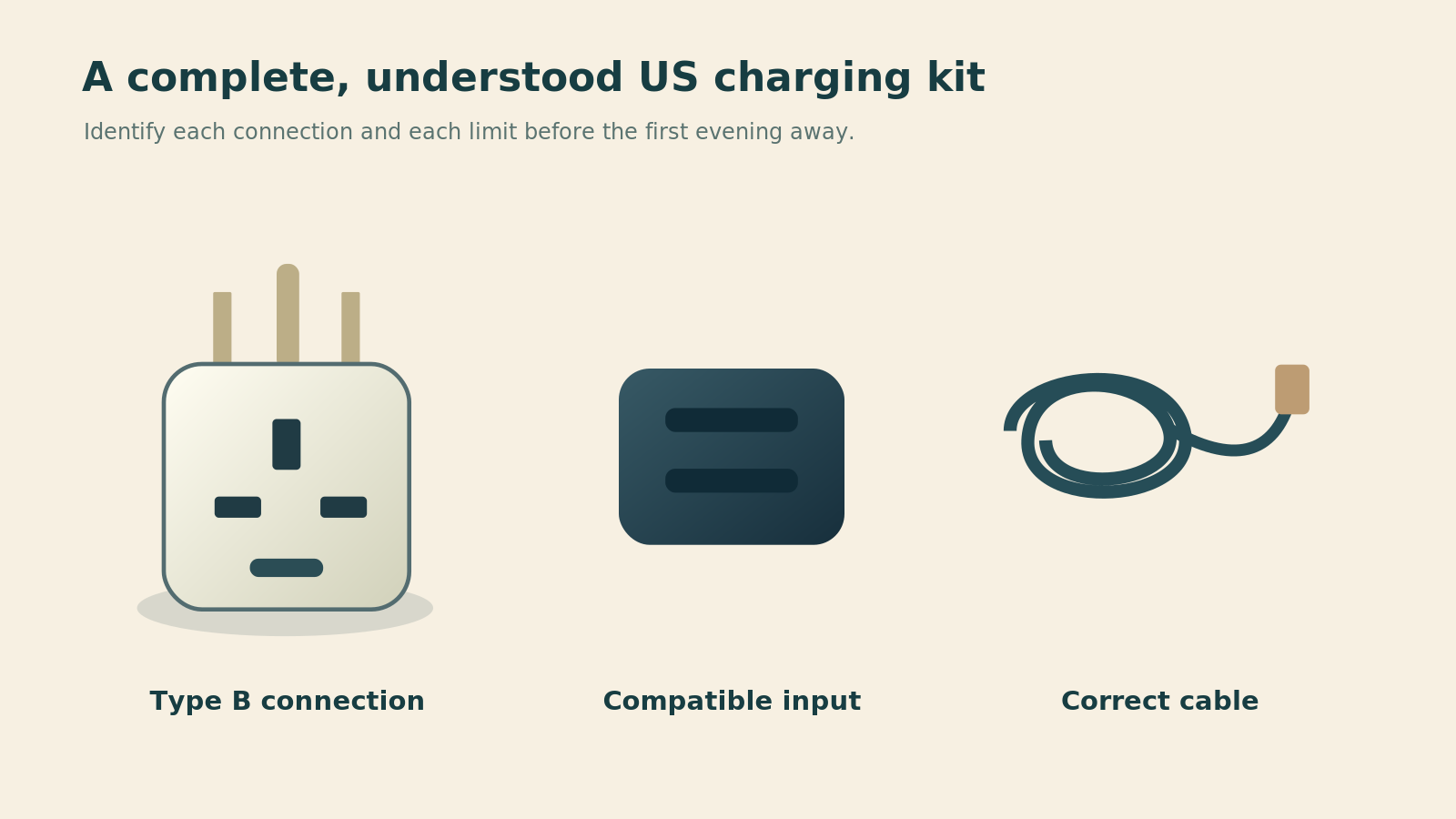
Choosing UK-to-USA travel plug adapters involves more than finding somewhere to insert a British three-pin plug. The United States uses a nominal 120V, 60Hz supply and Type A or Type B outlets. A travel adapter changes the physical connection, but it does not make a UK-only appliance suitable for that different supply. The input label on the equipment must be checked before anything is plugged in. [1]
For many trips, the useful purchase is a straightforward earthed adapter paired with a charger you already own. Other travellers benefit from built-in USB-C, an existing USB-A lead or a multi-country unit. Those are different needs, and a large port count does not establish that an adapter can charge a laptop at the power you expect.
This comparison contains five research-led options with distinct roles. It does not claim hands-on electrical testing, approval of a particular hotel installation or guaranteed compatibility with every British appliance. Published power limits and unresolved details remain separate from practical buying judgement.
Go Travel 526
A simple earthed UK-to-USA adapter for suitably rated equipment.
Go Travel 624
25W USB-C and one mains socket, with separate limits for each job.
SKROSS PRO Light AC45PD
45W on USB-C alone; the shared USB mode is substantially lower.
1UK-to-USA travel plug adapters: make the device check first
Read the mains input, not the battery label
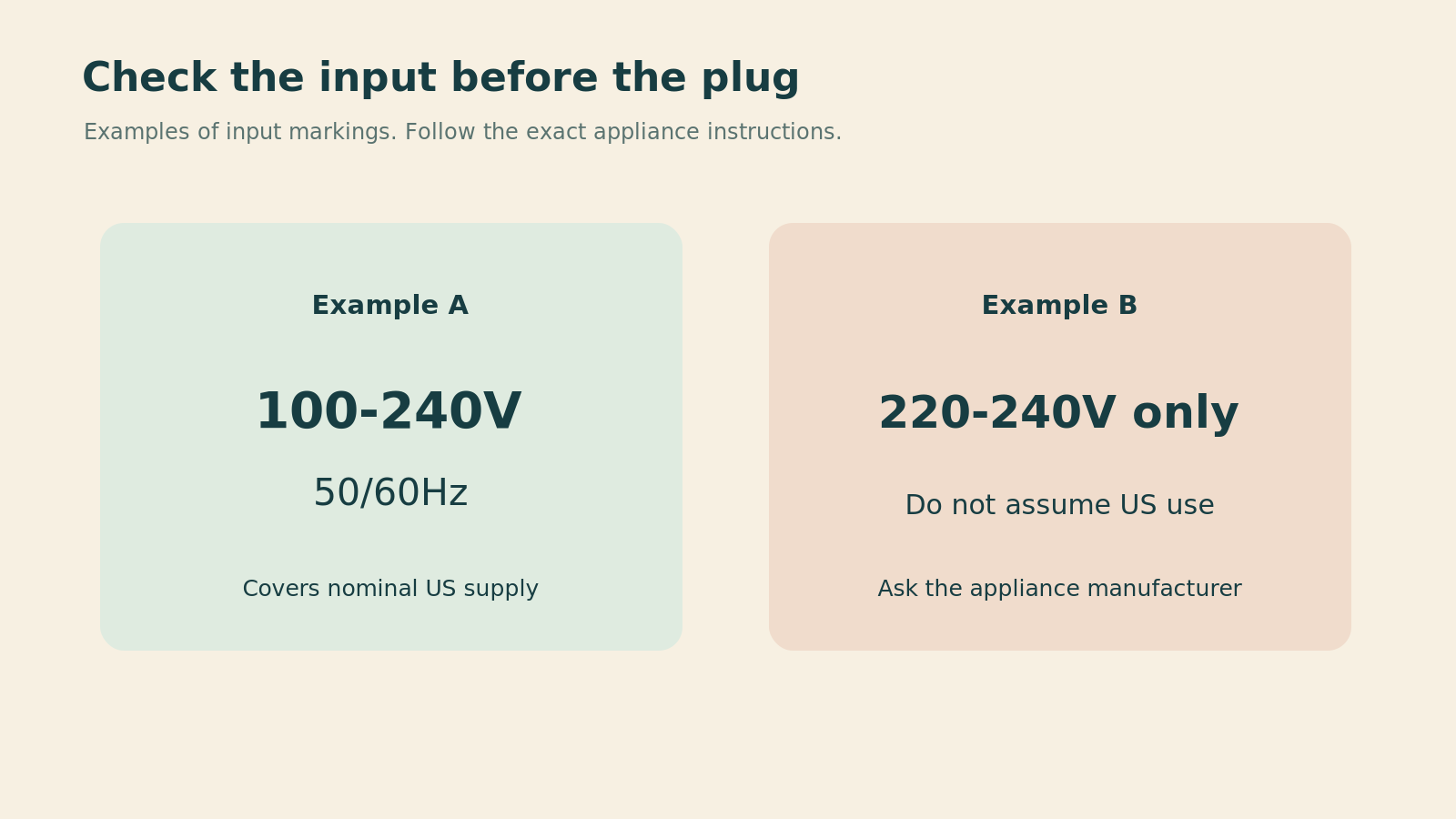
Find the input marking on the charger or appliance that will connect to the wall. A label stating 100-240V, 50/60Hz covers the nominal US supply, provided the equipment is otherwise appropriate and used according to its instructions. A marking limited to 220-240V does not establish compatibility with 120V, regardless of whether the plug fits the adapter. [1][9]
Do not read the phone battery's voltage or the laptop charger's USB output as though it were the wall-input rating. Those numbers describe different parts of the system. A clear photograph of the relevant input label is useful when asking the manufacturer a compatibility question before travel.
Avoid buying a converter by guesswork
A voltage converter or transformer is a different device from the adapters compared here. Suitability can depend on the appliance type, demand and frequency requirements, so a generic shopping recommendation is not enough for every situation. Electrical Safety First advises seeking manufacturer guidance when the equipment is not dual-voltage or compatibility is unclear. [9]
For a short trip, leaving an unsuitable appliance at home can be simpler than carrying a bulky conversion system. An appropriate device provided locally or a clearly specified travel alternative may solve the problem more cleanly. The aim is a documented working setup, not a collection of products whose labels sound reassuring together.
| Option | Integrated USB | Mains specification stated | Best role / caveat |
|---|---|---|---|
| Go Travel 526 | None | 120V / 10A | Use a suitable existing charger with Type B. [3] |
| Go Travel 624 | USB-C up to 25W | 120V / 13A | Phone-focused port plus a mains socket. [4] |
| Go Travel 626 | USB-A up to 12W | 120V / 13A | Existing USB-A cables, not USB-C PD. [5] |
| Go Travel 640 Worldwide | USB-A 12W; USB-C 15W | Configuration-dependent; follow exact unit | Multi-country role; combined USB budget not confirmed. [6] |
| SKROSS PRO Light AC45PD | USB-C 45W alone; both USB ports 24W shared | 7A; power depends on supply voltage | Higher USB-C output, but not 45W plus 20W simultaneously. [7][8] |
Published specifications checked 9 October 2026. Verify the exact model, variant and supplied instructions before use.
2Type A and Type B: understand the missing earth pin
The wall connection matters
Type A has two flat pins, while Type B adds a grounding pin. An adapter intended for a Type B outlet needs the corresponding grounded connection. A two-slot outlet is not a reason to remove the adapter's earth pin, use force or add an improvised component. Match the product to the outlet and the appliance's requirements. [1][2]
The five selections here should be approached through their documented UK-input and US-output configurations. A worldwide adapter can offer several outputs, but only the correctly selected and fully engaged configuration is relevant at the moment of use. Do not judge suitability from the other plugs folded inside the unit.
Double-insulated equipment is a separate category
Electrical Safety First identifies Class II equipment by the double-insulation symbol, one square inside another, and warns that some travel adapters are suitable only for such equipment. That does not mean an unearthed adapter can be used indiscriminately with any British plug. The appliance classification and the adapter specification must agree. [2]
When the required connection is unavailable or uncertain, ask the accommodation for a suitable outlet rather than improvising. A photograph may help the manufacturer identify an outlet type, but it cannot verify the installation's condition or grounding. Keep the compatibility decision separate from assumptions about the room's electrical safety.
3Go Travel 526: the straightforward choice for your own charger
The relevant specification
The 526.101 UK-USA model is an earthed adapter for the US three-pin connection, with no USB charging. Go Travel lists a 120V, 10A maximum and dimensions of 59 x 58 x 49mm. The manufacturer's BS 8546 statement is product information, not an independent certification performed for this review. [3]
This is the first option to investigate when you already have a charger with a suitable mains input. You retain familiar ports and cables, while the adapter performs one clear job. It also avoids paying for an integrated USB port whose output might be below the needs of your main device.
Keep the complete arrangement manageable
A small adapter can still become awkward when a large charger and several leads are attached. Position the equipment so it does not pull on the outlet or rely on a cable to hold it in place. The useful measure is the whole connected setup, not the adapter's dimensions in isolation.
Choose the 526 for a confirmed Type B outlet and appropriately rated equipment. It is not a universal recommendation for UK hairdryers, nor a way to change the supply reaching the socket on its front. The simple design makes the decision clearer, but the appliance input and total-load checks remain necessary.
4Go Travel 624: a 25W USB-C option alongside a mains socket
Good for a modern phone-led kit
The 624.101 World-USA USB-C adapter combines one mains socket with a USB-C output rated up to 25W. Go Travel specifies UK Type G input support, Type B output and a 120V, 13A mains maximum. Its published dimensions are 77 x 65 x 55mm, with a listed weight of 83g. [4]
The integrated port can remove a separate phone charger from the kit while leaving the mains socket available for another compatible device. That is the useful purchasing argument. It should not be sold to yourself as a full laptop-charging solution simply because the connector is USB-C.
Confirm what your device can actually request
Charging performance depends on the device, cable and supported output profiles. A 25W maximum is a ceiling for compatible use, not a promise that every connected phone receives that power. Likewise, a device requiring more power may charge differently or fail to sustain normal use; consult its maker rather than relying on the port shape.
Choose the 624 when one suitable USB-C device and one mains connection match the trip. For a work laptop plus several demanding USB devices, compare a correctly specified separate charger with the simpler 526. A more coherent complete kit can be preferable to integrated convenience that creates an output limitation.
5Go Travel 626: useful when your cables still use USB-A
A familiar lower-power connection
The 626.101 UK-USA USB-A adapter provides one USB-A port with a published 5V, 2.4A output, equivalent to 12W. The manufacturer permits simultaneous use of the USB port and mains socket, with a stated mains limit of 120V and 13A. This is not a USB-C Power Delivery model. [5]
It may suit an existing phone lead, watch cable or small accessory without requiring you to replace the whole charging arrangement. For a traveller with modest needs, using equipment already owned can make more sense than choosing the newest connector on every product.
Do not buy an unwanted cable problem
A kit based entirely on USB-C-to-USB-C leads does not become simpler by adding a USB-A-only adapter. You would need to change a lead or another component, which can cancel the apparent benefit. Lay out the cables before ordering and check both ends against the intended devices and ports.
Select the 626 for a genuine USB-A use case, not because a single-port adapter with an extra socket sounds automatically more versatile. If the integrated output would remain unused, the basic 526 plus your suitable charger is the more direct comparison. Lower output can be adequate, but it should be chosen knowingly.
6Go Travel 640: for a real multi-country itinerary
Broader connections, modest integrated USB
The 640.101 Worldwide model has sliding plug configurations and a detachable European adapter, along with USB-A rated at 12W and USB-C at 15W. Go Travel lists a 207g weight and warns against use in Switzerland. Its website gives different mains-throughput ratings for different configurations, so the correct mode and unit instructions matter. [6]
The value is broader itinerary coverage, not high-powered USB-C charging. Someone continuing beyond the United States may appreciate one organised unit. For a US-only visit, it is harder to justify the extra bulk and complexity when a small dedicated adapter performs the required connection.
Do not invent a combined USB budget
The reviewed page gives the individual USB ratings but does not clearly establish a shared simultaneous-output budget in the accessible specification. This guide therefore does not add the two figures together and promise that combined power to your devices. Confirm the simultaneous behaviour when it affects your plan. [6]
Check the entire country list and exclusions before choosing a worldwide product. In particular, coverage of one common European outlet does not establish coverage of every Swiss or Italian connection. A multi-country unit is useful when its documented configurations match your actual stops, not simply when it contains more moving parts than a dedicated adapter.
7SKROSS PRO Light AC45PD: higher USB-C, lower shared output
The single-port number needs its companion figure
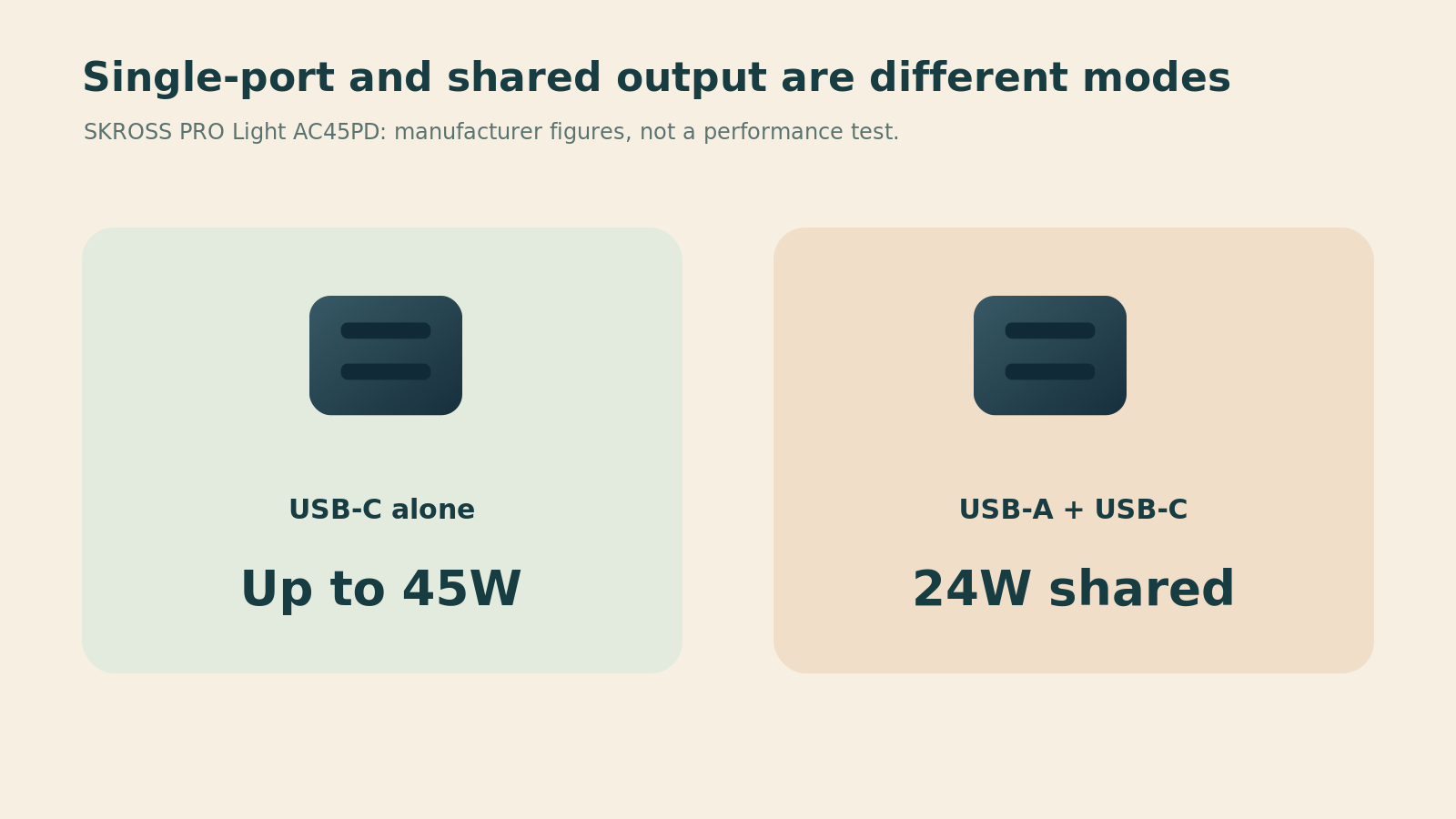
The PRO Light USB AC45PD – World lists up to 45W from USB-C and up to 20W from USB-A individually. When both USB ports operate together, the manufacturer specifies 24W shared at 5V. It also lists a 7A mains limit, a replaceable T7A fuse and a 256g unit weight. [7]
This makes it a more interesting USB-C option than a basic phone-focused adapter, but not an automatic replacement for every laptop charger. A device whose normal supply is higher-powered needs its own compatibility check. The shared mode is particularly important when a second cable will remain connected most of the time.
Confirm the exact model, not the AC45PD family alone
SKROSS also sells products with similar names, so check that the listing is the PRO Light adapter rather than a USB-only charger. The manufacturer's complete plug list includes UK Type G input and US Type B output; the English page's displayed icon list was incomplete during research, so the corresponding manufacturer listing was cross-checked. [8]
Choose it for documented multi-country use and a device that benefits from its actual output profiles. Do not interpret the maximum wattage quoted at a higher mains voltage as the usable limit at 120V. The current limit, actual supply and all other component ratings still govern the arrangement.
8Why a large wattage on the website can mislead
The supply voltage changes the arithmetic
A mains wattage figure is linked to voltage and current. For an illustrative resistive-load calculation, 120V multiplied by 7A gives 840W; a larger wattage associated with a higher voltage is not automatically available from that same 7A adapter on a US supply. This calculation explains the distinction, not permission to operate an appliance at the theoretical ceiling.
Use the actual product marking, instructions and the appliance requirements rather than working towards the largest calculated number. Allow for the constraints of the outlet and every component. A laptop charger and a heat-producing appliance should not be treated as interchangeable examples simply because both have a UK plug.
A specification we chose not to rely on
The Go Travel 632 World-USA Duo page contains a 250V, 3750W field despite being a US-oriented model. We have not treated that website figure as a US usable-power recommendation or included the model among the five main picks. The 120V context and the exact unit rating need clarification before relying on such a claim. [10]
This is not proof that the product is defective. It is an example of why a buying guide should preserve a meaningful uncertainty. When an unexplained field affects electrical use, the proper response is clarification from the manufacturer, not a confident calculation built on the most convenient interpretation.
9Plan laptop charging around the laptop, not the adapter
Start with the original power supply
Read the laptop maker's charging requirements and the input label of the supply you normally use. When that supply is suitable for the US mains, a correctly matched plug adapter can be a more straightforward solution than an integrated USB port. It preserves the charging arrangement intended for the computer, subject to all relevant limits.
A 65W or 100W label on a laptop charger describes an output capability, not necessarily its exact mains draw. Do not use that figure alone as an electrical-loading calculation for a multi-device setup. The charger input and the adapter's instructions remain the appropriate reference for safe connection.
Watch what happens when another USB device is added
The SKROSS example shows why shared output deserves attention: 45W on USB-C alone is not the same operating mode as 24W shared across both ports. A kit that works when the laptop is the only USB device can behave differently once a phone or another accessory is connected. [7]
Make a simple charging plan: which device needs power while in use, which can charge later and which needs a different supply? That can reveal that one suitable laptop charger and a modest additional phone connection are more useful than trying to make every device share the same integrated adapter.
10Phones, watches and accessories need a cable check too
Check connectors at both ends
List the devices and the exact cables you intend to pack. A USB-C phone may still be paired with a USB-A-to-USB-C cable, while another cable ends in USB-C at both ends. The adapter's port must match the cable, and the cable must suit the device's required charging method.
Do this check with the actual leads, not a mental inventory. Small accessories often have proprietary charging ends which are easy to forget. A tidy travel pouch is not useful when it contains several compatible-looking cables and omits the one connection that a watch or camera battery charger actually needs.
Charge in stages when that is enough
Not every device needs the highest possible output at the same time. A modest USB-A connection may be perfectly adequate for a particular accessory according to its instructions, while the phone uses a faster compatible port. The useful question is whether the schedule suits the trip, not whether every available connector is filled.
For someone whose main requirement is a phone and an occasional accessory, the 624's USB-C option is worth comparing with an existing charger and the basic adapter. Choose by the complete charging routine rather than by a theoretical speed advantage that your device may not support.
11Hair tools and other UK appliances: a separate decision
Do not assume reduced performance means acceptable use
A UK-only appliance may behave differently on a lower-voltage supply, but apparent operation is not a sound compatibility test. Motors, controls and heating elements can have different requirements, and the change from 50Hz to 60Hz may also matter. Follow the appliance manufacturer's guidance rather than experimenting in the hotel room. [1][9]
For a hairdryer, straightener or similar item, inspect the specific model's input label and any voltage-selector instructions. Do not assume that a travel-sized product is dual-voltage. Likewise, a dual-voltage capability does not remove the need to check the adapter's permitted load and required earthing.
Prefer a clear alternative to a speculative conversion kit
An appropriate appliance supplied by the accommodation can be the simplest option. A purpose-selected travel appliance may also make sense when its compatibility is explicit. Those choices can avoid transporting a converter whose suitability for the particular device has not been established.
For medical or other essential equipment, obtain model-specific instructions from the manufacturer and plan any necessary backup before departure. This guide's ordinary travel-electronics comparisons are not an approval for specialist devices. Their importance makes clear documentation more necessary, not less.
12Hotel outlets, loose connections and charging position
A stable physical arrangement is part of the plan
A large adapter can sit awkwardly in a recessed outlet or behind a desk. A heavy charger attached to it may create leverage, and a short cable can pull the whole arrangement towards a device. Choose a position where the connection is properly seated and the equipment is supported without improvised wedges.
If a wall outlet is damaged, loose or unsuitable, ask the accommodation for help or another outlet. Do not bend the adapter's pins, force the casing against furniture or remove its ground connection to make it fit. Those are signs that the arrangement should change, not obstacles to work around.
Keep the charging area separate from storage
A travel pouch protects and organises equipment while it is being carried. It is not automatically a suitable enclosure while chargers are operating. Follow the manufacturers' ventilation and placement instructions and keep the setup clear of clothing, bedding and unnecessary cable tangles.
Put the most-used device within reach without leaving the cable under tension. A sensible cable length can improve the arrangement more than a larger multi-port block. When packing up, unplug deliberately and check that the adapter has not remained in the wall after the UK charger has been removed.
13Three useful US-trip setups
Phone-only leisure travel
Begin with the phone's normal compatible lead and a suitable charger. The basic 526 may be sufficient when the charger already accepts the US supply. The 624 offers a different approach when its integrated USB-C port removes a separate phone power supply. Neither option is better simply because it looks more advanced.
Add only the accessories you will actually charge. A spare lead can be valuable when it solves a realistic failure point, but an assortment of redundant adapters makes the pouch larger and harder to check. Keep one clear charging route for each device and know which item is the backup.
A laptop-led work visit
Keep the laptop's requirements at the centre of the kit. Confirm the main supply, add the correct destination adapter and plan where the computer will be used while charging. A separate modest phone connection can then be chosen without compromising the laptop's power arrangement.
For a work trip with little room for downtime, familiarity may be worth more than reducing the accessory count by one. A known charger, documented input and a simple adapter are easy to explain and replace. Choose an integrated alternative only when its exact output and shared behaviour meet the work setup.
Continuing to other countries
A worldwide adapter earns its extra space when the verified output configurations match the later destinations. The Go Travel 640 and SKROSS PRO Light should be compared on that itinerary, their mains limits and their actual USB performance. The country count alone does not show which one is appropriate. [6][7][8]
Keep a note of the required configuration for the next stop. Do not assume a setting used in the United States will remain suitable after a connection elsewhere. A multi-country design reduces the number of separate pieces, but it increases the importance of selecting and using the right one each time.
14Buying, price and what counts as verified
Use dated prices only as a comparison aid
The Go Travel manufacturer pages displayed £5.99 for the 526, £19.99 for the 624, £14.99 for the 626 and £54.99 for the 640 when checked on 9 October 2026. These are reference prices, not guaranteed delivered totals or promises about another seller's inventory. [3][4][5][6]
Compare the complete kit cost. A more expensive integrated adapter can be worthwhile when it replaces equipment you would otherwise need to buy. It is less persuasive when you already own a suitable charger and its additional ports remain unused. Delivery, the exact model and the seller's support also belong in the comparison.
A known name does not remove the checks
Electrical Safety First recommends reputable retailers and the relevant BS 8546 safety standard for travel adapters sold in the UK with a UK plug or socket section. Check the exact seller and model rather than assuming every listing using the brand name is equivalent. [2]
This review verifies published product identity and specifications where available; it does not independently verify every certificate or unit. No affiliate commission or customer rating changes the compatibility requirements. When the delivered markings differ from the description, pause and ask the retailer or manufacturer before using the product.
15Pros, cons and the best reasons not to buy
What the five options cover well
The shortlist offers a basic connection, a phone-focused USB-C port, an existing USB-A use case and two broader travel arrangements. That is enough variety to compare actual needs without filling the guide with near-identical generic plugs. The main choice is whether you want the adapter to change only the plug shape or also take over some charging duties.
A dedicated US adapter is particularly appealing for a straightforward journey with a suitable existing charger. Integrated USB becomes more useful when its output and connectors match the device list. A worldwide unit should be justified by the itinerary rather than a desire to buy the most elaborate accessory once.
What none of them promises
None turns an unsuitable UK-only appliance into a compatible US appliance. None verifies the electrical condition of a hotel outlet, and none should be described as guaranteed protection against every electrical problem. Their purpose and limits remain specific even when the marketing language is broad. [1][2]
Skip a new purchase when your existing adapter is correctly specified, in good condition and supported by clear instructions. Replace uncertainty, damage or a missing connection, not a functioning setup merely because another product advertises more ports. The simplest complete arrangement is often the one you can check most confidently.
16Common mistakes before a US trip
Treating 250V as a promise of US power
A maximum voltage marking does not mean the adapter converts 120V into 250V. Nor does a wattage figure quoted at a higher voltage automatically describe what is suitable on a US supply. Keep the voltage, current and power context together, and follow the exact product instructions rather than selecting the largest number in a comparison chart.
The same care applies to integrated USB. A 45W port used alone may not remain a 45W port when another device is attached. Read the shared mode and plan the charging routine around it, particularly when a laptop must keep working rather than merely charge slowly while switched off.
Packing adapters without checking the appliances
It is easy to assemble a pouch of well-known brands and still include a charger or appliance with the wrong input. Check each item individually before departure. Record the equipment model and the relevant label so that any later question can be answered without relying on memory.
Finally, avoid stacking adapters or altering plugs to deal with an unexpected outlet. Ask for a suitable connection or obtain an appropriately specified product. A missed charging opportunity is inconvenient, but it does not justify using equipment in a way that defeats its intended grounding or load limits.
17Make a connection record before packing
One line for each device
Write down the device, its normal power supply, the supply's input rating, the required cable and the intended adapter. Keep this record with photographs of the relevant labels. The exercise is especially useful when a household has several similar chargers, because it prevents the correctly checked supply being replaced accidentally by another one at the last minute.
Mark any unanswered compatibility question clearly. A blank field is a reason to obtain clarification before departure, not a detail to overlook because the rest of the kit is ready. When asking a manufacturer, provide the exact model and destination supply rather than a general question about whether its products work abroad.
Check the actual items going into the bag
Lay out the equipment beside the record and compare each component. Inspect cables for visible damage and confirm that the intended leads fit the device and charger connectors without force. This is an identification and condition check, not an electrical test or a guarantee that equipment is fault-free.
Keep adapters accessible for arrival, while protecting their pins and avoiding pressure from heavy luggage contents. Store the instructions digitally when possible. A clearly organised kit makes the first evening easier because you can identify the right configuration without experimenting with several unfamiliar parts.
Make the checkout routine equally deliberate
Before leaving a room, inspect every charging position you used. Remove the charger and adapter together, then separate them carefully if required for packing. Check the wall again: a small destination adapter can remain behind when the larger British plug is removed.
Review any problem encountered during the trip while it is still fresh. A cable that was too short, an awkwardly wide block or a poorly placed shared port can guide the next purchase. Replace the component that caused the difficulty rather than automatically buying a larger universal adapter with more functions you may not need.
18Frequently asked questions
Will my UK phone charger work in the United States?
Check the charger's mains input label. A rating covering 120V and 60Hz, such as 100-240V, 50/60Hz, is the relevant starting point, along with the correct plug connection and the manufacturer's instructions. Do not infer compatibility solely from the phone model or where the charger was bought. The plug adapter changes the physical connection; it does not supply a missing voltage-conversion function for an unsuitable charger. [1][9]
Is Type B preferable to Type A for this shortlist?
The adapter must match the outlet and the appliance's requirements. Type B includes a grounding connection, while Type A does not. When equipment requires an earth, preserve that path through an appropriate adapter and outlet. A two-slot outlet is not a reason to remove a ground pin. Double-insulated equipment is a different category, but that still calls for a correctly specified product rather than an improvised combination. [1][2]
Can the Go Travel 624 charge a laptop?
Its USB-C output is rated up to 25W, so compatibility depends on the laptop's accepted profiles and charging needs. It should not be assumed to replace a more powerful laptop supply. Some devices may accept lower power under particular conditions, but the maker's guidance decides that. For a work trip, a suitable existing laptop charger through the adapter's mains socket may be a more straightforward arrangement, within all applicable limits. [4]
Does the SKROSS deliver 45W while the phone uses USB-A?
The manufacturer's published shared mode is 24W total when USB-A and USB-C are used together, not 45W plus the USB-A figure. That distinction matters when a laptop is connected at the same time as another device. Compare the shared output with the intended routine before buying. The higher single-port number can still be useful, but it should not be treated as the simultaneous two-device performance. [7]
Do these adapters convert 120V to 230V?
No. They are plug adapters, some with their own low-voltage USB charging circuits. The mains socket does not become a 230V supply simply because it accepts a UK plug. A UK-only appliance may require a different solution, and the appropriate converter or transformer depends on the exact equipment. Obtain manufacturer advice rather than assuming a generic travel product will make every appliance compatible. [1][9]
Can I use a UK hairdryer with one of them?
Only when the specific appliance supports the local supply and the complete setup satisfies its load and earthing requirements. A travel-sized hairdryer is not automatically dual-voltage, and a dual-voltage setting does not remove the adapter's limits. Read the model instructions before travel. An appropriate appliance supplied locally may be a simpler option than carrying equipment whose safe use depends on an unverified conversion arrangement.
Is the Go Travel 640 a high-power USB-C laptop charger?
No such claim is made here. The manufacturer lists 15W for its USB-C port and 12W for USB-A, with no clear simultaneous budget in the accessible specification reviewed. Its main appeal is multi-country plug coverage. A laptop-led trip should be planned around the computer's required supply rather than assuming that a worldwide adapter with USB-C replaces it. Check the exact version and instructions before relying on any output figure. [6]
Should I buy a spare adapter?
A spare can be useful when losing one would disrupt work or leave essential everyday equipment without a convenient charging route. It should be a compatible, clearly understood backup rather than an unrelated bargain plug. For a simple US-only trip, a second basic adapter may be easier to manage than two complicated universal units. Consider whether a spare cable or a separate suitable charger addresses the more likely problem in your own kit.
What should I do when a plug or adapter becomes hot or smells wrong?
Discontinue use when the equipment is damaged, behaving abnormally or producing a burning smell. Do not cover it, wedge it in place or keep trying different plug combinations. Ask the accommodation for help with an unsuitable outlet and consult the product manufacturer about the equipment. This buying guide cannot diagnose a particular electrical fault remotely; the sensible response to a suspect connection is to stop using it, not work around it.
19Final recommendation: a clear connection and a checked input
The Go Travel 526 is the most straightforward starting point for a US-only journey with a suitable existing charger. Choose the 624 or 626 when its particular USB connection genuinely simplifies your kit. Compare the Go Travel 640 and SKROSS PRO Light only when their broader travel role or documented USB performance justifies the additional size and complexity.
Whatever you buy, perform the appliance-input check before the packing check. A well-organised pouch cannot correct an incompatible voltage requirement, a missing earth path or a misunderstood shared-power figure. The best adapter is the one that fits a complete, documented setup you can use without modifying or improvising any part of it.
Sources and fact-checking notes
Editorial review: 9 October 2026. Specifications are manufacturer or retailer statements, not independent measurements. Packing and purchase recommendations are research-led editorial judgements. Recheck the exact variant, instructions and checkout terms.
- Electrical Safety First: United States – Type A/B, 120V and 60Hz; voltage and frequency are not changed by a plug adapter.
- Electrical Safety First: travel-adapter safety – Class II equipment, earthing, ratings and buying safeguards.
- Go Travel: UK-USA 526.101 – Earthed Type B, 120V/10A and physical dimensions.
- Go Travel: World-USA USB-C 624.101 – UK input, Type B output, 25W USB-C and 120V/13A mains specification.
- Go Travel: UK-USA USB-A 626.101 – 12W USB-A and simultaneous mains use; not a USB-C PD model.
- Go Travel: Worldwide USB-A and USB-C 640.101 – Multi-country connections, ratings and shared USB limits.
- SKROSS: PRO Light USB AC45PD – World – 7A limit and 45W/20W individual versus 24W shared USB mode.
- SKROSS: same PRO Light model, complete plug list – Manufacturer listing explicitly includes Type G input and Type B output; English icon list was incomplete.
- Electrical Safety First: electricals abroad – Manufacturer checks for non-dual-voltage and frequency-sensitive equipment.
- Go Travel: World-USA USB-A Duo 632.101 – Unclear 250V/3750W website field is excluded from US-load recommendations.
Illustrations in this article were created for Taylor’s Trailblazing Travel Gear. Third-party photographs, where used, are credited beside the image or in the source list.