Silk vs Synthetic Eye Masks for Travel
Choose by the fabric against your face, the complete construction and the care routine you can actually keep.
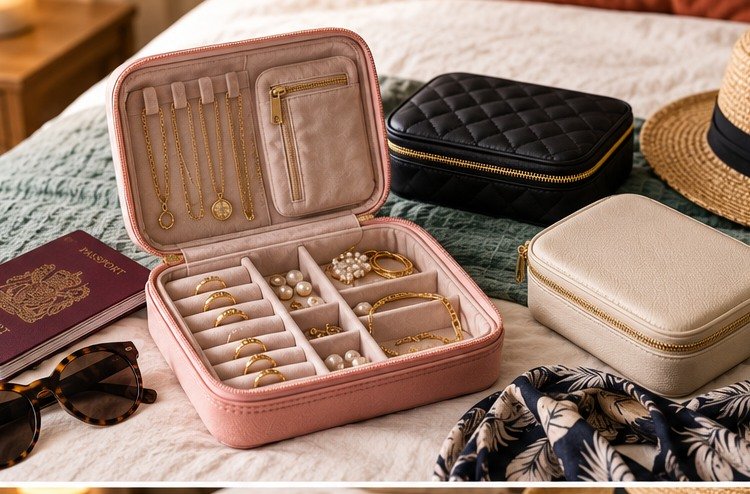
Original concept illustration: a slim fabric eye mask beside a contoured mask; not product photography.
Silk vs synthetic eye masks for travel is not a simple luxury-versus-budget choice. The fabric touching your skin matters, but so do the filling, eye cups, seams and headband. A smooth silk front cannot fix a scratchy fastening, and a polyester mask is not automatically hot, uncomfortable or inferior.
Start with the problem you want to solve. Is light entering around your nose? Does the mask catch your hair? Are you packing for repeated overnight journeys without easy laundry access? Those answers narrow the choice more usefully than a fabric name printed across the packaging.
This is a research-led comparison of published materials and care instructions, not a report of hands-on testing. The examples illustrate different constructions rather than a ranked best-to-worst list. Where marketplace information is incomplete, the missing detail stays missing; comfort, blackout and skin benefits are not assumed.
Read the lining
The outside photograph may not show the material against your face.
Fit before prestige
Nose gaps and strap pressure can outweigh a fabric upgrade.
Model-specific care
Some silk masks permit cold machine washing; others do not.
Keep a good mask
A comfortable mask you already own may need no replacement.
Silk vs synthetic eye masks for travel: the useful distinction
Separate the surface from the whole mask
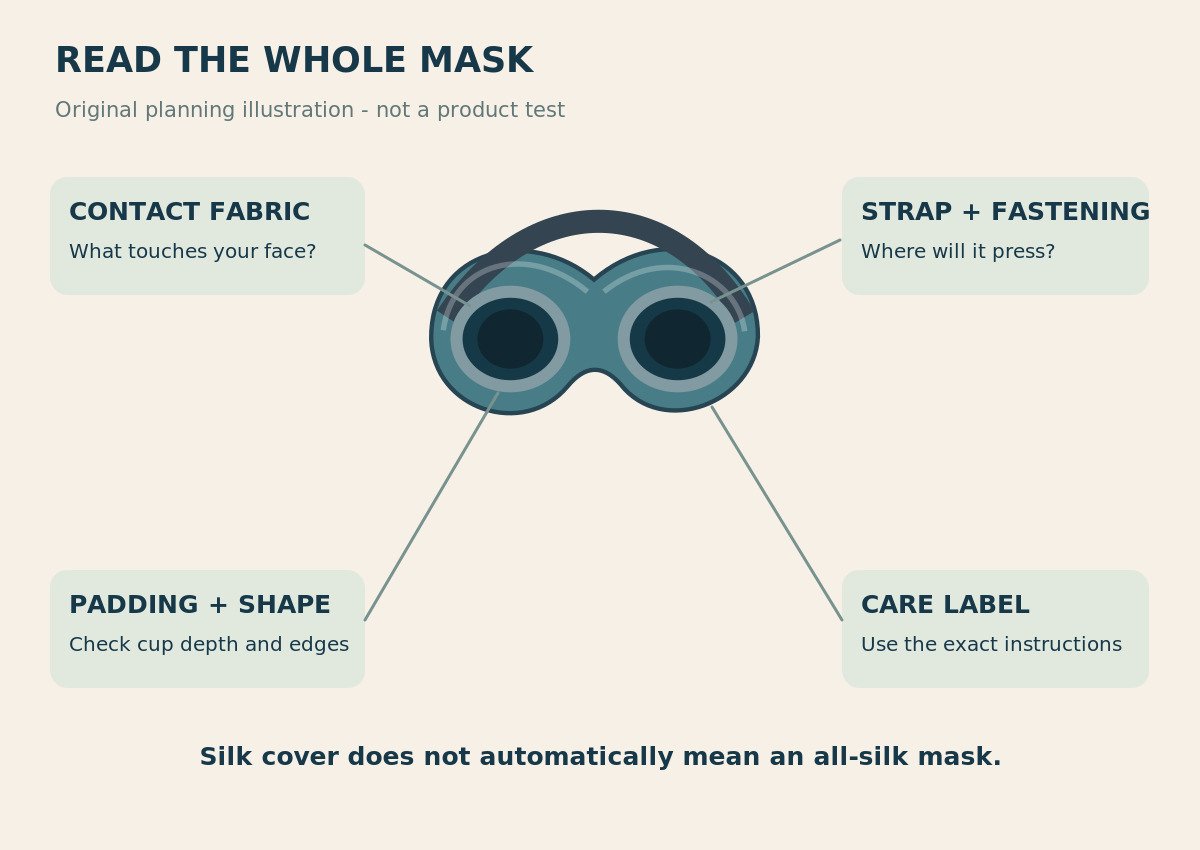
A sleep mask is an assembly rather than a single square of fabric. The face-side lining, outward-facing cover, padding, seams, elastic and fastening can all use different materials. Therefore, a claim about the cover should not be expanded into a claim about the whole product. Ask which component a percentage describes before using it to compare two masks.
For example, a silk contact layer can sit over substantial cushioning, while a non-silk model can have a thin, flexible construction. Either might be preferable depending on where it touches your face. Imagine removing the decorative outer layer: would the remaining cup shape and headband still solve your main problem? That question helps prevent an attractive finish from distracting you from an unsuitable structure.
Non-silk is not a single material
Polyester is a synthetic fibre; modal is a regenerated-cellulose fibre, and cotton is another distinct category. The UK textile fibre definitions distinguish them, so treating every non-silk mask as identical would be misleading. This guide uses synthetic for documented synthetic materials and identifies mixed or regenerated-cellulose designs separately. [1]
In practice, compare actual labels rather than a natural-versus-artificial story. A useful listing explains what touches the face, what fills the mask and how it should be washed. Missing information is a reason to ask a question, not permission to assume that the material resembles another product with a similar photograph.
What silk can change, and what it cannot promise
Buy a contact feel, not a guaranteed outcome
A silk mask may appeal because you enjoy the way a particular silk fabric feels. That is a reasonable preference. However, the preference does not establish that every silk mask will stay cooler, block more light or prevent skin problems. Those outcomes involve construction, fit, the environment and the person wearing it.
Consider how much of the fabric will actually touch you. With a shallow mask, a broad area may rest across the eyelids and cheeks. With separate cups, most contact can be around their rims. The same advertised fibre can therefore produce quite different experiences. Choose the contact arrangement you tolerate rather than assuming the expensive version must feel better.
Be cautious with beauty language
Wrinkle prevention, anti-ageing and guaranteed skin improvement are not the basis for the recommendations here. Manufacturer marketing may make such claims, but this comparison has not established them through clinical research. A mask can still be worth buying for practical comfort without turning that preference into a health or cosmetic promise.
Similarly, a phrase such as sensitive-skin friendly is not an individual safety guarantee. Consider the complete item, including dyes, elastic, seams and your own known sensitivities. Stop using a mask that causes irritation or uncomfortable pressure. Persistent symptoms are a reason to seek appropriate advice rather than keep tightening, adjusting or changing fabric on guesswork.
Satin, momme and the words that can confuse a purchase
A smooth appearance does not identify the fibre
Satin describes a fabric construction, not proof that the fabric is silk. A satin-looking sleep mask can therefore have a non-silk composition. Look for a fibre statement that identifies the actual contact surface. Words such as silky, silk-like and luxury describe an impression and should not replace that statement. [11]
Do not rely on a photograph of shine either. Lighting, colour and editing can make very different fabrics look similar. A close-up of the inside label is more useful than another glossy front view. When the listing gives a complete composition, save it with the model and colour so you can compare it with the delivered item.
Momme is not a blackout score
Silk products sometimes state a momme figure, which relates to fabric weight rather than a direct rating of mask darkness, cooling or lifespan. [12] Manta, for example, specifies different silk weights for the cups and head strap of its SILK mask. That is a component description, not evidence that a bigger number wins every comparison. [2]
Treat the number as one detail within a fuller specification. A well-shaped mask with clear care instructions can be a more useful purchase than a heavier silk fabric around a poor nose seal. Paying more should solve something you have identified, not merely move you to the largest advertised figure.
Four product references, without a false league table
Why these examples are included
The following products illustrate a silk-faced modular mask, a slim silk-labelled mask, a documented polyester design and a mixed-material modular alternative. They were selected for the distinctions they make visible, not because they won a laboratory test. The table should help you decide which construction to investigate further. [2] [3] [4] [6]
| Product reference | Construction to investigate | Main question before buying | Buying reference |
|---|---|---|---|
| Manta SILK | Silk cup surfaces and a silk/spandex head strap | Do adjustable cups suit your face and packing space? | Check Manta SILK |
| ALASKA BEAR two-strap | Slim mulberry-silk-labelled covering with two adjustable bands | Will the bands and nose flap sit comfortably? | Check two-strap mask |
| Go Travel Dreamer 733.101 | Domed mask with recycled-polyester fabric | Do the dome and fastening suit your resting position? | View Dreamer at Case |
| Manta Original | Modal cup fabric and mixed headband materials | Would cup adjustment matter more than a silk surface? | Check Manta Original |
Scroll the table sideways on smaller screens to see every column.
Availability and version checks
The inspected Amazon references for the silk and Manta examples did not provide a dependable current featured offer. They remain identified product references, not a promise of stock, price or delivery. Check the selected version, seller and returns terms before paying; similar names do not establish identical construction. [6] [7] [8]
The Case Luggage link is for the Dreamer model rather than a generic eye-mask collection. Nevertheless, check colour, included accessories and delivery to your address. A listing can be useful for comparison even when the sensible buying decision is to wait or to keep the mask you already own. [9]
Reading those product examples in more detail
Manta SILK and a slim silk alternative
Manta’s UK specification identifies silk cup fabric, a 90% silk and 10% spandex head strap, adjustable cups and cold machine washing in a laundry bag. Its architecture is the notable feature: this is not simply a flat silk cover. Compare that architecture with your preferred resting position before considering the surface an upgrade. [2]
The ALASKA BEAR reference is specifically the two-strap version with a nose flap. Do not assume a single-strap listing is the same product. Its slim arrangement is worth considering when you dislike bulky cups, but the marketplace description is not a complete independently verified bill of materials. Check the delivered label rather than assuming every internal layer is silk. [6]
Review the ALASKA BEAR two-strap listing
Polyester and mixed-material alternatives
Go Travel lists the Dreamer mask fabric as recycled post-consumer polyester, with a polyester pouch and polyurethane foam earplugs. The stated mask dimensions are 205 x 80 x 25 mm, and the care guidance permits washing at 30 degrees. These are manufacturer specifications, not measurements taken for this guide. [3]
Review the Dreamer model at Case Luggage
Manta Original is useful as a reminder that non-silk does not automatically mean all-polyester. Its adjustable cups make it a structural alternative, while the published modal and mixed headband materials need to be considered on their own terms. Compare the actual contact surface and fastening, rather than treating it as a cheaper version of SILK. [4]
Blackout depends on the seal as well as the fabric
Look for gaps, not just opacity
A fabric can look opaque while the finished mask admits light at the nose or sides. Conversely, a comfortable seal can make a modestly priced mask useful without any prestigious textile. Assess those two issues separately: first the coverage, then the comfort of the edges that create it.
For a home check, use ordinary room lighting and close your eyes while wearing the mask normally. Turn your head gently and notice whether bright areas appear around the nose, cheeks or temples. Do not shine a powerful light directly towards your eyes. The aim is to find everyday gaps, not to stage a dramatic test with conditions unrelated to travel.
Avoid solving gaps with excessive tension
If tightening the strap removes light but creates pressure, the fit has not really improved. Try repositioning the mask, altering adjustable cups where provided or using a different strap route permitted by the design. When those changes fail, another shape is a better solution than continuing to pull harder.
Record where the problem occurs. A nose gap points you towards the nose bridge and lower edge; side leakage suggests width or edge position. That diagnosis makes a replacement more targeted. Otherwise, you may buy another mask in a different fabric while retaining the same geometry that caused the problem.
Heat and moisture: assess the complete arrangement
Begin with your usual travel layers
Try the mask with the layers you expect to wear, not only in a cool room for a few seconds. A scarf, high collar, pillow and headphones can surround the same small area. When several accessories overlap, it becomes difficult to tell which one is making the arrangement feel close or bulky.
Remove one accessory at a time and repeat the comparison. This is a practical comfort check, not a thermal experiment. You do not need a temperature sensor to discover that a thick strap beneath an ear cushion is unpleasant. Equally, do not turn your own short trial into a general claim that an entire fibre category is unsuitable for warm cabins.
Think about the hours between uses
A mask used on two consecutive night journeys needs somewhere clean to dry and rest between them. The relevant question is not just whether the fabric feels comfortable when new, but whether your routine leaves the whole item ready for the next use. Padding and seams deserve attention as well as the visible cover.
Avoid promising yourself an exact drying time without testing the actual item. Hotel airflow, washing method and the amount of water retained can differ. Build some margin into the routine, especially before an early departure. A dry spare or a night without a mask is preferable to sealing a damp one in its pouch for the day.
Side leaning changes which details matter
Test the headrest contact point
An upright fit can change when you lean towards a window or against a travel pillow. The side of a cup, a buckle or a folded strap can become the part pressed between your head and the support. Therefore, repeat the comfort check in the position you genuinely expect to use.
Do not press hard to imitate an aircraft wall. A gentle lean against your normal pillow is enough to reveal obvious hardware or edge pressure. Notice whether the mask shifts, whether an eye cup collapses or whether the lower edge moves towards your nose. These observations help you decide between a slimmer design and a more structured one.
Your pillow may be the deciding factor
A bulky neck pillow and a bulky mask can compete for space even when each is comfortable alone. Try them together before packing. The answer may be a different pillow adjustment, a flatter mask or simply taking fewer accessories rather than paying for a more elaborate fabric.
The site’s guide to choosing a travel pillow explains the related support and packing questions. Use it to plan the combination, not as evidence that a particular mask has been tested with every pillow. Your own fit check remains the useful final step.
Straps, hair and removable adjustments
Inspect the part behind your head
The headband is easy to overlook because product photographs usually favour the front. Check the location and size of any adjuster, the exposed edges of hook-and-loop fastening and the amount of spare strap after adjustment. Those are the parts most likely to interfere with a headrest or catch on something in your bag.
A two-strap design gives you more positioning choices but also adds more pieces to manage. A single broad band may distribute contact differently while taking more space behind the head. Neither arrangement is universally superior. Compare how easily you can adjust it without repeatedly lifting your hair, removing headphones or disturbing your resting position.
Practise removing it normally
You should be able to uncover your eyes promptly without unthreading a complicated arrangement. Try normal removal while seated, with your other accessories in place. This is particularly useful when a mask is worn beneath headphone bands or close to a hood.
Do not attach a sleep mask to the aircraft seat or use improvised straps to hold your head in position. A standard travel mask is a light-blocking accessory, not a restraint. Pay attention to the safety briefing and follow crew instructions about when you need to remain alert and able to respond. [10]
Washing rules belong to the exact model
Silk care is not one universal instruction
Slip’s guidance for its standard sleep masks specifies cold hand washing and says not to put them in a washing machine. Manta’s cited SILK guidance permits cold machine washing in a laundry bag. Both involve silk, which demonstrates why the exact product instructions matter more than a general fabric rule. [5] [2]
Read the mask section of a care page rather than borrowing instructions for the brand’s pillowcases. Products can share a fabric name while using different construction. Keep the original care label or a photograph of it so that a later website redesign does not leave you trying to remember which instructions applied.
Synthetic does not mean care-free
The Dreamer provides a documented 30-degree washing instruction, but that does not establish the routine for every polyester mask. Electronic, weighted, heated or mixed-material versions need their own instructions and are outside this simple fabric comparison. Do not assume a removable-looking component is intended to be detached. [3]
After cleaning, check that the mask is fully dry and that the shape and fastening remain normal. Store it away from wet toiletries. A machine-washable label is useful only when your trip includes a realistic opportunity to carry out the required wash and drying process.
Packing: compare the mask and its protection
Measure the actual packed item
A mask’s front dimensions are not its packed dimensions. Cups, adjusters and a protective case can make the stored item considerably different from the flat fabric shown online. Place the complete item beside the things it must share space with: glasses, earplugs, a charging cable and any small medication pouch.
Avoid crushing a structured mask simply to make its volume match a flat alternative. The comparison should preserve the shape you paid for. If the cups require protection, include that protection in the space budget. A slim mask that you can store safely in an existing compartment may be the simpler choice for a very small personal item.
Give it a repeatable home
Choose one clean pocket or pouch location and use it every time. That is more useful than a complicated packing system which changes between flights. When you remove the mask for a meal, put it back in that location rather than balancing it on the tray or leaving it loose in a seat pocket.
Keep the face-contact surface away from shoes, leaking toiletries and loose food. Close hook-and-loop sections before putting the mask beside delicate fabric. These are straightforward organisation choices, not claims that a particular pouch makes the item sterile or removes the need to clean it.
Three journey patterns that favour different choices
A single overnight flight and a hotel stay
For one return journey, begin with an existing mask that fits. Spending more on silk may make sense when you already know you prefer the surface, but a holiday does not automatically justify an upgrade. The practical priority is a clean item, predictable adjustment and somewhere safe to keep it while awake.
Give yourself time to learn the fit before departure. Discovering a nose gap at the gate leaves little opportunity to compare alternatives. A short seated check several days earlier lets you decide whether the problem is the fabric, shape or something as simple as the strap being in the wrong position.
Repeated transfers with limited washing
For several overnight legs, care instructions and replacement planning become more significant. You may prefer one easily maintained mask plus a spare, rather than a delicate item requiring a routine you cannot provide. However, buying two uncomfortable masks is not a solution to poor fit.
Think through where each item will be between uses. A clean spare should not share a damp pocket with the one being dried. If every transfer involves repacking at dawn, a simpler design with fewer detachable pieces may be more convenient than a modular option, even when the latter feels appealing during a leisurely home trial.
A small cabin bag and frequent daytime use
For short naps on trains or in a hotel, quick access and compact storage can matter more than maximum cushioning. A slim silk or non-silk mask may work well, provided the strap is comfortable and removal is easy. A substantial contoured model can still be worthwhile when eye clearance is the reason you use a mask at all.
Do not buy a mask specifically to sleep through situations where you need awareness of belongings, stops or instructions. Plan the circumstances of use as carefully as the item itself. A light-blocking accessory solves a light problem; it does not make an unsuitable place safe for unattended rest.
A practical comparison routine before committing
Change one variable at a time
When comparing two masks, keep the chair, lighting and other accessories the same. First compare them upright, then with a gentle side lean, and finally packed into the intended pocket. Note comfort at the nose, temples, eyelids and rear fastening separately. A single overall score can hide the exact reason one works better.
Use your existing mask as the baseline rather than assuming a new purchase has to win. A meaningful improvement might be easier removal, fewer light gaps or less awkward storage. It does not have to be a dramatic transformation in sleep. Equally, a mask that needs constant repositioning has not solved the problem just because its fabric feels pleasant.
Keep the test proportionate
Check the retailer’s terms before opening sealed hygiene packaging or wearing a product you may return. A returns period is not automatically permission for a used sleep trial. Keep tags, packaging and the order details while you establish what the seller allows; do not assume one marketplace seller has another seller’s policy.
There is no need to invent a precise comfort percentage. A few plain observations are more actionable: the adjuster presses when leaning left, the bottom edge catches the nose, or the mask fits the designated pouch. Those notes make the choice clearer without pretending that personal comfort has become laboratory data.
Value, replacement and avoiding unnecessary upgrades
Compare the whole cost of keeping it usable
A lower purchase price is not always the lowest practical cost, but neither is a premium mask automatically economical. Consider replacement straps or cups where the manufacturer actually offers them, the risk of losing separate pieces and whether you need an additional protective case. Do not assume replacement parts exist because the mask is modular.
As a hypothetical budgeting example made on 11 October 2026, a GBP 12 mask used on 12 journeys represents GBP 1 per journey before washing, loss or replacement. A GBP 48 mask used on the same journeys represents GBP 4. Those invented prices are arithmetic illustrations, not current product offers or predictions of lifespan.
Replace for a reason you can name
A stretched fastening, damaged cup, persistent discomfort or inability to clean the item properly can justify a replacement. A new fibre label alone is less compelling when your current mask already fits and meets the same need. Keep useful accessories in service rather than accumulating several nearly identical options.
For a silk-surface comparison, revisit the ALASKA BEAR two-strap reference. For a documented polyester construction with a different shape, compare the Go Travel Dreamer. These are alternative starting points, not a claim that every traveller needs both.
Buying online when the fabric description is incomplete
Ask three component questions
A useful message to the seller asks what fabric touches the face, what fills the mask and what material is used in the headband. Ask whether those answers apply to the precise colour and version in your basket. This is more effective than asking whether the mask is real silk, because that broad question can be answered about only the decorative cover.
Also request the care instructions for the finished product. A seller who can identify the lining but cannot explain how the assembled item should be cleaned has left a practical gap. You do not have to solve that uncertainty by purchasing first. Choose a clearer specification or keep the option open while waiting for a useful answer.
Save the comparison at the point of purchase
Record the model, selected colour, key composition statement and cleaning method together. Product pages can combine variants and change over time. A saved product description helps you notice whether the delivered label actually matches what you ordered, rather than relying on a vague memory of a photograph.
If the mask differs, contact the seller before assuming the change is harmless. A different strap, inner lining or filling can matter even when the outside looks similar. The aim is not to distrust every listing; it is to preserve the few details on which you based the purchase.
Build the mask into a small rest kit
Separate essential items from optional duplicates
Lay out the mask with the earplugs, glasses case and other items you use when resting. Give each one a reason to be there. A mask pouch which also holds clean earplug packaging may be useful, whereas a second bulky case can duplicate space without protecting anything additional.
Keep rigid or sharp items away from the fabric and cups. A charging plug, key or uncovered zip pull can make a poor companion for a delicate contact surface. You do not need a specialist organiser for every object, but you do need a layout that avoids pressing hardware into the mask while the bag is full.
Make the end-of-flight check automatic
Before leaving the seat, return the mask to its usual place and check for removable cups or loose accessories. A distinctive pouch can make this easier to remember. Do not rely on noticing a dark mask against dark upholstery after a tiring journey.
At home, unpack the rest kit before putting the main bag away. That gives you a chance to clean, dry and inspect the mask without the pressure of the next departure. A simple repeatable routine often adds more practical value than replacing a usable item with a more prestigious fabric.
Pros and cons of each approach
Silk-focused designs
Silk can be a worthwhile preference when you enjoy the actual contact fabric and the complete mask fits. It can also be found in different structures, so choosing silk does not require choosing a flat mask. The drawbacks are the possibility of a higher purchase cost and model-specific care which may be inconvenient during travel.
The more important limitation is that the fabric cannot compensate for a poor seal or awkward fastening. Check what is included in the silk claim and resist treating luxury packaging as a substitute for useful specifications. A good silk purchase should be explainable in practical terms, such as comfortable contact and manageable cleaning.
Documented synthetic and mixed designs
A synthetic design can offer an effective structure and a convenient care routine without trying to imitate silk. Mixed-material alternatives can also be useful, particularly when adjustable cups address a fit issue. However, a vague non-silk category hides considerable variation, so it deserves the same careful label reading.
Do not assume a low price makes an item disposable or a washable description makes every cleaning method safe. Compare the fastening, contact fabric, padding and instructions together. The strongest choice in either category is the one you can wear comfortably, remove easily and keep ready for the next journey.
Common mistakes that lead to the wrong mask
Buying around a single attractive claim
The first mistake is treating satin as a fibre declaration. The second is treating blackout as a guarantee that the mask will fit your face. A third is comparing only the outside fabric while overlooking the rim, elastic or inner padding that actually creates the discomfort.
Another avoidable mistake is choosing a bulky mask without checking how it will fit alongside a pillow and headphones. The accessories may each look compact separately but interfere when worn together. Lay out the complete rest kit before deciding that a more elaborate mask is the missing ingredient.
Packing before practising the routine
Washing too late, storing the mask damp and leaving removable pieces loose are problems that a fabric upgrade will not solve. Make the washing, drying and storage routine part of the purchase decision. A premium item that repeatedly stays at home because it is not ready has poor practical value.
Finally, do not keep wearing a mask through irritation or excessive pressure in the hope that the fabric will become suitable. Reassess the fit and stop when it is uncomfortable. The aim is a useful accessory, not learning to tolerate a poor match because the packaging promised a better night’s sleep.
Frequently asked questions
Is silk always better than polyester for a travel eye mask?
No. Silk may suit your preferred contact feel, but polyester can be used in a comfortable, well-designed mask. Shape, lining, padding, fastening and cleaning requirements all matter. Compare the complete item in your intended resting position rather than using the fibre as a universal quality ranking. Keeping a mask that already works is also a legitimate choice.
Does satin mean the mask is made from silk?
No. Satin does not identify the fibre on its own. Look for a clear composition statement and check whether it describes the cover, the face-side lining or another component. A silky appearance or silk-like description is not the same as a documented silk contact surface. Ask the seller for the missing specification rather than guessing from photographs.
Can a silk mask go in the washing machine?
Only when the exact model’s instructions allow it. The cited Manta SILK guidance permits cold machine washing in a laundry bag, while Slip’s standard sleep-mask guidance says to hand wash and not machine wash. Do not borrow instructions from a pillowcase or a different mask in the same brand. Keep the delivered care label as your reference. [2] [5]
Will a higher momme number block more light?
Not necessarily. It is not a finished-mask blackout rating. Light can still enter around the nose or sides, and the shape may move when you lean against a pillow. Use the fabric specification as background information, then assess coverage and comfort separately. Tightening an unsuitable mask until it hurts is not a successful blackout solution.
Are modal masks synthetic masks?
Modal is a regenerated-cellulose fibre and is distinct from polyester. A mask can also combine modal with synthetic headband materials or foam. This is why the guide labels mixed constructions separately instead of putting every non-silk option in the same group. Read the component description and consider the surface that will actually touch your face. [1]
Which is easiest to pack in a very small bag?
Often a slim design with minimal structure, but check the complete packed item. A contoured mask may need space to protect its cups, while a flat mask may still have a substantial case or adjuster. Place it in the pocket you intend to use and include the pouch. Do not crush a structured model merely to make the comparison appear equal.
Can I wear the mask with headphones and a neck pillow?
Possibly, but the combination needs its own fit check. Straps, cups, ear cushions and pillow edges can meet at the same point. Try them together while seated and leaning gently in your normal resting direction. You should still be able to remove the mask easily. A comfortable result with each item alone does not establish comfort with the full arrangement.
Should I buy a new mask just for a long-haul flight?
Not automatically. First assess the one you own for coverage, comfort, cleaning and storage. Replace it when you can identify an unmet need, such as a fastening that presses against the headrest or a shape that leaves a persistent nose gap. A new fabric is most useful when it contributes to solving that problem rather than merely sounding more luxurious.
Final recommendation: choose the whole mask
Put the decision in the right order
Start with a comfortable shape, check the fabric against your face and then confirm a cleaning routine you can maintain. Silk is a reasonable preference, not a shortcut around those checks. A documented synthetic or mixed-material design deserves consideration when it performs the practical jobs you need without unnecessary bulk.
Keep the purchase focused. You need one mask that makes sense for your journey, not a collection of materials to cover every possible claim. The right choice should be easy to explain: it fits, it blocks enough light for your use, it works with your other accessories and you can keep it clean and ready.
Sources and fact-checking notes
Sources checked 11 October 2026. Published specifications and policies are attributed above; fit judgements, packing suggestions and hypothetical calculations are editorial guidance, not measured test results. Product versions, offers and airline policies can change. No hands-on product testing is claimed.
- UK textile fibre definitions: silk, modal and polyester
- Manta SILK UK: component materials and care
- Go Travel Dreamer 733.101: polyester, dimensions and washing
- Manta Original: modal cups and mixed-material headband
- Slip UK: standard and contoured mask care instructions
- ALASKA BEAR two-strap silk mask: identified UK listing
- Manta SILK: identified UK marketplace listing
- Manta Original: identified UK marketplace listing
- Case Luggage: Go Travel Dreamer buying reference
- UK CAA: safety briefings and following crew instructions
- CottonWorks textile encyclopedia: satin is a weave
- Slip FAQ: momme as a silk-weight measure
Illustrations in this article were created for Taylor’s Trailblazing Travel Gear. Third-party photographs, where used, are credited beside the image or in the source list.