Seven-Day Carry-On Packing List With a Laundry Plan
Pack four days of clothing, schedule one small wash and keep a full drying buffer instead of carrying seven complete outfits.
A seven-day trip does not require seven separate outfits in a suitcase. The more reliable approach is to pack a small capsule that covers four days, wear one complete outfit in transit and schedule a light wash early enough for everything to dry before the return journey.
This seven-day carry-on packing list is built around repeatable combinations rather than a different look for every day. It assumes ordinary leisure travel, one pair of travel shoes worn on the plane, one optional second pair in the bag and access to either a sink, a laundrette or a hotel laundry service. The quantities can be adjusted for climate, dress codes and medical needs without abandoning the system.
Airline cabin rules vary sharply, so the first task is to plan against the smallest allowance on the booking rather than the roomiest case at home. The policy examples and product prices in this guide were checked on 20 September 2026 and should be verified again before travel.
Four-day rotation
Wear one outfit and pack enough clothing for roughly four days, then repeat after laundry.
Wash by day four
A mid-trip wash leaves a drying buffer and avoids carrying damp clothing on departure day.
Leave 10–15% spare
A small reserve absorbs souvenirs, wet toiletries and scale differences at the airport.
Repeat bottoms
Tops, underwear and socks need more rotation than trousers, skirts or shorts.
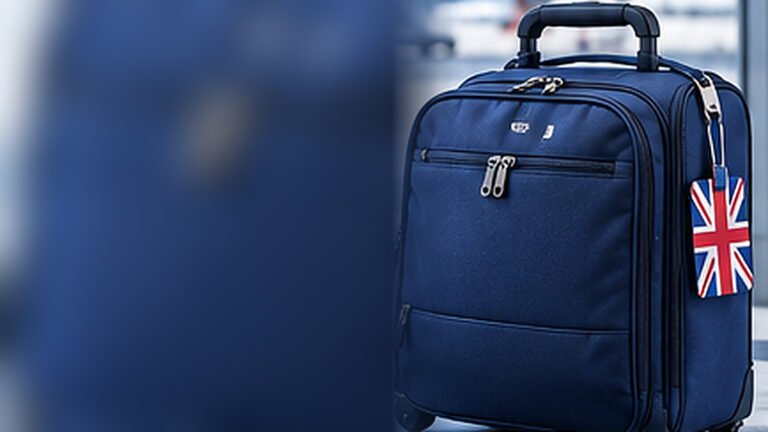
A packing list cannot be separated from the ticket. A 56 cm overhead case may be acceptable on one flight and chargeable on another; an under-seat-only fare changes the entire clothing plan. Check every operating airline, including the return and any separate tickets, then design for the strictest dimensions and weight.
| Airline example | Included or typical cabin item | Maximum dimensions | Weight point |
|---|---|---|---|
| British Airways | One hand bag plus one cabin bag | 40 × 30 × 15 cm and 56 × 45 × 25 cm | Cabin bag must be liftable without assistance; current policy lists up to 23 kg |
| easyJet | One small under-seat bag included; large cabin bag depends on booking | 45 × 36 × 20 cm; large bag 56 × 45 × 25 cm | Up to 15 kg, but the passenger must lift and carry it |
| Ryanair | One small personal bag included; Priority can add a 10 kg cabin bag | 40 × 30 × 20 cm; optional cabin bag 55 × 40 × 20 cm | Optional overhead bag is 10 kg |
Examples checked 20 September 2026. Always use the allowance shown in the booking because fares and policies can change. Sources 2–4.
Liquids also affect space. Current UK guidance says airport rules can differ; at most airports, liquid containers over 100 ml remain restricted and a one-litre transparent bag may still be required.1 Check departure, transfer and return airports rather than assuming the outbound rule applies everywhere.
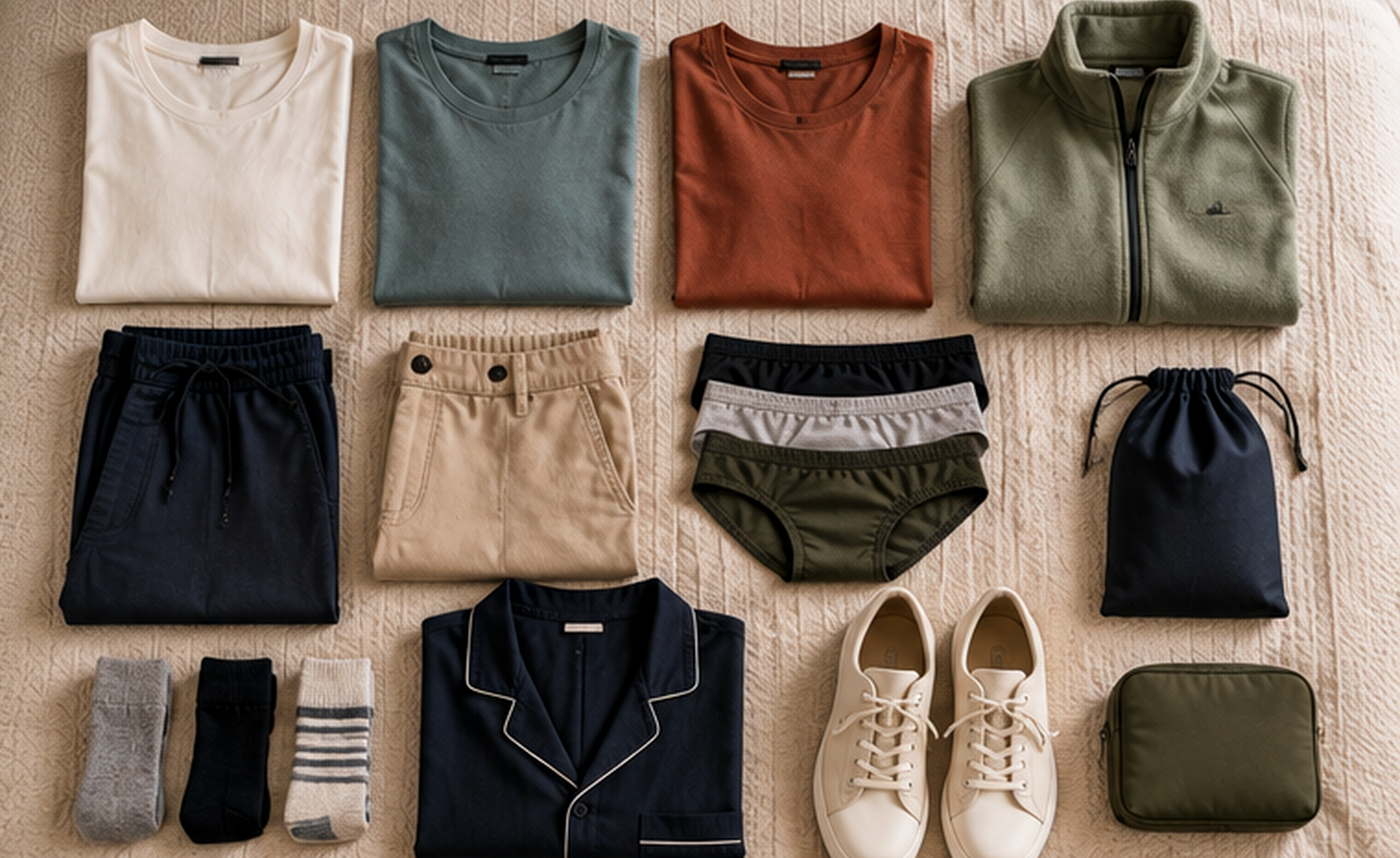
The most efficient seven-day carry-on packing list treats bottoms and layers as repeat items while rotating the garments that sit directly against the skin. This reduces volume without asking one T-shirt to survive an entire week.
| Clothing group | Wear in transit | Pack | Seven-day role |
|---|---|---|---|
| Everyday tops | 1 | 3 | Four tops before repeats; wash two mid-trip |
| Bottoms | 1 | 2 | Three options when one dress, skirt or shorts is counted as a bottom |
| Underwear | 1 | 4 | Five sets available; wash three or four on day three |
| Socks | 1 pair | 3–4 pairs | Adjust for sandals, heat and activity |
| Sleepwear | — | 1 light set | Can double as emergency lounge clothing |
| Light layer | Wear or carry | 0–1 | Cardigan, overshirt or light fleece |
| Weather shell | Wear or pack | 0–1 | Only when forecast and itinerary justify it |
| Swimwear | — | 1 | Add a second only for daily swimming and slow drying |
| Shoes | 1 pair | 0–1 compact pair | Wear the bulkiest pair; pack sandals or flats only when useful |
Build combinations before packing
Lay every top beside every bottom. If a garment only works with one other item, it is using valuable space for a single outfit. A restricted colour palette need not be dull; it simply means the footwear, outer layer and most bottoms work with several tops.
Protect one presentable outfit
Keep one clean top and one compatible bottom out of the early rotation when the trip includes a restaurant, event or work call. It is easier to preserve a small smart option than to pack an entirely separate formal wardrobe.
The following list is a planning baseline rather than a universal prescription. Prescription medicines, mobility equipment, religious clothing and specialist activity gear take priority over an arbitrary minimalist target.
| Category | Pack this | Where it goes | Reason or adjustment |
|---|---|---|---|
| Clothing | 3 tops, 2 bottoms, 4 underwear, 3–4 socks, sleepwear, one layer | Main clothing cube or folded section | Designed around one laundry cycle |
| Footwear | One compact second pair only when needed | Sole-to-sole bag at case edge | Wear the heaviest pair in transit |
| Toiletries | Seven-day quantities in compliant containers | Liquids pouch near the opening | Keep security-removal items accessible |
| Laundry kit | Small wash product, stopper if needed, clothesline, two pegs or clips | Flat side pocket | Keep the kit dry and separate from used clothing |
| Technology | Phone, cable, compact charger, required adapters | Personal-item tech pouch | Avoid duplicate cables unless critical |
| Documents | Passport, boarding access, insurance and backup details | Secure quick-access location | Separate originals from one recovery copy |
| Health | Medicines, prescription copy where appropriate, small first-aid basics | Personal item, not gate-checked luggage | Follow destination and airline rules |
| Weather | Packable rain layer, sun protection or warm accessory as forecast requires | Outer pocket or top layer | Choose by current forecast, not fear |
Laundry should happen before the clean-clothing reserve is exhausted. Waiting until day six creates a drying crisis and increases the chance of packing damp items.
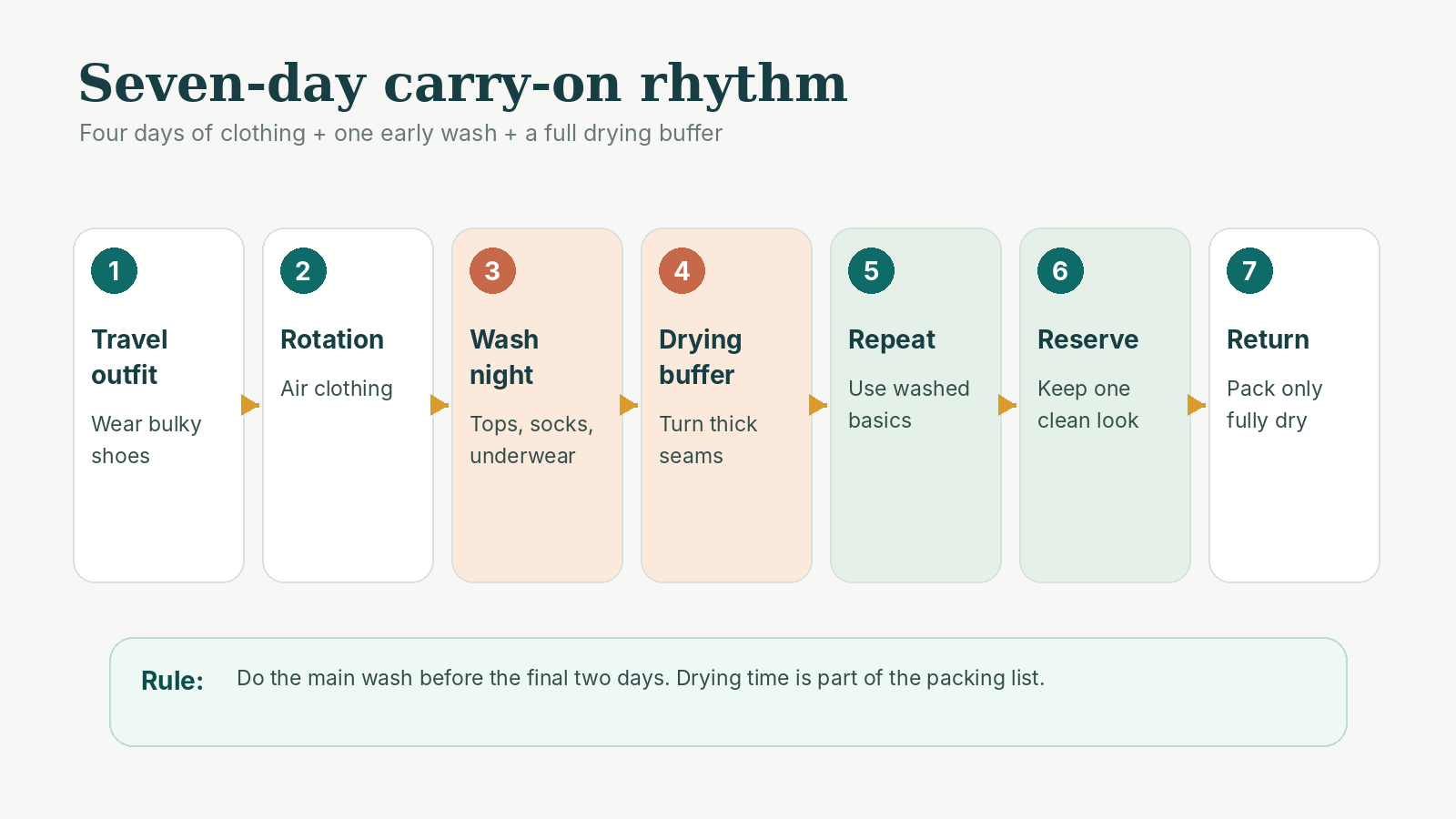
| Day | Clothing action | Laundry action | Reason |
|---|---|---|---|
| Travel day / Day 1 | Wear the bulkiest shoes and one complete outfit | None | Protect case space and start with a full clean rotation |
| Day 2 | Use packed outfit one | Air transit clothing overnight | Airing can extend wear when garments are genuinely clean and dry |
| Day 3 | Use packed outfit two | Wash underwear, socks and two tops in the evening | Creates the longest practical drying window |
| Day 4 | Use packed outfit three | Finish drying; move items for better airflow | A buffer absorbs cool rooms and humid weather |
| Day 5 | Return one washed top to rotation | Optional spot wash only | Avoid starting another full load unless departure timing permits |
| Day 6 | Use remaining clean or washed pieces | Air garments and inspect dampness | Prepare a fully dry return pack |
| Day 7 / return | Wear the bulkiest outfit again | Separate dry dirty laundry | Do not seal anything damp for the journey home |
Choose the laundry point by room conditions
A heated room with strong ventilation may dry a light top overnight. A humid coastal room may not. Plan the wash for the earliest evening with at least 24 hours before the next move, and use a laundrette or paid service when the accommodation cannot provide safe hanging space.
Research into textile malodour has found that humid drying conditions are associated with characteristic odours and the growth of particular bacteria.8 The practical lesson is simple: washing is only half the job; fast, complete drying matters too.
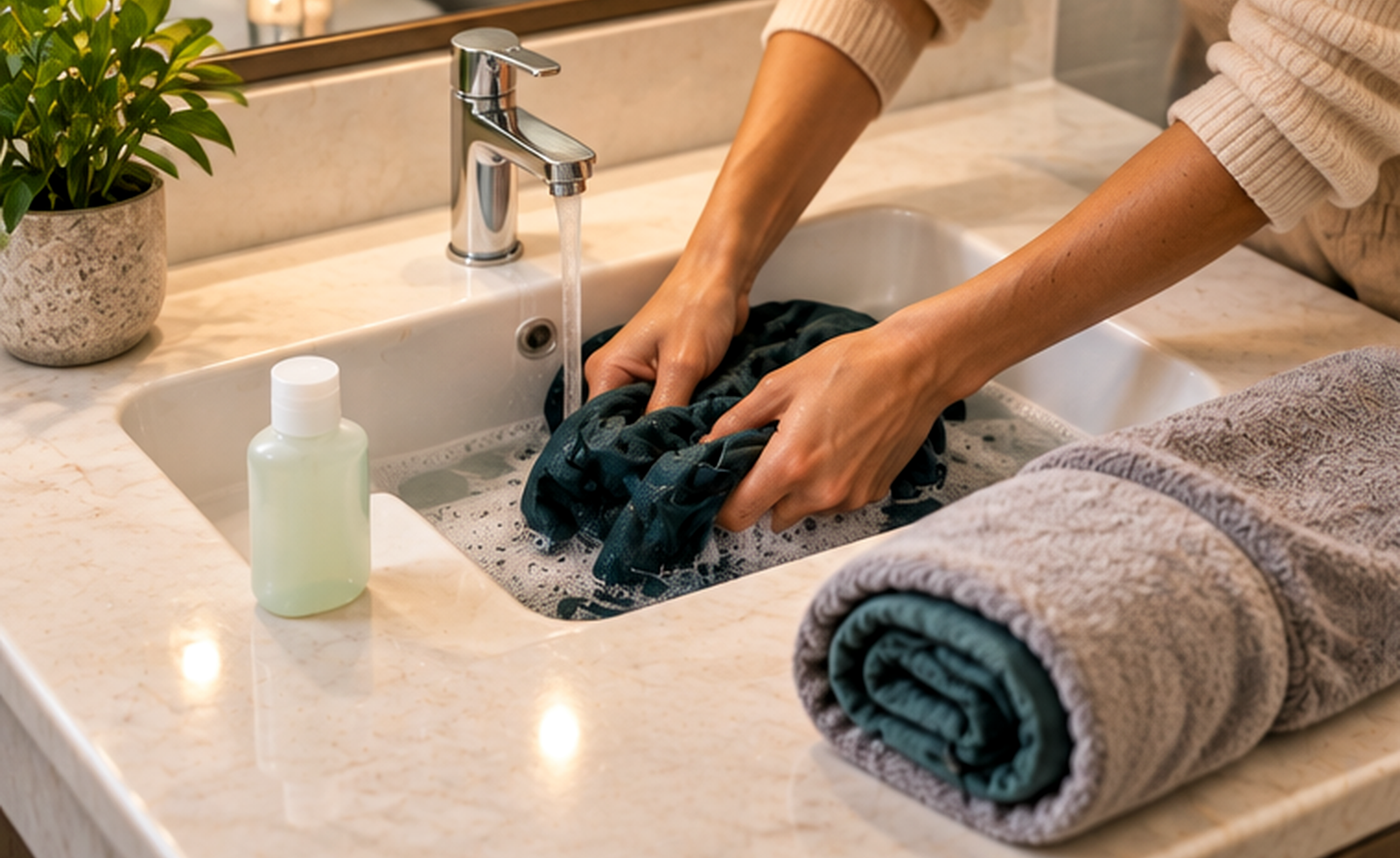
- Read the care label before water touches the garment. Separate colours that may run.
- Clean the sink or use a dedicated wash bag. Do not assume the basin is suitable without wiping it first.
- Use a small amount of appropriate wash product. Extra detergent creates more rinsing and can leave residue.
- Agitate gently, focusing on collars, underarms and socks rather than twisting the whole garment.
- Rinse until the water is clear and the fabric no longer feels slippery.
- Press out water without wringing. Lay the item on a towel, roll it firmly and press to transfer moisture.
- Hang with space around each item. Turn thick waistbands or seams after several hours.
A compact laundry kit
A travel line can be useful where hangers are scarce. Sea to Summit currently lists its 3.5 m Lite Line at 25 g and £12, while its Pocket Wilderness Wash contains 50 dry leaves and was listed at £4.50 when checked on 20 September 2026.67 These are examples of the size and weight available, not mandatory purchases.
Quick-drying synthetics and blends
Light polyester or nylon blends generally release water faster than heavy cotton, but odour behaviour varies with fabric, finish, activity and wash quality. Treat quick-dry as a drying characteristic rather than a promise that the garment will remain fresh indefinitely.
Merino and wool blends
Woolmark notes that merino garments can require less frequent washing because of their natural odour resistance, while still needing the care shown on the label.5 A light merino top can be useful for repeat wear, but it should be aired, allowed to recover and washed gently when needed.
Cotton, linen and heavy waistbands
Comfortable natural fibres may dry slowly in cool or humid rooms. One cotton T-shirt is easy to manage; a full wardrobe of thick cotton increases drying risk. Linen dries reasonably well but creases heavily, while jeans are poor candidates for a sink-wash schedule.
Minimal volume can still hide excessive weight. Toiletries, chargers, spare shoes and a hard-shell case can consume more allowance than the clothing itself.
| Component | Practical planning range | Control method |
|---|---|---|
| Empty bag | 0.7–3.5 kg | Choose the lightest bag that still protects the load and fits the fare |
| Packed clothing | 2.0–3.5 kg | Repeat bottoms, limit shoes and weigh outer layers |
| Toiletries | 0.4–1.0 kg | Decant genuine seven-day quantities and remove duplicate containers |
| Technology | 0.4–1.5 kg | Share compatible chargers and avoid redundant power banks |
| Laundry kit | 0.05–0.25 kg | Use a line, wash product and small stopper only when needed |
| Documents and health items | 0.2–0.8 kg | Keep essentials accessible; do not cut necessary medication |
| Spare margin | 10–15% of allowance | Stop packing before the published limit |
Planning ranges are deliberately broad because garment sizes, bag construction and medical needs differ. Weigh the finished bag on the scale you will use before travel.
Weigh the bag in its final airport state
Add the filled water bottle only after security, but include the empty bottle, coat if it may go into the bag and every cable. Recheck after any last-minute toiletries. A luggage scale should be used several times from the same lifting point because flexible bags can shift.
Pack quantities, not retail containers
A seven-day trip rarely needs a full shampoo bottle or large skincare tub. Decant only products that are safe to decant and label them clearly. Keep medicines in the packaging and documentation required by the destination rather than moving them into anonymous pots for the sake of space.
Avoid duplicate technology
List each device and its connector. One multi-port charger may replace several plugs, but only when its output suits the devices. Keep essential electronics and medicines in the smaller personal item if an overhead cabin bag could be placed in the hold.
Separate wet-risk items
Use a leak-resistant liquids pouch and keep it away from electronics and documents. The pouch should contain the leak, but bottles still need secure caps. A plastic bag around a poorly closed bottle is not a substitute for checking the closure.
| Trip type | Add | Remove or reduce | Laundry change |
|---|---|---|---|
| Hot and humid | Second lightweight top or swimwear, sun protection | Heavy layer and thick socks | Wash smaller loads more often; prioritise ventilation |
| Cool city break | Warm base layer, scarf and compact gloves | Extra shorts or sandals | Wear outer layers repeatedly; wash only skin-contact items |
| Business or event | One protected shirt, dress or smart trouser | Casual duplicate | Use professional laundry for structured garments |
| Active trip | Activity top, sports socks and recovery layer | Decorative extras | Rinse sweat promptly and allow full drying |
| Beach trip | Swimwear and light cover-up | Second bulky shoe | Carry wet swimwear only temporarily; dry before sealing |
Weather forecasting remains uncertain, but packing for every theoretical condition creates a certain problem: too much luggage. Choose a flexible layer system and buy or borrow a low-cost emergency item locally if an unusual forecast becomes real.
Security and transit access at the top
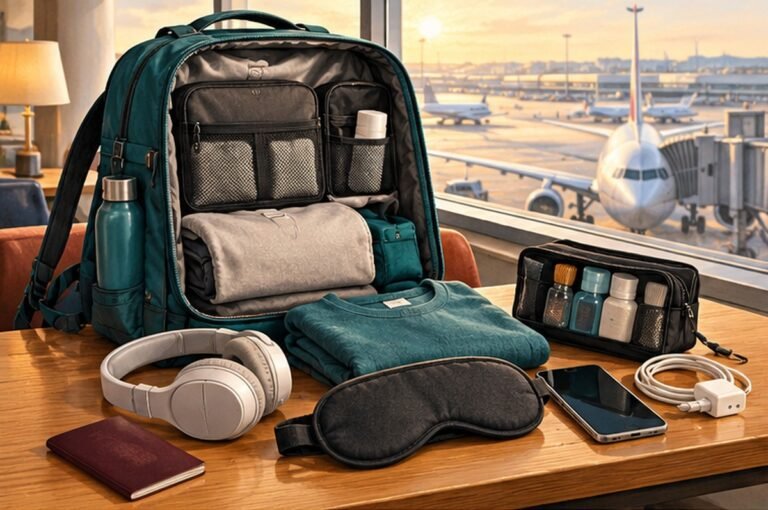
Liquids, electronics that may need removal, medication and travel documents should not be buried beneath clothing. Place them near the opening while keeping documents in a secure zipped compartment.
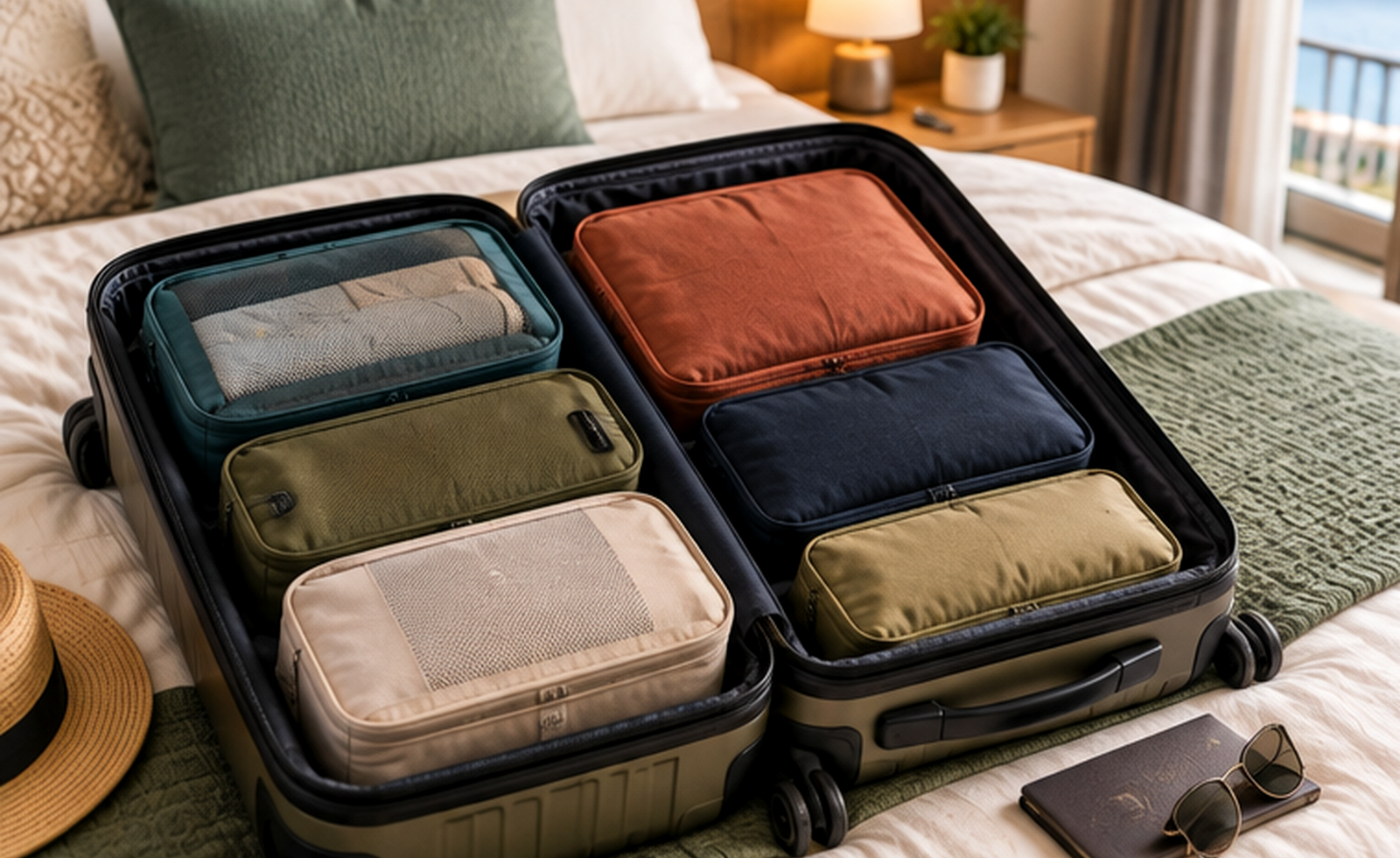
Clothing in two working modules
Use one module for the first half of the week and one for the clean reserve, or separate tops from underwear and socks. A small empty or folded laundry bag can gradually take over the space used by clean clothing.
Shoes at the structure points
Place packed shoes at the wheel end or side wall, soles isolated from clothing. Fill clean shoe interiors with small non-fragile items only when access will not be needed during the journey.
- Check the strictest airline dimensions and weight shown on the actual booking.
- Lay out the transit outfit and every packed item. Remove anything that lacks a defined use.
- Pack the bag exactly as it will be taken to the airport, including documents, cables and toiletries.
- Measure the external dimensions at the widest points and weigh it three times.
- Carry it for 20–30 minutes, climb stairs and lift it to overhead height safely.
- Perform the planned sink wash with two tops, underwear and socks. Record drying time.
- Live from the packed capsule for two ordinary days at home and note missing combinations.
- Leave the final bag with 10–15% spare rather than filling the newly available space.
The rehearsal turns a theoretical list into evidence. It also reveals uncomfortable straps, an overpacked liquids pouch and garments that look versatile on paper but are not comfortable enough to repeat.
Buy only to solve a measured problem
A clothesline is useful when the room lacks hangers; detergent sheets help when liquids space is tight; a scale matters when the fare has a strict weight limit. None of these accessories compensate for packing too many clothes.
Check size, weight and return terms
Compare the accessory’s packed dimensions and mass with the benefit it provides. Test clips, cords and scales at home before the return window closes, and avoid using new detergent on delicate travel garments for the first time abroad.
Compare compact laundry and weighing options
Use product pages to check current dimensions, materials, reviews and return terms. The links open broad Amazon UK searches rather than presenting one product as universally suitable.
Advantages
- Reduces duplicate clothing and case bulk.
- Creates a clear outfit rotation rather than random packing.
- Leaves room for weather gear, medicine and trip-specific essentials.
- Makes dirty-laundry management predictable.
- Can reduce checked-bag fees and baggage handling.
Trade-offs
- Requires a realistic wash and drying opportunity.
- A humid room can disrupt the schedule.
- Repeated garments must be comfortable and easy to combine.
- Hand washing takes time and may not suit delicate clothing.
- Very strict under-seat fares may still require further reductions.
Packing seven tops because the trip lasts seven days
This ignores the purpose of the laundry plan and consumes the space saved elsewhere.
Scheduling laundry on the final evening
Slow drying, a late return to the room or an early flight can leave wet clothing with nowhere safe to go.
Choosing every garment for appearance alone
An attractive item that is uncomfortable, incompatible or difficult to wash is unlikely to earn its space.
Carrying full-size toiletries
Large containers can be heavier than the clothing reductions achieved by careful planning and may breach security rules.
Forgetting the empty bag weight
A heavy case can consume a large share of a 10 kg allowance before anything is packed.
Trusting one scale reading
Repeat the measurement and leave margin for scale differences and return purchases.
Sealing clothing before it is dry
Damp fabric is a moisture and odour problem, not simply a laundry category.
How many outfits should I pack for seven days?
Wear one complete outfit and pack enough coordinated pieces for roughly four days. Plan one wash so the tops, underwear and socks can repeat without carrying seven full sets.
Is one carry-on really enough for a week?
It can be for many leisure trips when the bag fits the airline allowance, shoes are limited and clothing is planned as a capsule. Medical, formal or specialist activity needs may require more space.
When should I do laundry on a seven-day trip?
Day three evening or day four morning is usually the safest point because it leaves a full drying buffer before departure.
How many pairs of shoes should I take?
Wear the bulkiest pair and pack no more than one compact second pair unless the itinerary has a specific need such as formal wear or technical activity.
What if the hotel does not have a sink plug?
Use a dedicated wash bag or a clean container, or choose a laundrette. A universal flat stopper can help, but test it at home because basin shapes vary.
Do detergent sheets count as liquids?
Dry sheets are not liquid, but product formulation and local security interpretation can vary. Keep them in the original labelled pack and check airport rules.
Can I wash clothes with shampoo?
It may leave residue or be unsuitable for the fabric. A small product intended for laundry is a more predictable option, used according to the garment care label.
How do I make clothes dry faster?
Press out water without twisting, roll the garment in a towel, hang it with space around it and improve ventilation. Turn thick seams and waistbands part-way through drying.
Should I pack jeans?
One worn pair may be practical, but jeans are heavy, bulky and slow to sink-wash. Do not base the laundry cycle on washing them in a hotel room.
How much spare weight should I leave?
A 10–15% margin is a sensible target when possible. It helps with souvenirs, damp items and differences between home and airport scales.
What should never go in a gate-checked cabin bag?
Keep passports, essential medicines, valuables and fragile electronics in the smaller personal item when possible, following airline rules.
Should I use packing cubes?
They can organise the capsule and separate clean from used clothing, but they do not reduce weight. Choose a small number that fit the bag rather than filling it with accessories.
For a typical seven-day leisure trip, begin with the smallest airline allowance, wear the bulkiest outfit and pack a four-day capsule: three tops, two bottoms, four underwear sets, three or four pairs of socks, sleepwear and one light layer. Add only the weather, health and activity items the itinerary genuinely requires.
Schedule a small wash on day three or four and protect at least one full drying day. The strongest version of this plan is not the absolute minimum number of possessions; it is a tested system that fits the ticket, remains comfortable to carry and still works when drying takes longer than expected.
- GOV.UK, hand luggage liquid restrictionsCurrent UK guidance says rules vary by airport; at most airports containers over 100ml are not allowed and a one-litre transparent bag may still be required.
- British Airways, baggage essentialsCurrent hand-bag and cabin-bag size guidance.
- easyJet, cabin bagsCurrent under-seat and large cabin-bag dimensions and weight limit.
- Ryanair, bag policyCurrent included personal-bag dimensions and optional 10kg cabin-bag rules.
- Woolmark, wool washing and careCare guidance and the lower wash frequency of merino garments.
- Sea to Summit, Lite Line ClotheslineOfficial length, weight and UK price checked 20 September 2026.
- Sea to Summit, Pocket Wilderness WashOfficial 50-leaf format, carry-on suitability and UK price checked 20 September 2026.
- BMC Biology, laundry malodour and humid dryingPeer-reviewed research connecting humid drying conditions with characteristic malodour and bacterial growth on textiles.
Illustrations in this article were created for Travel Gear. Third-party photographs, where used, are credited beside the image or in the source list.