
Travel Tech
Map the system before choosing products
- List every device and the connector it uses.
- Record the maximum charging input that is useful to each device.
- Identify which devices can share one charger or cable.
- Check the plug type and mains voltage at the destination.
- Check the current battery rules of every airline or transport operator.
- Decide what must work during a power cut, delay or lost-bag situation.
Plug adapter or voltage converter?
A plug adapter changes the physical connection. It does not automatically change voltage. Read the input label on every charger or appliance. Many modern phone and laptop chargers accept a broad voltage range, while some heat-producing appliances do not. If a device is not compatible with the local supply, use a suitable converter or leave it at home rather than guessing.
Multi-country adapters vary in grounding, fuse design, socket grip, USB output and the number of devices that can be charged safely. Check independent safety certification relevant to your market and avoid overloading an adapter with high-powered appliances.
Chargers and cables
A multi-port charger can replace several plugs when its total output is sufficient and the ports share power in a way you understand. Check what happens when all ports are occupied, whether the laptop receives enough power and whether the charger becomes impractically large or heavy.
Label similar cables, carry only the lengths you use and protect the one cable that is difficult to replace. A short extension lead can be more useful than a complicated adapter in accommodation with badly positioned sockets, but it must be rated for the local supply and the connected load.
Power banks and spare batteries
Capacity claims, real delivered energy, port output, recharge time, size and safety protections all matter. Battery transport rules can change and may differ by operator, route and battery rating. Verify the current requirements directly before travel, keep required batteries in the permitted baggage and protect terminals from short circuits.
Do not describe a power bank as “airline approved” without identifying the rule, the operator and the date checked. Approval may depend on capacity, labelling and how it is carried.
Trackers and lost-item technology
A tracker may help locate luggage or identify its last reported position, but it is not a recovery guarantee and does not replace contact details, insurance evidence or an airline report. Check network compatibility, battery type, privacy controls, alert behaviour and local restrictions. Avoid hiding a tracker in a way that prevents safe battery access or breaches an operator’s rules.
Connectivity and data
Compare roaming, physical SIMs, eSIMs and local Wi-Fi according to coverage, phone compatibility, activation timing, hotspot needs and support. Save essential information for offline access, including bookings, addresses and a route back to accommodation. A connectivity plan should still work when the main phone is lost or uncharged.
A compact travel tech kit
- One suitable multi-port charger.
- The minimum reliable cables plus one critical spare.
- A destination-appropriate plug adapter where needed.
- A power bank sized to the actual journey and current transport rules.
- Headphones or earphones that can be used comfortably for the travel duration.
- A small organiser that keeps power items accessible without becoming bulky.
For placement and access during flights, trains and transfers, continue to Travel Accessories for Transport. For device and document loss planning, see Travel Safety & Security Gear.
Latest travel tech guides
Explore current guides to charging, adapters, cables, trackers, connectivity and travel electronics.

Best Laptop Power Banks for Flights
A laptop-first comparison of six sub-100Wh power banks. Match the USB-PD profile, calculate an illustrative energy budget and plan for permitted charging opportunities.
Read the guide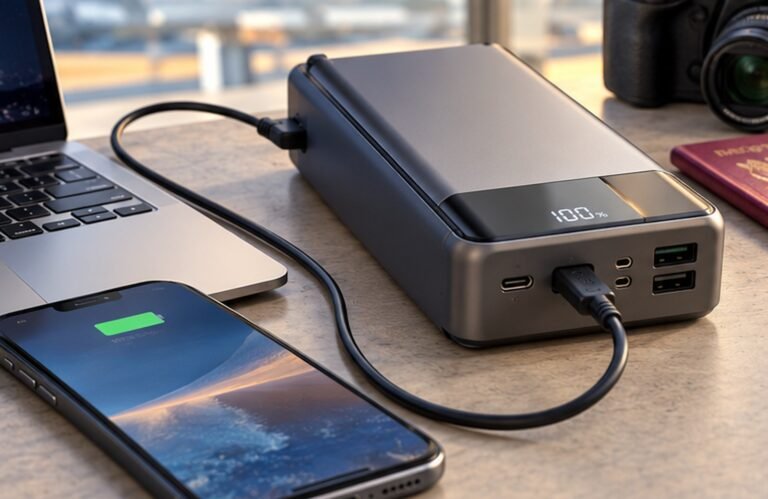
Power Bank With Built-In Cable vs Separate Cable
A practical comparison of attached, retractable and separate power-bank cables, with exact-model examples, connector checks and a safer, more resilient travel charging kit.
Read the guide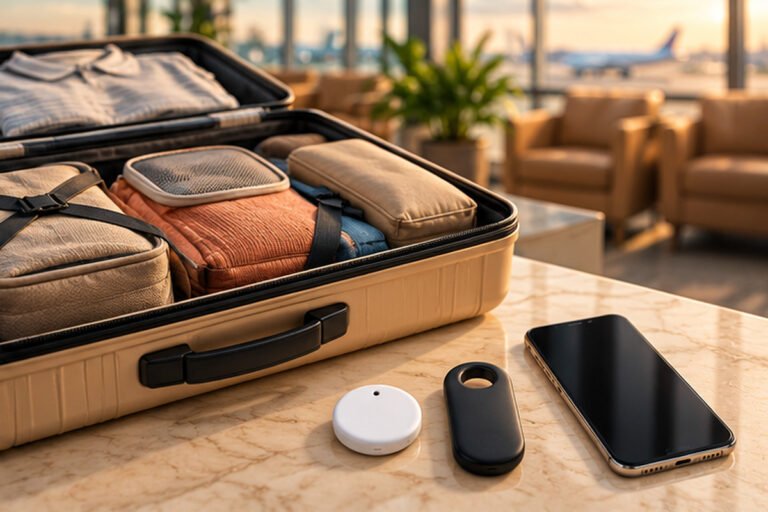
AirTag vs Samsung SmartTag for Luggage
Choose a luggage tracker around the phone and recovery tools you will actually use. This research-led comparison separates AirTag generations, SmartTag2 and the newly announced SmartTag3.
Read the guide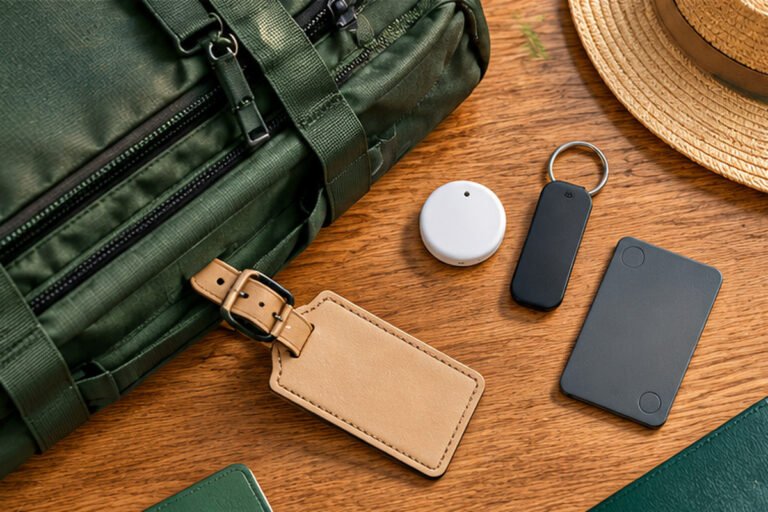
AirTag vs Tile for Luggage
AirTag fits an Apple-centred travel setup; Tile can suit mixed-phone households. Compare the actual apps, sharing permissions, battery design and recovery process rather than buying on Bluetooth range alone.
Read the guide
AirTag Holder vs Hidden Tracker Pocket
A research-led comparison of AirTag holders, discreet luggage pockets and combined setups, with practical checks for retention, battery access and finding a missing bag.
Read the guide
Best Waterproof Phone Pouches for Travel
A waterproof phone pouch needs to fit, close correctly and suit the water exposure you expect. Compare five product families, including regular and XL options, without mistaking depth claims for…
Read the guide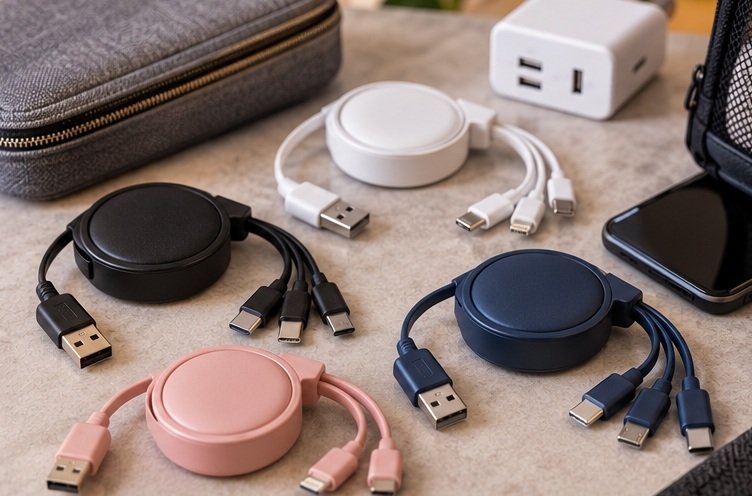
Best Retractable Charging Cables for Travel
A research-led comparison of retractable travel charging cables, including UGREEN and Baseus, power and data limitations, reach, packing and a sensible backup strategy.
Read the guide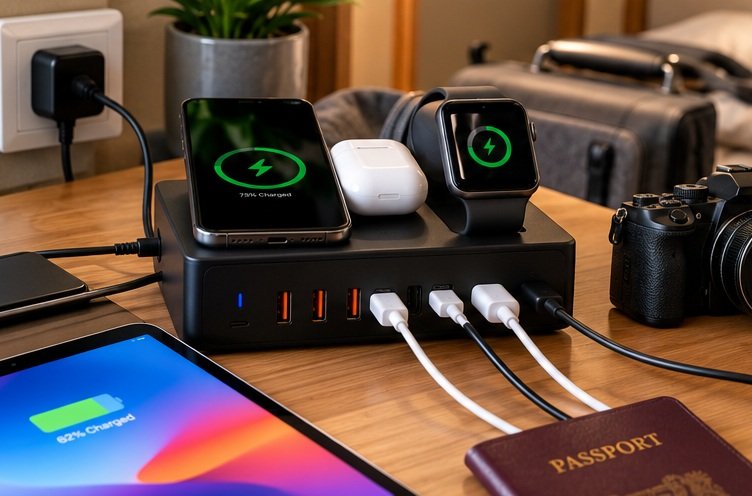
Best Multi-Device Charging Stations for Hotel Rooms
Compare six hotel-room charging options, with clear distinctions between total power, per-port output, wired stations, travel chargers and Apple-focused wireless pads.
Read the guide
Best Android Luggage Trackers
Choose an Android luggage tracker by phone compatibility, finding network, battery routine and attachment. Includes current Moto Tag 2, Chipolo, Pebblebee and Samsung options.
Read the guide
Best iPhone Luggage Trackers
An iPhone-first comparison of five luggage trackers, with generation checks, battery trade-offs, sharing instructions and a realistic plan for delayed baggage.
Read the guide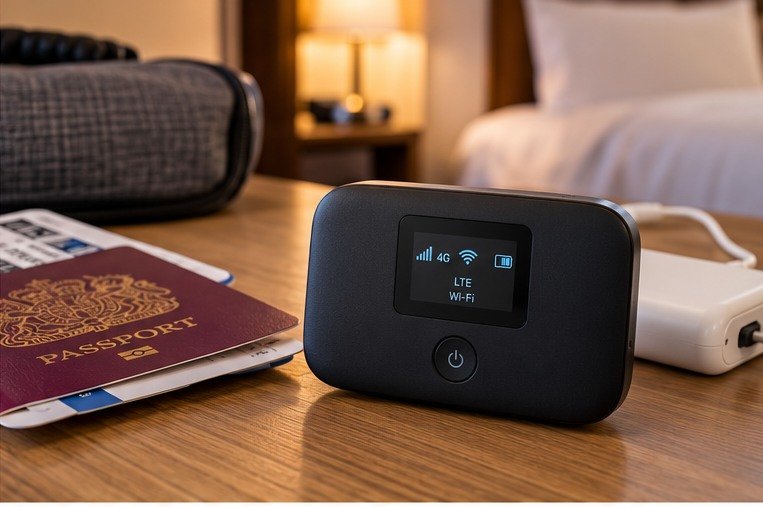
Best Portable Wi-Fi Hotspots for International Travel
A practical comparison of international mobile hotspots, separating cellular coverage, local Wi-Fi speeds, regional hardware, data plans and the cheaper phone-tethering alternative.
Read the guide
Best Bluetooth Airplane Audio Adapters
A flight-focused guide to Bluetooth transmitters, with five researched options, two-headphone trade-offs, model-specific pairing cautions and a practical troubleshooting sequence.
Read the guide