
Travel Tech
Map the system before choosing products
- List every device and the connector it uses.
- Record the maximum charging input that is useful to each device.
- Identify which devices can share one charger or cable.
- Check the plug type and mains voltage at the destination.
- Check the current battery rules of every airline or transport operator.
- Decide what must work during a power cut, delay or lost-bag situation.
Plug adapter or voltage converter?
A plug adapter changes the physical connection. It does not automatically change voltage. Read the input label on every charger or appliance. Many modern phone and laptop chargers accept a broad voltage range, while some heat-producing appliances do not. If a device is not compatible with the local supply, use a suitable converter or leave it at home rather than guessing.
Multi-country adapters vary in grounding, fuse design, socket grip, USB output and the number of devices that can be charged safely. Check independent safety certification relevant to your market and avoid overloading an adapter with high-powered appliances.
Chargers and cables
A multi-port charger can replace several plugs when its total output is sufficient and the ports share power in a way you understand. Check what happens when all ports are occupied, whether the laptop receives enough power and whether the charger becomes impractically large or heavy.
Label similar cables, carry only the lengths you use and protect the one cable that is difficult to replace. A short extension lead can be more useful than a complicated adapter in accommodation with badly positioned sockets, but it must be rated for the local supply and the connected load.
Power banks and spare batteries
Capacity claims, real delivered energy, port output, recharge time, size and safety protections all matter. Battery transport rules can change and may differ by operator, route and battery rating. Verify the current requirements directly before travel, keep required batteries in the permitted baggage and protect terminals from short circuits.
Do not describe a power bank as “airline approved” without identifying the rule, the operator and the date checked. Approval may depend on capacity, labelling and how it is carried.
Trackers and lost-item technology
A tracker may help locate luggage or identify its last reported position, but it is not a recovery guarantee and does not replace contact details, insurance evidence or an airline report. Check network compatibility, battery type, privacy controls, alert behaviour and local restrictions. Avoid hiding a tracker in a way that prevents safe battery access or breaches an operator’s rules.
Connectivity and data
Compare roaming, physical SIMs, eSIMs and local Wi-Fi according to coverage, phone compatibility, activation timing, hotspot needs and support. Save essential information for offline access, including bookings, addresses and a route back to accommodation. A connectivity plan should still work when the main phone is lost or uncharged.
A compact travel tech kit
- One suitable multi-port charger.
- The minimum reliable cables plus one critical spare.
- A destination-appropriate plug adapter where needed.
- A power bank sized to the actual journey and current transport rules.
- Headphones or earphones that can be used comfortably for the travel duration.
- A small organiser that keeps power items accessible without becoming bulky.
For placement and access during flights, trains and transfers, continue to Travel Accessories for Transport. For device and document loss planning, see Travel Safety & Security Gear.
Latest travel tech guides
Explore current guides to charging, adapters, cables, trackers, connectivity and travel electronics.
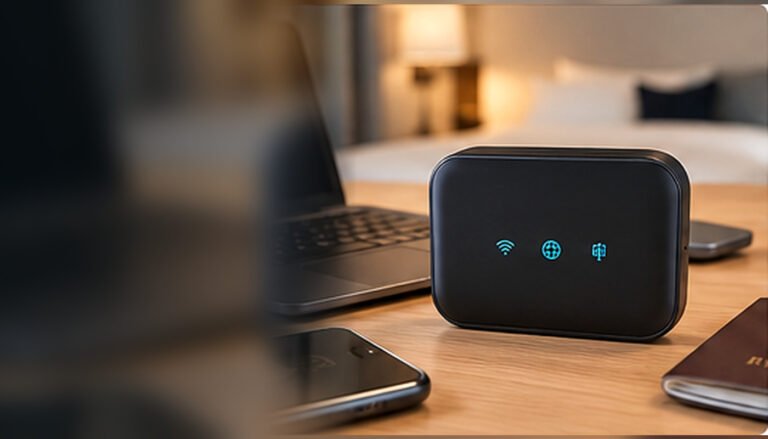
Top 10 Portable Travel Routers for Hotels
A research-led comparison of ten portable hotel travel routers, including Wi-Fi standards, captive portals, power requirements and realistic setup compromises.
Read the guide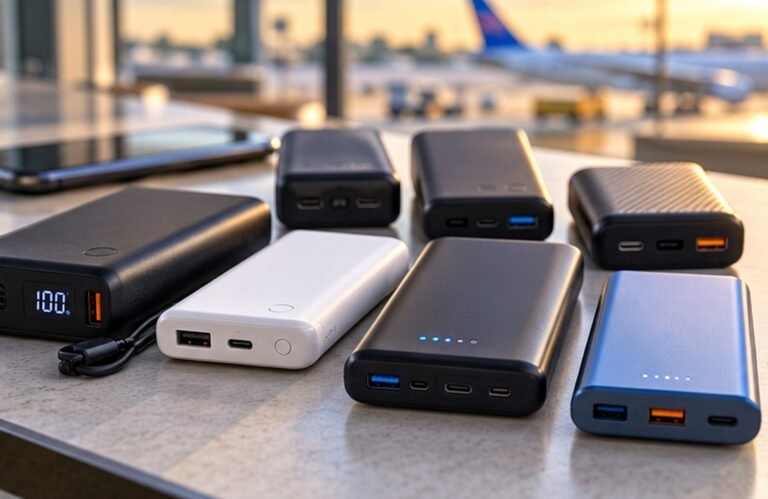
10,000mAh vs 20,000mAh Power Bank for Travel
Choose the right travel power-bank capacity with worked energy examples, current flight guidance, exact-model comparisons and realistic planning for time away from sockets.
Read the guide
Best UK-to-USA Travel Plug Adapters
Five UK-to-USA adapter options for phones, laptops and multi-country trips. Separate Type B earthing, 120V compatibility, mains limits and shared USB output before connecting British equipment to an American socket.
Read the guide
Best 65W USB-C Travel Chargers
Choose a 65W travel charger around your laptop, phone and destination sockets. This guide separates single-port output from shared allocations and flags the UK Anker 715 input limitation.
Read the guide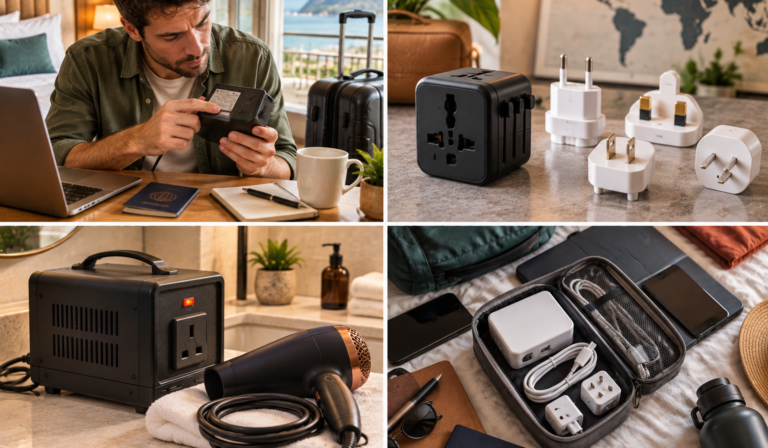
Travel Adapter vs Voltage Converter: The Label Check That Matters
A practical label-first guide to deciding whether your device needs only a travel adapter, a correctly rated voltage converter or a different travel appliance.
Read the guide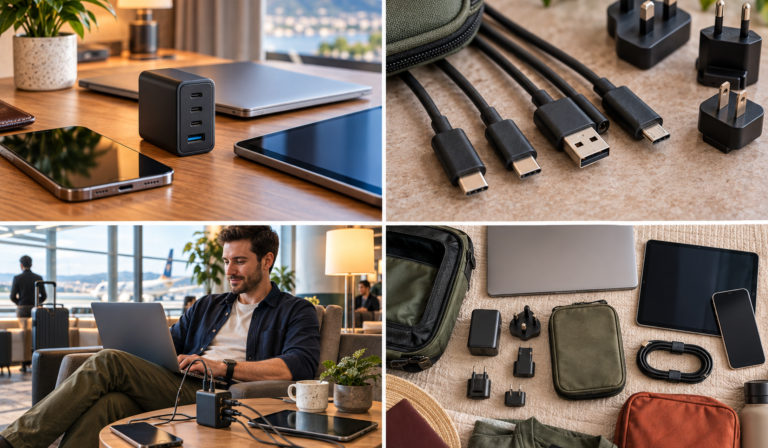
How to Choose a Travel Charger for Phone, Tablet and Laptop
A clear method for choosing one travel charger that can power a phone, tablet and laptop without overlooking port sharing, cable ratings or destination input.
Read the guide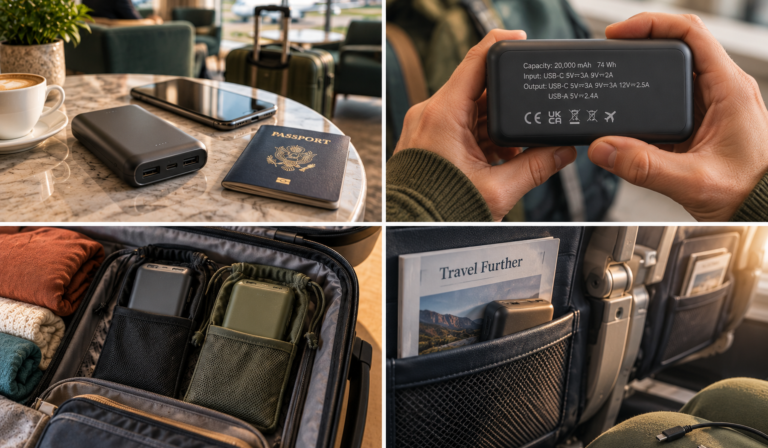
Power Banks for Flights: A Rule-Checking Checklist
A 2026 checklist for flying with power banks, covering watt-hours, cabin-only packing, two-bank limits, airline-specific use bans and safer storage.
Read the guide
RFID-Blocking Travel Wallets: Define the Risk Before You Buy
RFID-blocking travel wallets solve a narrow radio-frequency problem. This evidence-led guide separates contactless skimming, stolen-card use, passport privacy and online fraud so you can decide whether shielding is useful or…
Read the guide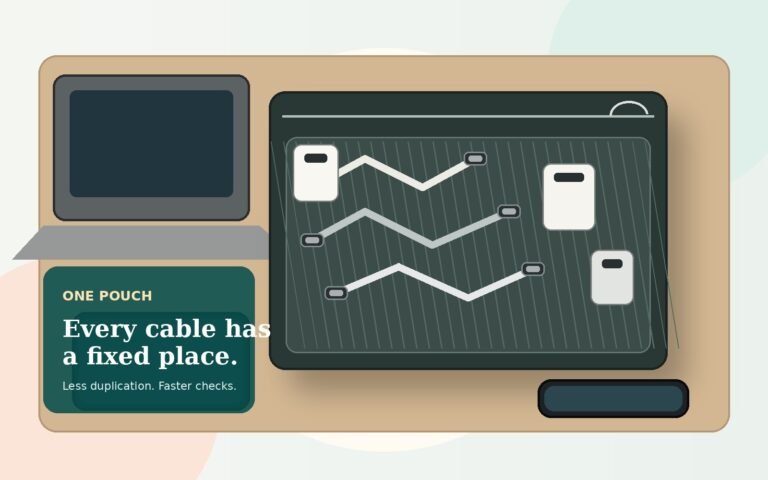
A One-Pouch Cable System for Multi-Device Travel
A one-pouch cable system keeps a phone, tablet and laptop charged without carrying duplicate leads. Use this device-first method to choose charger wattage, USB-C cables, specialist accessories and a pouch…
Read the guide
Luggage Trackers: What They Can—and Cannot—Do
Luggage trackers can add a valuable location clue, but they are not continuous GPS and cannot replace an airline baggage report. This guide explains the networks, limits, flight rules and…
Read the guide